
Water Damage Mold Removal Colorado Springs The Mold You Can’t See Is Already Growing
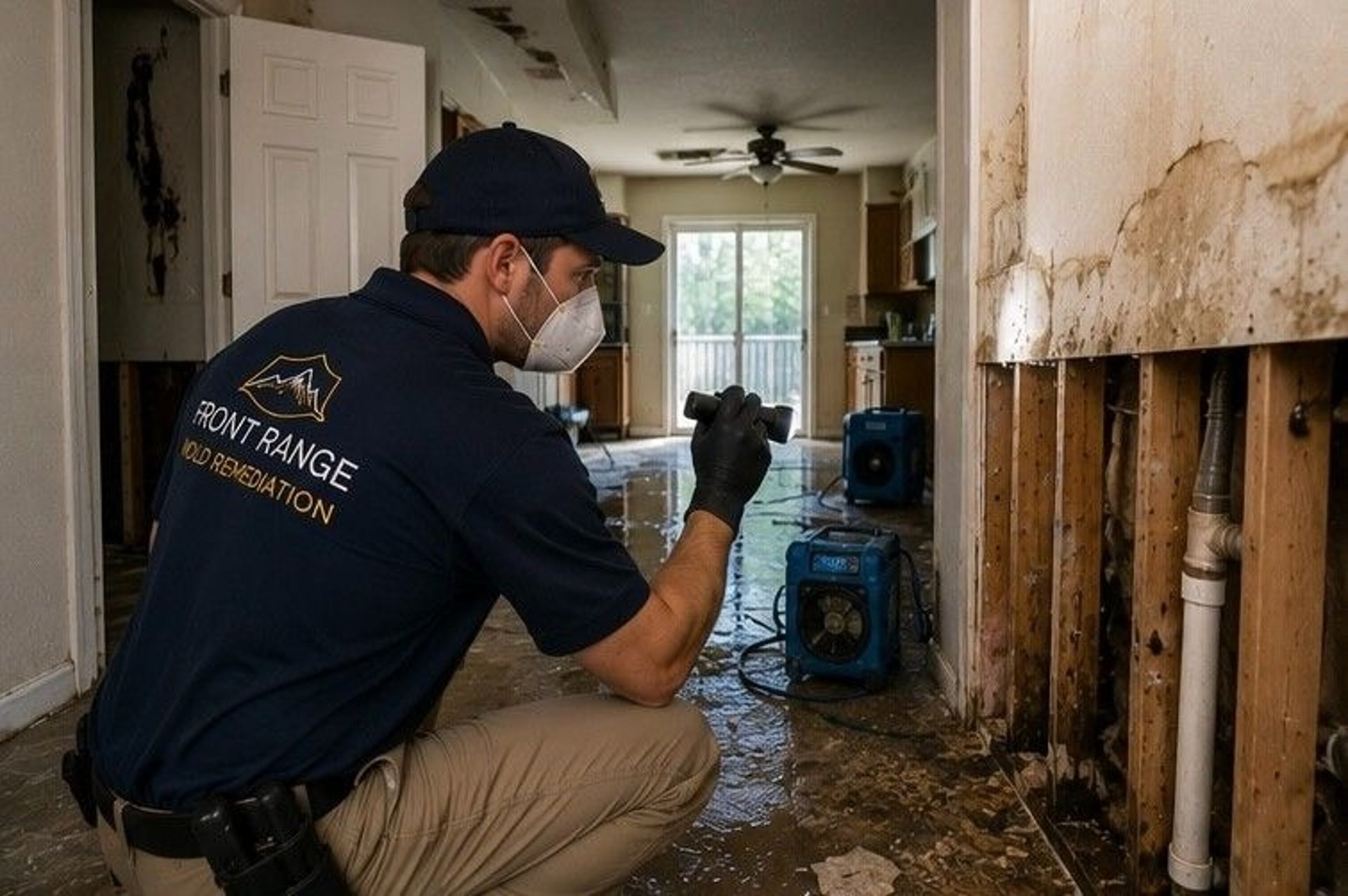
Front Range Mold Remediation provides certified water damage mold removal services across Colorado Springs for homeowners and property managers dealing with mold that developed following any type of water intrusion event — burst pipes, roof leaks, flooding from snowmelt, appliance failures, sewage backups or storm water intrusion. Water damage and mold are inseparable in Colorado Springs properties. Materials that stayed wet for more than 24 to 48 hours after a water event — even materials that appear completely dry on the surface now — almost certainly have mold growing inside them. Our IICRC certified team finds it, removes it completely and generates the combined water damage and mold documentation that Colorado Springs insurance claims require. We serve every neighbourhood across Colorado Springs with free estimates, same week availability and 24/7 emergency response when the water event just happened.
Why Colorado Springs Homeowners End Up With Mold After a Water Event They Thought Was Handled
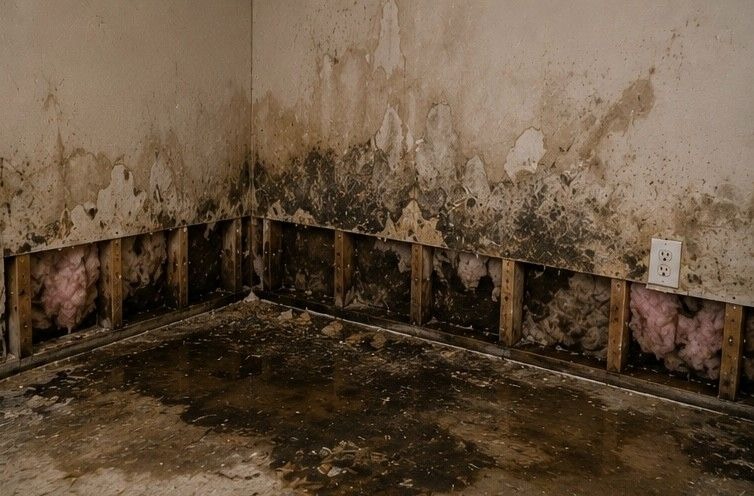
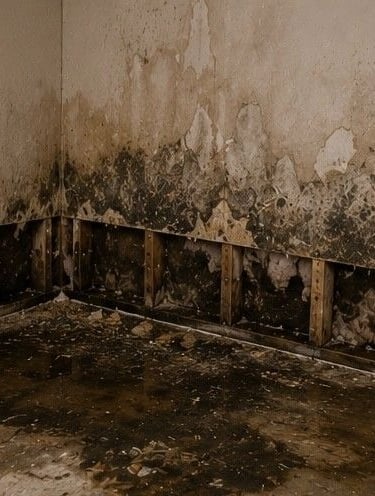
The most common reason water damage leads to a mold remediation job in Colorado Springs is a simple one — the water was removed but the moisture wasn’t. Consumer equipment, surface drying and visual assessment of dry-looking materials leave residual moisture inside wall assemblies, under flooring and in structural elements where mold establishes itself within days of the original event. Here’s what drives water damage mold calls across Colorado Springs.
01. You dried out the water yourself and everything looked fine until the smell started
A wet vac, some towels and a few fans running for a day or two creates the impression that a water event has been handled. What it actually does is remove surface water while leaving building materials with moisture contents well above the threshold where mold establishes itself. The smell that develops two to four weeks later is the mold that’s been growing in those materials since the surface appeared dry.
02. A restoration company dried the property but never tested moisture levels in the wall cavities
Not all water damage restoration is created equal. Drying protocols that monitor surface conditions without measuring moisture inside wall assemblies and subfloor systems leave Colorado Springs homeowners with properties that passed a visual check but still have mold-generating moisture trapped inside structural elements. If the company that dried your property after a water event didn’t provide moisture reading documentation, the drying process may not have been as thorough as it appeared.
03. The water event happened months ago and you’re only now noticing symptoms
Mold that established itself in wall cavities or under flooring after a Colorado Springs water event doesn’t produce surface signs immediately. It grows through the material from the inside for weeks or months before discoloration appears on the surface, a smell develops in the room or health symptoms in household members begin to accumulate. The delay between the water event and the visible or health indicators is why so many Colorado Springs homeowners don’t connect the two.
04. Your Colorado Springs property floods or takes on water every spring and it’s been happening for years
Annual spring flooding from snowmelt is a Colorado Springs property reality for many homeowners — particularly in Fountain, Powers Corridor and older parts of Downtown. Each annual event adds another moisture cycle to building materials that never fully dried from the previous year. Cumulative water damage mold in Colorado Springs properties with recurring spring flooding is typically far more extensive than any single event would generate.
05. An appliance failure — dishwasher, washing machine, water heater — leaked for an extended period
Slow appliance leaks in Colorado Springs properties are among the highest-risk water damage scenarios for mold development because they’re often undetected for days or weeks before the water is discovered. A dishwasher that’s been seeping under the kitchen floor, a water heater drip pan that’s been overflowing or a washing machine supply line that’s been weeping behind the laundry room wall — these slow events generate exactly the sustained moisture conditions that produce the most aggressive mold establishment.
06. Sewage backup flooded part of your Colorado Springs property
Sewage backup events introduce both moisture and biological contamination simultaneously. Mold that develops following a sewage event occurs in a substrate that includes organic material from the sewage itself — creating particularly aggressive contamination that requires biohazard-level handling alongside standard mold remediation protocols. This is not a situation where standard mold removal approaches fully address the contamination.
Water damage mold in Colorado Springs properties develops on a timeline that outpaces most homeowners’ response. The materials that look dry two days after a water event may have been generating mold growth from the moment the visible water was removed.
Water damage mold removal requires understanding both the mold remediation and the moisture dynamics of the original water event — because addressing the contamination without fully resolving the residual moisture that’s still generating it produces remediation that fails before the clearance report is dry. Here’s our process for every water damage mold job across Colorado Springs.
How Front Range Mold Remediation Handles Water Damage Mold Removal in Colorado Springs
Step 4: Combined Documentation
Water Damage and Mold in One Insurance-Ready Package Every Front Range water damage mold job concludes with combined documentation covering both the water damage event and the mold remediation — moisture mapping records, drying documentation, mold scope and removal records, and post clearance testing results. This single documentation package covers everything a Colorado Springs homeowner’s insurance adjuster needs to process a combined water damage and mold claim without requesting supplementary documentation.
Step 1: Water Damage Assessment
Mapping Moisture Beyond the Visible Damage We don’t limit assessment to the area where the water event was visible. Using moisture meters and thermal imaging we map residual moisture throughout the property — identifying building materials that are still above safe moisture content levels, tracing the migration path the water followed through the building structure and establishing whether active moisture sources remain. Mold remediation that starts before residual moisture is fully mapped treats the contamination while leaving the conditions that generated it in place.
Step 2: Structural Drying and Containment
Parallel Processes Where residual moisture remains in structural elements we deploy industrial drying equipment alongside establishing mold containment — running both processes simultaneously to compress the overall timeline. Containment barriers and HEPA air scrubbers manage airborne spores while drying equipment reduces the moisture content of structural elements to levels that stop supporting mold growth. We monitor moisture readings throughout the drying phase rather than assuming a fixed drying timeline is adequate for the specific conditions.
Step 3: Mold Removal and Treatment
Eliminating What the Water Generated Once structural elements reach safe moisture levels we proceed with full mold removal — physical extraction of contaminated materials, professional grade antimicrobial and fungicidal treatment of affected structural surfaces and disposal of all removed materials. For water damage mold jobs that involve sewage backup contamination we apply biohazard protocols alongside standard mold remediation procedures.
Water damage mold documentation that separates the water damage records from the mold remediation records creates insurance claim complications that delay settlement. We document both under one package — because they’re the same event.
Eight Signs Your Colorado Springs Property Has Mold From a Previous Water Damage Event
These signs appear weeks or months after the original water event — not immediately when the damage occurs.
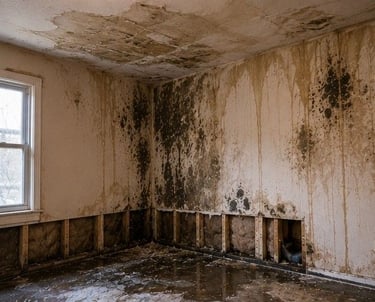
1. A musty smell that developed two to six weeks after a water event you thought was resolved
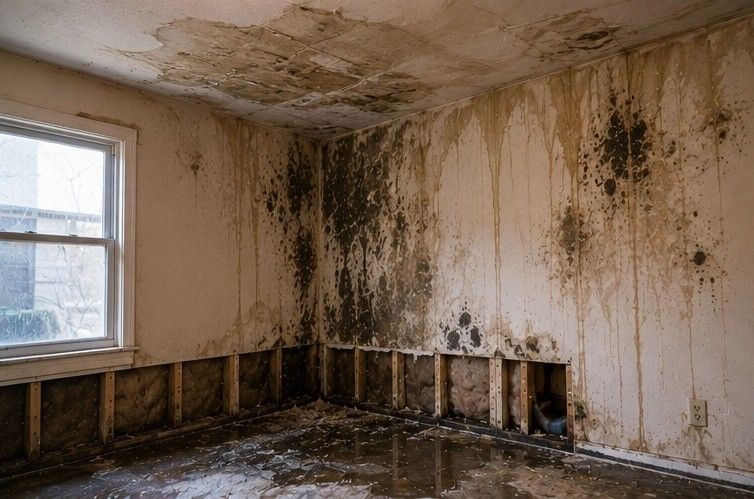
The timing pattern is the tell. A smell that develops weeks after a water event rather than immediately following it indicates mold that established itself in the building materials during the drying period and has been growing since — not a surface moisture smell that disappears as the property dries.
2. Discoloration appearing on walls, ceilings or flooring in the weeks after a water event
New discoloration appearing in the area of a previous water event after the damage appeared to be resolved is mold growing through the material from the inside — becoming visible on the surface after establishing itself throughout the material thickness during the weeks following the event.
3. Flooring that has buckled, cupped or developed soft spots in the months after a water event
Floor movement that develops gradually in the months after a water event indicates residual moisture in the subfloor system — moisture that consumer drying approaches didn’t extract from the structural assembly beneath the surface flooring. Mold in that subfloor system almost always accompanies the structural movement.
4. Paint bubbling or peeling on walls in areas affected by a previous water event
Paint failure on walls that previously had water damage indicates moisture working through the wall assembly from inside — either from residual moisture that was never fully extracted or from an ongoing slow moisture source that the original water event damaged waterproofing made possible.
5. Health symptoms in household members that developed after a water event and haven’t resolved
Respiratory symptoms, headaches or fatigue that developed in the weeks following a water damage event in a Colorado Springs property and haven’t resolved despite normal health measures should be investigated as potential mold exposure from water damage mold establishment — particularly if they’re specific to time spent in the property.
6. A Colorado Springs home inspector flagged potential water damage history and mold risk
Home inspectors who identify evidence of previous water damage — staining patterns, floor movement, efflorescence on foundation walls — frequently note mold risk as a consequence. A flag of this type in a purchase inspection warrants dedicated water damage mold assessment before completing the transaction.
7. Your property has had multiple water events and has never been professionally assessed for mold
Colorado Springs properties that have experienced more than one water event over their ownership history — spring flooding, plumbing failures, roof leaks — without professional mold assessment after any of them carry accumulated mold risk from each successive event. The absence of obvious visible mold doesn’t indicate the absence of contamination in the structural materials.
8. You can see staining inside wall cavities opened during renovation following a water event
Renovation work that opens wall cavities in areas that previously experienced water damage and finds irregular dark staining on framing, insulation or sheathing surfaces — particularly staining that doesn’t correspond to the water flow pattern — has found mold. Stop work, establish containment and call for professional assessment before continuing the renovation.
Had a water event in your Colorado Springs property and not sure whether mold has established itself inside the building materials? Our mold inspection and testing team can assess the full property and tell you definitively — before the contamination gets worse.
Why Colorado Springs Homeowners Choose Front Range for Water Damage Mold Removal
We Treat the Moisture and the Mold — Not Just the Mold
Water damage mold removal that addresses the contamination without fully resolving residual moisture in structural elements produces remediation that fails before the clearance report is filed. Our process treats both simultaneously — industrial drying to resolve residual moisture in structural elements alongside mold removal and treatment — because solving one without the other leaves the job incomplete regardless of how well the visible mold was removed.
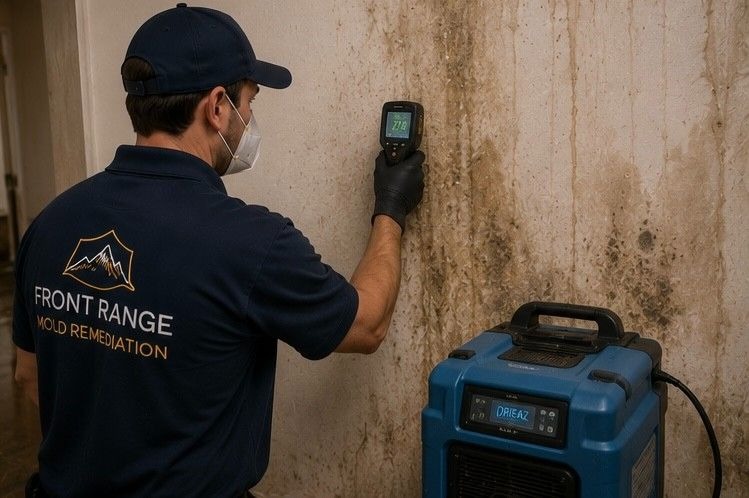
Combined Insurance Documentation Under One Scope
Colorado Springs water damage and mold insurance claims that have separate documentation from separate contractors create adjuster queries that delay settlement and sometimes result in partial coverage denial. We document the complete scope — water damage assessment, drying records, mold remediation and post clearance testing — under one package that covers the full claim from a single certified contractor.
We Understand Colorado Springs Water Damage Patterns Specifically
Spring snowmelt flooding, freeze-thaw foundation seepage, ice dam water intrusion and summer hail storm roof damage are the Colorado Springs-specific water damage mechanisms we encounter most frequently. Understanding how each of these events moves water through different property types — and where mold establishes itself as a result — changes how we assess and scope water damage mold jobs compared to applying generic water damage protocols.
Post Clearance Testing Before Sign Off Always
Water damage mold removal without post clearance testing leaves Colorado Springs homeowners with no documented proof that the mold generated by their water event was fully eliminated. Every Front Range water damage mold job concludes with independent air sampling that confirms safe spore levels — and that clearance report is part of the insurance documentation package that closes the claim.
Water damage mold removal requires understanding both sides of the problem — the moisture dynamics and the mold remediation. Here’s what makes the difference.
Ready to get your Colorado Springs property properly assessed for water damage mold? Contact us today for a free combined assessment and estimate.
Water Damage Mold Removal Across Every Colorado Springs Neighbourhood
Front Range Mold Remediation provides certified water damage mold removal across all of Colorado Springs — from spring snowmelt flooding situations in Fountain and Powers Corridor to pipe burst emergencies in Briargate and Broadmoor and storm damage events in Black Forest and Cheyenne Mountain.
Water damage mold in Downtown Colorado Springs historic properties involves moisture migration through century-old building fabric that behaves differently from modern construction — requiring assessment that accounts for the specific moisture dynamics of masonry and timber frame buildings under urban drainage conditions.
Briargate’s residential density and aging plumbing infrastructure make burst pipe water damage events the most common water damage mold scenario we respond to in this neighbourhood — often affecting finished basements where mold establishes behind wall systems before surface signs appear.
Water damage mold in Broadmoor’s high value properties requires assessment and remediation that accounts for premium finishes, complex below-grade layouts and the combined documentation requirements of high value property insurance claims.
Historic Old Colorado City properties experiencing water damage events require mold assessment that understands 19th century construction moisture dynamics — older timber framing and rubble stone foundations retain and distribute water damage moisture differently than modern construction.
Water damage mold in newer Northgate properties most commonly follows plumbing system failures in recently built homes — where construction-phase moisture management and early plumbing issues create water damage events in properties still under their original warranty period.
Rockrimmon’s mid-century residential properties experience water damage mold most commonly from aging plumbing systems and foundation seepage — two moisture sources that both generate mold in the wall assemblies and below-grade spaces of established northwest Colorado Springs homes.
Fountain’s recurring spring flooding creates annual water damage mold cycles in older properties — accumulated moisture damage from successive events producing mold that compounds year over year in building materials that never fully dried between events.
The Powers Corridor’s high residential density means water damage events from aging municipal infrastructure — drainage backups and shared utility failures — create water damage mold situations affecting multiple properties simultaneously rather than isolated single-property events.
Black Forest’s Colorado Springs storm exposure — hail, heavy snow loading and rapid snowmelt — creates roof and foundation water damage events that generate attic and crawl space mold in forested lot properties where ambient moisture conditions accelerate establishment after the initial event.
Mountain snowmelt drainage creates water damage mold scenarios in Cheyenne Mountain properties that combine external moisture pressure against foundations with internal plumbing events — producing combined below-grade water damage and mold situations that require whole-property assessment to fully scope.
Frequently Asked Questions
How long after a water event does mold start growing in a Colorado Springs property?
Mold can begin establishing itself within 24 to 48 hours of moisture exposure under the temperature and humidity conditions typical of an occupied Colorado Springs home. The 48 hour window is the most frequently cited threshold — but establishment timing varies based on the temperature of the space, the type of material that’s wet and whether the moisture is sustained or drying. Materials that stayed wet for more than 48 hours without professional drying should be assumed to have initiated mold growth — even if no visible or olfactory sign is present yet. Our emergency mold removal team can respond same-day to water events that just occurred and provide the professional drying that prevents establishment within that critical window.
My Colorado Springs property had water damage that was professionally dried — can mold still develop?
Yes — and this is one of the most important points about water damage mold in Colorado Springs. Professional drying that meets IICRC S500 standards and achieves documented dry standard in all affected building materials is extremely unlikely to result in mold establishment. Drying that was completed without moisture monitoring inside wall assemblies and subfloor systems — which describes many standard water damage responses — may leave residual moisture in structural elements above the threshold for mold growth even when the property appears visually dry. If the company that dried your property didn’t provide moisture reading documentation showing all affected materials reached dry standard, the property warrants mold assessment regardless of how thorough the drying appeared.
Does homeowner’s insurance cover water damage mold removal in Colorado Springs?
Coverage depends on what caused the water damage. Mold resulting from a sudden covered water damage event — burst pipe, appliance failure, storm water intrusion — is typically covered under standard Colorado homeowner’s policies as part of the overall water damage claim. Mold resulting from gradual leaks, maintenance failures or long-term neglect is generally excluded. Our combined water damage and mold documentation package provides insurance adjusters with the cause assessment they need to determine coverage applicability for your specific Colorado Springs claim — and we’ve supported successful claims across many Colorado Springs properties.
Can I stay in my Colorado Springs home during water damage mold removal?
It depends on the extent of water damage and mold contamination. For localised events affecting a single room or isolated area, remaining in unaffected parts of the property during remediation is often feasible. For extensive water damage events affecting multiple rooms or large areas of the property, temporary displacement during active remediation — particularly during physical material removal — is recommended. Where children, elderly residents or anyone with respiratory conditions are in the household, the threshold for recommending temporary displacement is lower. We assess this during the initial property visit and give you a recommendation based on your specific situation rather than a blanket policy.
What’s the difference between water damage restoration and water damage mold removal?
Water damage restoration addresses the structural damage the water event caused — removing damaged materials, drying structural elements and restoring the property to pre-loss condition. Water damage mold removal specifically addresses the mold that established itself in materials during or after the water damage event. In many Colorado Springs water damage situations both are needed — the water damaged the materials and mold grew in those materials during the time they were wet. Front Range Mold Remediation handles both under one scope — our mold damage restoration team manages the structural repair that follows mold removal — producing a complete scope from water event through to finished restoration under one contract and one insurance documentation package.
Had water damage in your Colorado Springs property and concerned about mold? Our black mold removal team handles the most serious contamination that water damage events generate — contact us for a free combined assessment.
Other Mold Services We Offer in Colorado Springs
Emergency mold situations almost always connect to other remediation needs — here’s what Colorado Springs properties typically require alongside emergency response.
Mold Removal
Complete physical removal of mold contamination from all affected areas and materials.
Mold Inspection & Testing
Laboratory confirmed identification of black mold before any removal work begins.
Black Mold Removal
Specialist black mold removal with full containment before restoration of affected structural materials.
Mold Damage Restoration
Structural restoration of subfloor and joist systems after crawl space mold removal.
Crawl Space Mold Removal
Below-grade moisture problems that affect crawl spaces and basements simultaneously in Colorado Springs.
Basement Mold Removal
Basement mold removal for Colorado Springs properties with moisture issues at both upper and lower levels.
Attic Mold Removal
Roof space mold removal for Colorado Springs commercial properties with accessible attic areas.
Commercial Mold Remediation
Emergency commercial mold response for Colorado Springs business properties and multi-unit residential.
Emergency Mold Removal
Same-day response when the water event just happened and the 48 hour mold window is still open.
The Water Is Gone — But the Mold From Your Colorado Springs Water Damage Event May Not Be
Water damage mold in Colorado Springs properties develops on a timeline that outpaces visual inspection every time. The materials that looked dry two weeks after your water event may have been generating mold growth from the day the surface appeared dry. Front Range Mold Remediation provides certified water damage mold removal across every Colorado Springs neighbourhood — combined documentation for insurance claims, industrial drying alongside mold remediation, and written clearance testing before sign off. Free estimates, same week availability and 24/7 emergency response when the water event is happening right now.
Water damage and mold — one scope, one contractor, one insurance documentation package. Done right.
Want to understand exactly what happens to Colorado Springs building materials after a water event and why mold develops even when everything looks dry? Read our guide on What Causes Water Damage Mold in Powers Corridor's Newer Homes.