
Rockrimmon Colorado Springs Where Natural Beauty and Northwest Moisture Create Hidden Mold Conditions
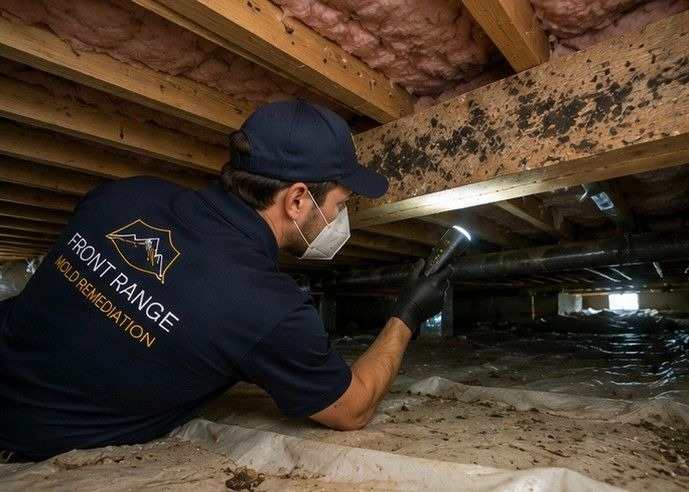
Front Range Mold Remediation serves homeowners throughout Rockrimmon — an established northwest Colorado Springs neighbourhood where the combination of natural open space proximity, mid-century residential construction and northwest-facing terrain creates moisture conditions that make professional mold assessment more relevant than the neighbourhood’s well-maintained appearance suggests. Rockrimmon’s backing onto natural drainage channels, its older housing stock and the specific moisture dynamics of northwest Colorado Springs terrain generate crawl space, basement and attic mold in properties that look perfectly maintained from the street. Our IICRC certified team provides certified mold inspection, removal and clearance documentation across every Rockrimmon street and property type.
Rockrimmon — Northwest Colorado Springs’ Established Neighbourhood and Its Specific Moisture History
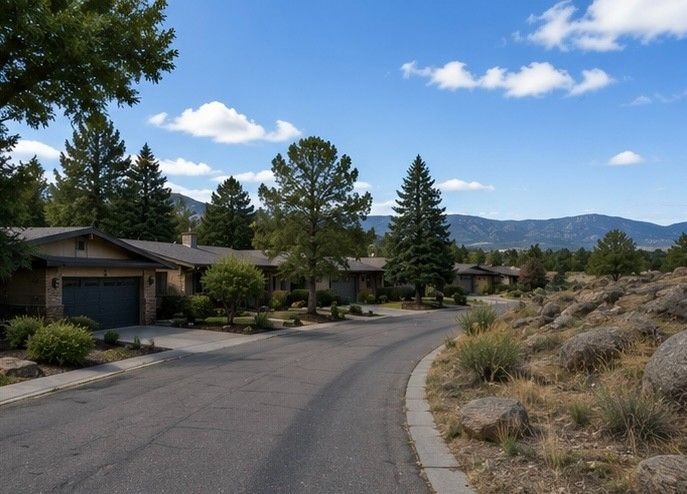
Rockrimmon occupies the northwest quadrant of Colorado Springs — a well-established residential neighbourhood that developed primarily through the 1970s and 1980s and that sits at the interface between the urban fabric of the city and the natural open space that characterises Colorado Springs’ western edge. The neighbourhood is bounded roughly by Garden of the Gods Road to the south, Centennial Boulevard to the east and the open space of the Ute Valley Park and Rockrimmon Open Space to the north and west — giving many Rockrimmon properties direct backing onto natural terrain that provides both recreational access and specific moisture dynamics.
The residential character of Rockrimmon reflects its development era — predominantly single-family homes from the 1970s and 1980s on generous lots with established landscaping, mature trees and the settled character of a neighbourhood that has been home to Colorado Springs families for forty to fifty years. Properties in this area were built to the construction standards of their era — standards that didn’t include the vapour barrier requirements, window well waterproofing specifications or crawl space ventilation standards that became standard practice in subsequent decades.
The neighbourhood’s northwest position in Colorado Springs also creates specific terrain characteristics that affect moisture behaviour. Rockrimmon’s natural drainage channels — the arroyos and drainage corridors that run through and alongside the neighbourhood’s western open space boundary — carry seasonal water from the higher terrain to the northwest during spring snowmelt and heavy rainfall events. Properties adjacent to these drainage features experience ground moisture conditions during wet periods that properties in the flat, fully urban sections of Colorado Springs don’t encounter.
Why Rockrimmon’s Natural Setting and Construction Age Create Specific Mold Conditions
Rockrimmon’s appeal — natural open space, mature landscaping, established neighbourhood character — comes with moisture dynamics that its mid-century construction was never designed to fully manage.
Natural Drainage Channels and Seasonal Ground Moisture
Rockrimmon’s western boundary backs onto natural drainage corridors that carry seasonal moisture from higher terrain during Colorado Springs’ spring snowmelt and summer monsoon periods. Properties adjacent to these drainage features experience elevated ground moisture during wet seasons that pushes against foundation walls, seeps into crawl spaces through inadequate vapour barriers and elevates the ambient humidity in below-grade spaces above what urban-centre properties in drier Colorado Springs locations experience. The seasonal nature of this moisture means properties can appear dry for most of the year while experiencing significant moisture events during the peak spring and summer periods that generate the mold growth discovered months later.
Mid-Century Crawl Space Construction
Without Modern Vapour Barriers Rockrimmon’s 1970s and 1980s housing stock frequently has crawl space foundations where vapour barriers were either not installed, installed inadequately or have since degraded to the point of ineffectiveness. Crawl spaces beneath Rockrimmon properties that back onto natural terrain have been accumulating ground moisture evaporation for forty to fifty years — in many cases without any professional assessment since the property was built. The floor joist systems in these properties have had decades of unmanaged moisture exposure and are among the most consistent sources of significant undiscovered mold contamination we encounter in northwest Colorado Springs.
Mature Tree Canopy and Reduced Solar Drying of Foundation Areas
Rockrimmon’s established landscaping includes mature trees that provide shade and natural character — and that reduce the solar exposure of foundation areas and ground adjacent to the house that solar drying would otherwise help manage. Shaded foundation perimeters stay damp longer after rain and snowmelt than exposed foundations in open terrain — maintaining the ground moisture conditions around the house that feed crawl space humidity and create the moisture pathways through foundation walls that generate basement mold in properties with tree coverage.
1970s and 1980s Window Well Drainage Failures
Rockrimmon properties with basement windows frequently have original window well systems — corrugated metal or concrete block wells with original drainage gravel — that are now forty to fifty years old and functioning poorly. Failed window well drainage allows snow accumulation and rainfall to pond against basement windows and eventually enter basement spaces through deteriorated window seals or overwhelmed drainage. Window well water intrusion is one of the most common sources of seasonal basement moisture we identify in Rockrimmon basement assessments.
Aging Attic Ventilation in Original Construction
Rockrimmon’s 1970s and 1980s construction used attic ventilation standards of that era — typically gable vents and limited soffit venting that don’t provide the cross-ventilation that modern ridge-to-soffit systems achieve. As these original ventilation systems have aged — gable vent screens deteriorating, soffit areas becoming blocked by insulation upgrades — the effective ventilation rate in Rockrimmon attics has decreased from its already-modest original design level. Reduced attic ventilation in Colorado Springs winters creates the condensation conditions on roof decking that generate attic mold in properties where the original ventilation was adequate when new but is no longer performing at even that modest standard.
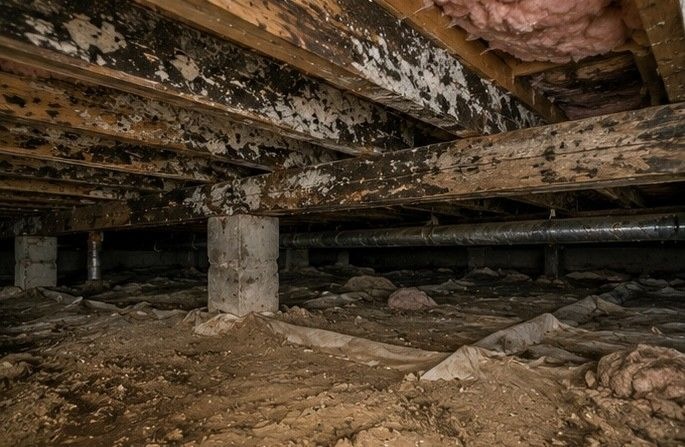
Rockrimmon’s natural setting is genuinely one of Colorado Springs’ most attractive residential environments. The moisture dynamics that come with that setting — drainage channel proximity, mature tree canopy, natural terrain backing — are manageable with appropriate professional assessment and moisture control. They’re just not something that mid-century construction anticipated or equipped these properties to handle without periodic professional attention.
Mold Services We Provide Throughout Rockrimmon Colorado Springs
Every service below is available across Rockrimmon — from crawl space assessments in mid-century builds with original vapour barriers to attic mold removal in properties where 1970s ventilation standards have degraded over five decades.
Mold Removal
Rockrimmon mold removal addresses the specific contamination patterns of mid-century construction — crawl space floor joist systems, original basement wall assemblies and attic structures with 1970s and 1980s framing that has been exposed to northwest Colorado Springs moisture dynamics for decades.
Mold Inspection & Testing
Rockrimmon property inspections specifically assess crawl spaces, original basement wall systems and attic ventilation performance — the three areas where mid-century construction and natural terrain proximity create the most consistent mold risk in this northwest Colorado Springs neighbourhood.
Black Mold Removal
Black mold in Rockrimmon’s crawl space floor joist systems — where ground moisture from natural drainage channels has been accumulating in poorly ventilated sub-floor spaces for decades — represents some of the most advanced crawl space contamination we encounter in Colorado Springs.
Mold Damage Restoration
Post-removal restoration in Rockrimmon’s mid-century properties addresses the specific structural elements common in 1970s and 1980s construction — dimensional lumber framing, original insulation systems and basement wall assemblies that reflect their era’s building standards.
Crawl Space Mold Removal
Crawl space mold removal is the single most common remediation service we provide in Rockrimmon — original vapour barriers, natural drainage channel proximity and decades without inspection create some of the most significant crawl space contamination in northwest Colorado Springs.
Basement Mold Removal
Rockrimmon’s original basement wall systems and aging window well drainage create basement moisture conditions that generate mold in properties whose finished basement spaces appear perfectly normal until moisture mapping equipment reveals what’s happening behind the wall surface.
Attic Mold Removal
Original 1970s and 1980s attic ventilation in Rockrimmon properties has been degrading for decades — and the condensation-driven mold that reduced attic ventilation generates is a consistent finding on inspection jobs throughout this northwest Colorado Springs neighbourhood.
Commercial Mold Remediation
Rockrimmon’s neighbourhood commercial areas — including established retail and service businesses — require commercial mold remediation scheduled around operating hours with documentation appropriate for commercial property insurance claims.
Emergency Mold Removal
Emergency mold response covers all of Rockrimmon 24/7 — rapid response to the water damage events and sudden moisture situations that require immediate containment before mold establishes in Rockrimmon’s mid-century building materials.
Water Damage Mold Removal
Water damage events in Rockrimmon — from window well failures and drainage channel overflow to internal plumbing failures in ageing 1970s and 1980s systems — generate mold that requires combined water damage and mold assessment to fully scope and document.
Other Colorado Springs Neighbourhoods We Serve:
Why Rockrimmon Homeowners Choose Front Range Mold Remediation
We Understand Northwest Colorado Springs Moisture Dynamics
The moisture patterns in Rockrimmon — drainage channel proximity, natural terrain backing, mature tree canopy effects — are specific to northwest Colorado Springs and distinct from the moisture patterns in the city’s flat urban sections. Our Rockrimmon assessments account for these terrain-specific moisture sources rather than applying the same assessment assumptions we’d use for a Briargate finished basement or a Downtown historic building.
Honest Assessment of What Decades of Unmanaged Moisture Has Produced
Rockrimmon properties with crawl spaces and attics that haven’t been assessed in decades sometimes present mold scenarios that are more extensive than the homeowner anticipated. We document scope honestly and completely before any work begins — including what’s most and least urgent — so Rockrimmon homeowners can make informed decisions about remediation scope and timing rather than discovering the full picture incrementally as work proceeds.
Full Crawl Space Entry and Assessment — Not Hatch Access Only
Rockrimmon’s most significant mold risk is in crawl spaces where floor joist contamination extends far beyond what’s visible from the access hatch. Every Front Range crawl space assessment in Rockrimmon involves full physical entry and complete footprint coverage — because the most advanced contamination in Rockrimmon crawl spaces is consistently furthest from the access point, in the areas adjacent to the natural terrain boundaries where ground moisture concentration is highest.
Vapour Barrier Assessment and Replacement Within Remediation Scope
Crawl space mold removal in Rockrimmon that doesn’t address the vapour barrier — the primary mechanism allowing ground moisture from natural drainage channels to enter the crawl space environment — is remediation that will require repeating within a few seasons. Every Front Range Rockrimmon crawl space job includes vapour barrier assessment and replacement where the existing barrier is failed or inadequate.
Frequently Asked Questions
How does Rockrimmon’s natural open space proximity specifically affect my property’s mold risk?
Properties that back onto Rockrimmon’s natural drainage corridors and open space boundary experience seasonal ground moisture elevation from snowmelt and rainfall runoff that flows toward the neighbourhood from higher terrain to the northwest. That seasonal moisture elevates the humidity in crawl spaces and against foundation walls during spring and summer — creating the sustained moisture conditions that support mold growth in sub-floor spaces and basement wall assemblies that were built to 1970s standards without modern vapour barriers. The effect is most pronounced for properties directly adjacent to drainage channels and diminishes with distance from the natural terrain boundary — but even properties several streets from the open space edge experience ground moisture conditions that differ from the fully urbanised sections of Colorado Springs. Our crawl space mold removal team assesses the full crawl space footprint of Rockrimmon properties accounting for terrain proximity as a specific risk factor.
My Rockrimmon crawl space has never been inspected — should I be concerned?
If your Rockrimmon property is from the 1970s or 1980s and the crawl space hasn’t been professionally inspected since construction, concern is warranted — not panic, but concern sufficient to warrant investigation. A 40 to 50-year-old crawl space in northwest Colorado Springs with original or degraded vapour barriers, proximity to natural drainage channels and no inspection history has had ample time and adequate moisture conditions to develop significant floor joist mold contamination that hasn’t produced a single visible sign in the living spaces above. Professional inspection establishes what’s actually present — which is always more useful than assumption, in either direction.
I can smell something musty in my Rockrimmon home but only in certain rooms — what does that indicate?
Room-specific musty odours in Rockrimmon properties most commonly indicate mold directly below the affected room in the crawl space — floor joist contamination beneath a specific section of the house that’s producing spores and VOCs that migrate upward through the floor assembly into the room above. The specificity of the smell to certain rooms rather than the whole house is actually useful diagnostic information — it suggests the contamination may be localised beneath the affected room rather than distributed across the full crawl space. Our mold inspection and testing team can assess both the crawl space and the affected room’s air quality to establish the extent of contamination before recommending removal scope.
How do I know if my Rockrimmon basement window wells are contributing to moisture problems?
Window well drainage failure signs include water staining on the interior face of basement windows following rain or snowmelt, efflorescence on the basement wall surface beneath window openings, soft or discoloured carpet or flooring at the base of basement exterior walls and a musty smell that’s strongest near basement windows. In Rockrimmon properties where window wells are original 1970s or 1980s installations, degraded drainage gravel and deteriorated window seals are common — and the seasonal water intrusion they allow has been contributing to basement moisture conditions that generate mold in the wall assembly around the affected windows. Window well drainage correction is typically part of the moisture source recommendations that follow our basement mold assessment in Rockrimmon properties.
Does Rockrimmon’s mature tree canopy affect attic mold risk as well as ground moisture?
Indirectly — yes. Tree canopy shade that reduces solar drying of ground adjacent to foundations also reduces the solar warming of roof surfaces that would otherwise help manage moisture in roof assemblies during cool weather. In winter and early spring, Rockrimmon roof sections under heavy tree canopy stay cooler than exposed sections — which affects the condensation dynamics on the underside of the roof decking in attic sections above shaded areas. Combined with the original low-capacity ventilation typical of Rockrimmon’s 1970s and 1980s rooflines, this can produce attic mold in sections of the roof assembly that are specifically associated with tree canopy shade rather than uniform across the whole attic.
Concerned about crawl space or basement mold in your Rockrimmon Colorado Springs property? Our basement mold removal team handles both below-grade mold scenarios across all of northwest Colorado Springs — contact us for a free estimate.
Rockrimmon’s Natural Setting Is Worth Protecting — Starting With What’s Underneath Your Home
Rockrimmon’s position at the interface of urban Colorado Springs and natural northwest terrain creates moisture conditions that mid-century construction was never fully equipped to manage. Front Range Mold Remediation provides certified mold inspection, removal and clearance documentation across all of Rockrimmon — free estimates, full crawl space entry and assessment, vapour barrier management within remediation scope and written clearance documentation before sign off. Same week availability and 24/7 emergency response across the full neighbourhood.
Serving all of Rockrimmon — northwest Colorado Springs expertise, certified process, documented results.
Want to understand how natural terrain proximity affects mold risk in Rockrimmon and other northwest Colorado Springs properties? Read our guide on Emergency Mold Removal After a Walkout Basement Flood in Rockrimmon.