
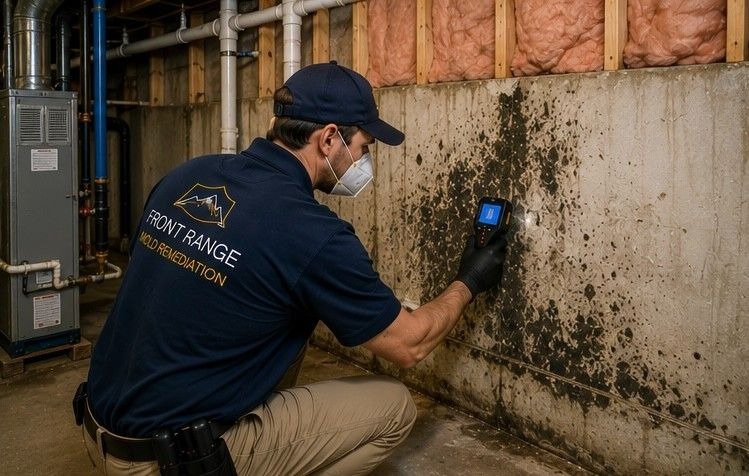
Powers Corridor Colorado Springs High Density Development Where Shared Infrastructure Creates Shared Mold Risk
Front Range Mold Remediation serves homeowners, tenants and property managers throughout the Powers Corridor — one of Colorado Springs’ most densely populated residential stretches and a neighbourhood where the combination of high development density, aging 1990s and 2000s suburban infrastructure and a mix of property types creates mold risk that affects more people per square mile than almost anywhere else in the city. When shared plumbing fails, shared drainage backs up or shared wall construction allows moisture to migrate between units, the Powers Corridor’s density means multiple properties are affected simultaneously before any single owner identifies the source. Our IICRC certified team provides certified mold inspection, removal and full clearance documentation across every residential and commercial property type throughout the Powers Corridor.
Powers Corridor — Colorado Springs’ Eastern Development Spine and What Density Means for Mold
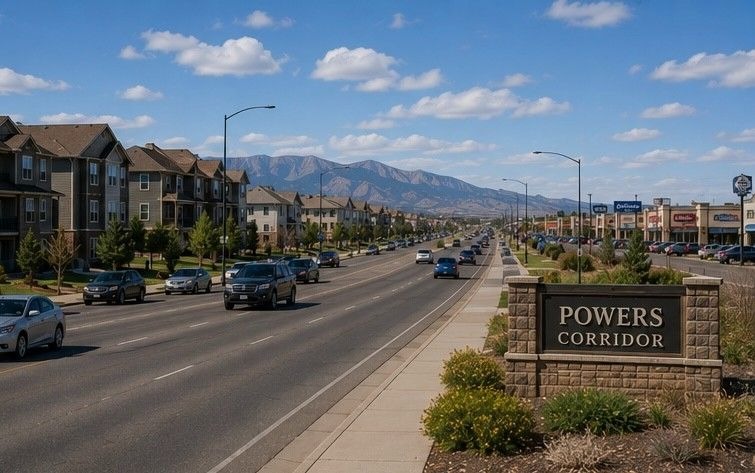
The Powers Corridor runs along Powers Boulevard — Colorado Highway 21 — on the eastern side of Colorado Springs, stretching from approximately Constitution Avenue in the north to Bradley Road in the south. It’s one of the most commercially and residentially active corridors in the city — a dense mix of retail centres, apartment complexes, townhome developments, single-family subdivisions and commercial properties that developed rapidly through the 1990s and 2000s as Colorado Springs’ eastern growth boundary expanded.
The residential character of the Powers Corridor is defined by density and variety — apartment complexes of fifty to two hundred units sit adjacent to townhome developments and single-family subdivisions, all developed within roughly the same two-decade window and all now hitting the infrastructure maintenance period that 20 to 30 year old suburban development tends to produce. HVAC systems are at or past first replacement cycles, plumbing supply lines are in the age range where failures become more common and drainage infrastructure that was designed for the development’s original build-out is now managing the full load of a mature, densely occupied residential area.
The military community from Fort Carson and Peterson Space Force Base contributes significantly to the Powers Corridor’s rental population — creating the same rotation dynamic seen elsewhere in Colorado Springs, compounded by the density of multi-unit rental properties in this corridor where one property manager may be responsible for dozens of units across several buildings simultaneously.
Why the Powers Corridor’s Density Creates Mold Conditions That Spread Beyond Single Properties
High residential density amplifies mold risk — when infrastructure fails in a dense corridor like Powers Boulevard, the moisture event affects multiple properties before anyone identifies the source.
Aging 1990s and 2000s Plumbing Infrastructure
Hitting First Failure Cycle The Powers Corridor’s residential development from the 1990s and 2000s is now at the age where original plumbing systems begin producing their first significant failures — polybutylene supply lines that were installed in 1990s construction and subsequently recalled for failure risk, PVC drain lines at joint connections that are beginning to seep, water heater tanks approaching or past their expected service life. In a dense corridor where these systems were installed across thousands of units in the same construction period, failures cluster temporally — many properties experiencing first-generation plumbing failures within the same window, generating water damage and mold events across the corridor simultaneously.
Shared Wall and Shared System Multi-Unit Development
Powers Corridor apartment complexes and townhome developments have shared wall construction, shared drainage stacks, shared HVAC systems and shared building envelopes where a moisture event in one unit creates pathways into adjacent units through shared structural elements. A plumbing failure on an upper floor of a Powers Corridor apartment building affects multiple units below it before the source is identified — and mold that establishes in the shared wall cavities affected by that event doesn’t respect the unit boundaries that define individual tenant responsibility.
High Tenant Turnover and Inspection Gaps in Rental Properties
The Powers Corridor’s high proportion of rental properties — both apartments managed by large property management companies and smaller investor-owned rentals — creates inspection gaps that single-owner occupied properties don’t have. Tenant turnover in Powers Corridor rentals often prioritises cosmetic preparation between tenancies over structural moisture assessment — a pattern that allows developing moisture problems in wall assemblies, crawl spaces and bathroom wall cavities to accumulate across multiple tenancy cycles before anyone investigates behind the finished surface.
Density-Related Drainage Infrastructure Stress During Peak Events
The Powers Corridor’s drainage infrastructure manages runoff from one of Colorado Springs’ most densely developed sections of the city — and during peak Colorado Springs spring snowmelt events and summer monsoon rainfall, that infrastructure experiences stress that creates backup events in the lowest-grade properties and drainage-adjacent units. Sewage backup events in dense residential corridors generate biological contamination alongside moisture — requiring biohazard-level remediation protocols rather than standard water damage response.
HVAC Systems Distributing Mold Spores Across
Multi-Unit Buildings Large apartment buildings in the Powers Corridor frequently have shared HVAC systems serving multiple units from central air handling equipment. A mold contamination event in one unit that generates elevated spore concentrations in the air can be distributed throughout the connected units by a shared HVAC system that continues running through the contamination event. By the time mold is identified in one Powers Corridor apartment unit, the air quality in connected units may already be affected by distributed spores from the source contamination.
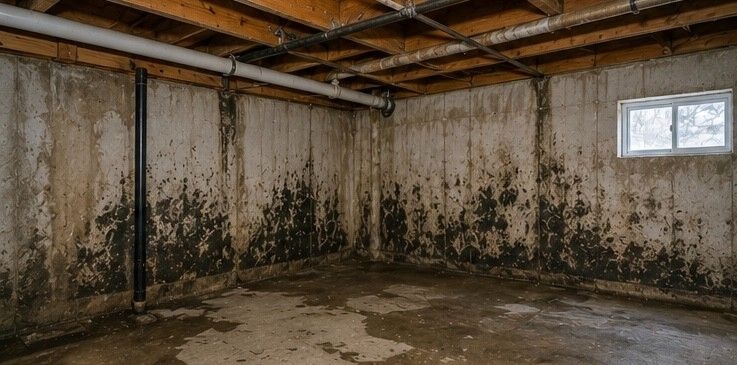
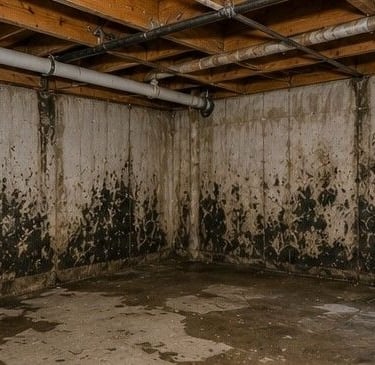
The Powers Corridor’s density is both its residential appeal and its primary mold risk amplifier. What affects one property here tends to affect adjacent properties — and the infrastructure that serves the corridor does so at a scale where individual property failures have collective consequences.
Mold Services We Provide Throughout Powers Corridor Colorado Springs
Every mold service below is available across this neighbourhood — from certified inspection and testing to emergency response and full structural restoration across all Colorado Springs property types.
Mold Removal
Powers Corridor mold removal covers the full range of property types in this dense east Colorado Springs corridor — from single-family subdivisions to multi-unit apartment complexes where shared wall contamination requires whole-building assessment rather than isolated unit treatment.
Mold Inspection & Testing
Powers Corridor property inspections assess the specific failure modes of 1990s and 2000s suburban construction — aging plumbing systems, shared building envelope performance and HVAC distribution risk in multi-unit buildings.
Black Mold Removal
Black mold in Powers Corridor properties most commonly follows the undetected plumbing failures — polybutylene supply line failures, seeping drain connections — that create sustained moisture in wall cavities of 1990s and 2000s builds.
Mold Damage Restoration
Post-removal restoration in Powers Corridor properties covers the modern construction materials typical of 1990s and 2000s suburban development — restoring affected areas to the same standard as the surrounding unaffected construction.
Crawl Space Mold Removal
Crawl space vapour barrier performance in Powers Corridor properties varies considerably — and sub-floor mold in this corridor’s crawl space foundation properties has been accumulating since original construction in buildings that have never had a dedicated crawl space assessment.
Basement Mold Removal
Basement mold in Powers Corridor’s townhome and single-family developments reflects the moisture management practices of their 1990s and 2000s construction period — finished basements with vapour management gaps that have been generating condensation-driven mold since the original fit-out.
Attic Mold Removal
Attic mold in Powers Corridor’s 1990s and 2000s residential stock reflects the ventilation standards and construction practices of that development era — now twenty to thirty years into service without the assessments that would identify developing condensation issues before they become significant.
Commercial Mold Remediation
Powers Corridor’s active commercial strip — retail centres, medical offices, restaurants and service businesses — requires commercial mold remediation scheduled around operations with documentation appropriate for commercial insurance claims and regulatory compliance.
Emergency Mold Removal
Emergency mold response covers all of the Powers Corridor 24/7 — particularly important in this dense corridor where plumbing failures in multi-unit buildings require rapid containment before moisture spreads through shared wall assemblies to adjacent units.
Water Damage Mold Removal
Removal Water damage events in the Powers Corridor — from first-generation plumbing failures in 1990s and 2000s builds to drainage backup events during peak Colorado Springs rainfall — generate mold in the shared construction of dense residential development that requires whole-building rather than single-unit assessment.
Other Colorado Springs Neighbourhoods We Serve:
Why Powers Corridor Homeowners and Property Managers Choose Front Range Mold Remediation
We Handle Multi-Unit Assessment — Not Just Single Property Inspection
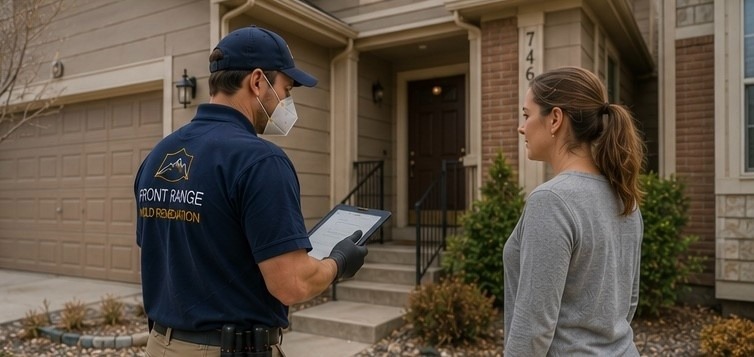
Powers Corridor’s dense multi-unit residential developments require assessment approaches that account for shared wall contamination, shared system failures and HVAC distribution risk across connected units. We conduct multi-unit assessments in Powers Corridor apartment and townhome buildings — establishing whether contamination from a source unit has migrated into adjacent units before concluding that a single-unit remediation scope is sufficient.
IICRC Certified Process Regardless of Property Type
Ownership Structure Whether your Powers Corridor property is owner-occupied, investor-owned or managed by a large property management company, the same IICRC certified remediation process applies. We don’t adapt the standard based on ownership structure — the containment, removal, treatment and clearance testing process is the same for a single-family home on a Powers Boulevard side street as it is for a 100-unit apartment complex on the corridor itself.
Property Management Documentation for Large Rental Portfolios
Powers Corridor landlords managing multiple units in apartment or townhome developments need remediation documentation that meets the requirements of property management compliance, tenant habitability obligations and commercial property insurance claims. We produce documentation structured for property management contexts — clearly identifying affected units, cause assessment, remediation scope per unit and post clearance results — in formats that property managers can file and produce on request.
Emergency Response Calibrated for Dense Multi-Unit Properties
Emergency mold response in a Powers Corridor apartment building requires different coordination than a single-family residential emergency — tenant notification, access management across multiple units and containment that prevents spread through shared systems while respecting the occupied status of adjacent units. Our commercial and multi-unit emergency response protocols are designed for exactly this context.
Frequently Asked Questions
If mold is found in one unit of my Powers Corridor apartment building, do I need to assess the whole building?
In most Powers Corridor multi-unit buildings — yes, adjacent unit assessment is warranted. Shared wall construction, shared drainage stacks and shared HVAC systems create pathways for moisture and spores to migrate from a source unit to adjacent units before the source event is identified. Assessing only the unit where mold is visible misses contamination that may already be established in the shared wall cavities connecting to adjacent units. Our commercial mold remediation team conducts multi-unit Powers Corridor assessments that establish the full scope of contamination across a building rather than concluding scope based on single-unit visual inspection.
My Powers Corridor townhome shares walls with two adjacent units — how does that affect my mold risk?
Shared wall construction in Powers Corridor townhome developments means that a plumbing failure, bathroom ventilation problem or drainage issue in either adjacent unit creates moisture pathways into the shared wall cavity that your unit’s interior wall surface is the other face of. Mold growing inside that shared wall cavity affects your indoor air quality regardless of whether the source event was in your unit — because the shared cavity is an undivided space that both properties’ wall surfaces border. If either of your adjacent townhome neighbours has had a water event or identified mold, your shared wall cavities warrant assessment as part of the same inspection scope.
How do I know if my Powers Corridor property’s plumbing system is at risk of the failures common in 1990s construction?
Properties built during the 1990s in the Powers Corridor that still have original polybutylene supply lines — a grey or silvery flexible plastic tubing used extensively in that era before being recalled for failure risk — are at elevated risk of supply line failures that produce the sustained moisture events most likely to generate significant mold growth. A plumber can identify whether your property has polybutylene supply lines during a standard inspection. Beyond polybutylene, 1990s PVC drain connections at joint unions are also worth professional assessment if they haven’t been checked recently — seeping joints at these connections are a consistent source of the slow sustained moisture events that generate mold under flooring and in basement wall assemblies.
As a landlord with multiple Powers Corridor units, what documentation do I need when a tenant reports mold?
When a tenant in any of your Powers Corridor units reports mold in writing, the documentation sequence that protects your legal position is: professional inspection within a reasonable timeframe following the written report, written inspection report documenting findings and cause, professional remediation to IICRC standards where contamination is confirmed, and post clearance testing confirming safe conditions before the unit is reoccupied. This documentation sequence demonstrates good faith response and due diligence — which is what matters if the situation escalates. Our mold inspection and testing team provides rapid assessment with written reports structured for landlord compliance documentation purposes.
What’s the most common mold scenario we see in Powers Corridor properties?
Bathroom wall cavity mold from inadequate exhaust ventilation is the single most consistent finding in Powers Corridor units across all property types — apartments, townhomes and single-family alike. Bathroom exhaust fans that vent into the wall cavity or ceiling space rather than directly to exterior — a construction shortcut common in the 1990s and 2000s development era — deposit warm humid air inside the wall or ceiling assembly where it condenses on cold surfaces and generates mold growth that’s invisible from the finished bathroom until the contamination is well established. If your Powers Corridor property has a bathroom exhaust fan that doesn’t visibly vent to the exterior, the wall or ceiling cavity it vents into warrants inspection.
Managing multiple Powers Corridor units with a mold situation that affects more than one property? Our emergency mold removal team handles multi-unit response across the full Powers Corridor — contact us for a coordinated assessment.
Powers Corridor Mold Problems Don’t Stay Contained to One Property — Let’s Establish the Full Scope
The Powers Corridor’s density means that what starts as a single property moisture event rarely stays that way when shared walls, shared drainage and shared HVAC systems connect units throughout a building. Front Range Mold Remediation provides certified mold inspection, removal and clearance documentation across every property type in the Powers Corridor — free estimates, multi-unit assessment capability, property management documentation for landlords with large portfolios and 24/7 emergency response for the plumbing failures and drainage events that drive most urgent mold calls in this east Colorado Springs corridor.
Serving all of Powers Corridor — single properties and multi-unit buildings, same certified standard throughout.
Want to understand how shared wall construction in Colorado Springs apartment and townhome developments creates mold risk that crosses unit boundaries? Read our guide on What Causes Water Damage Mold in Powers Corridor's Newer Homes.