
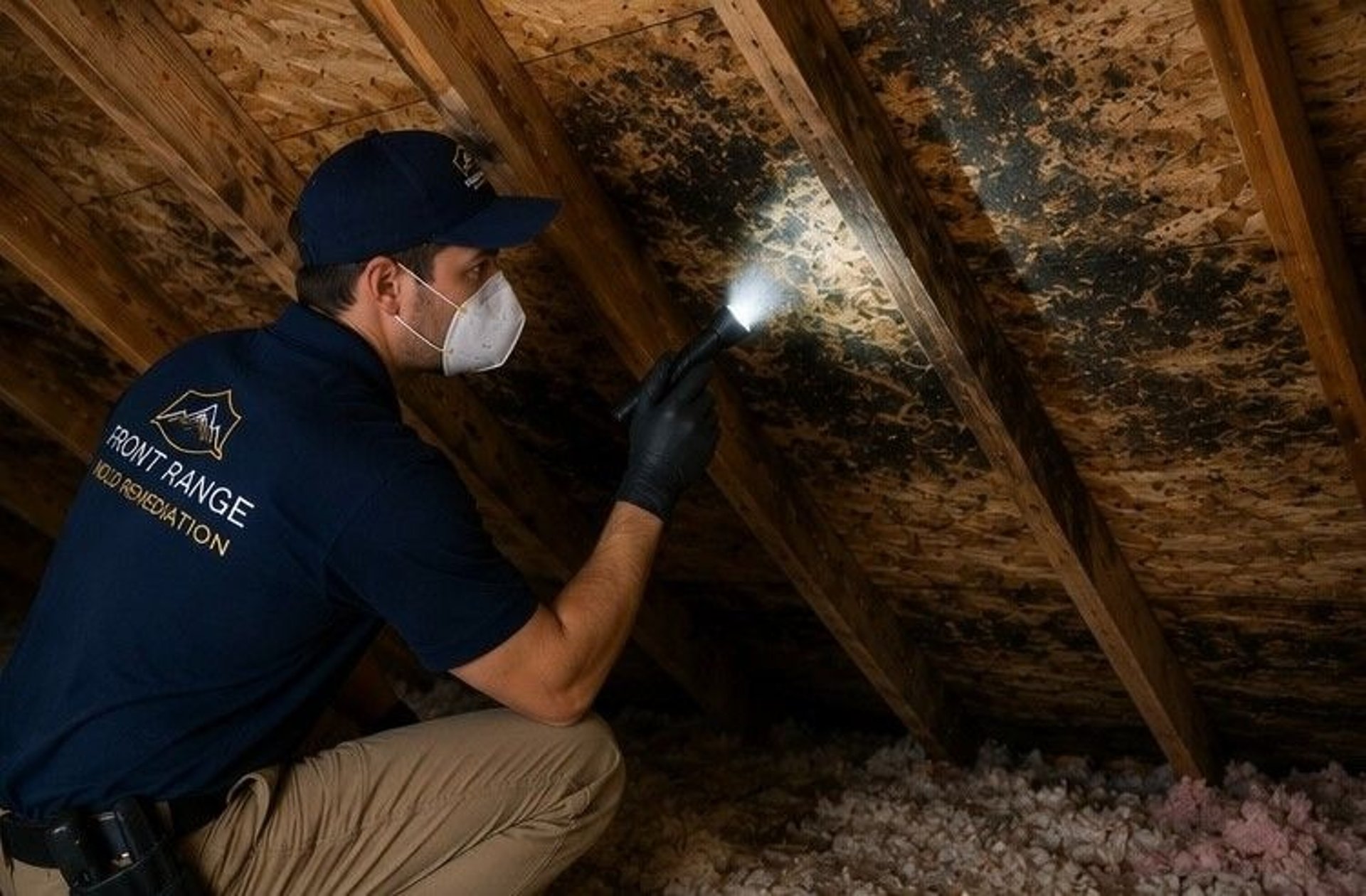
Attic Mold Removal Colorado Springs The Problem Above Your Ceiling That Most Homeowners Never See Coming
Front Range Mold Remediation provides certified attic mold removal services across Colorado Springs for homeowners dealing with one of the most consistently underdetected mold problems in local residential properties. Attic mold in Colorado Springs homes develops from a specific combination of inadequate ventilation, roof leak moisture and winter condensation — and it spreads across roof decking, rafters and insulation for months before any sign appears in the living spaces below. By the time attic mold is discovered it’s almost always more extensive than anyone expected — because nobody checks the attic until a roof inspection, a sale or a renovation finally forces someone to look. Our IICRC certified team assesses, contains and fully remediates attic mold across every Colorado Springs neighbourhood with written clearance documentation before sign off.
Why Attic Mold in Colorado Springs Gets So Advanced Before Anyone Finds It
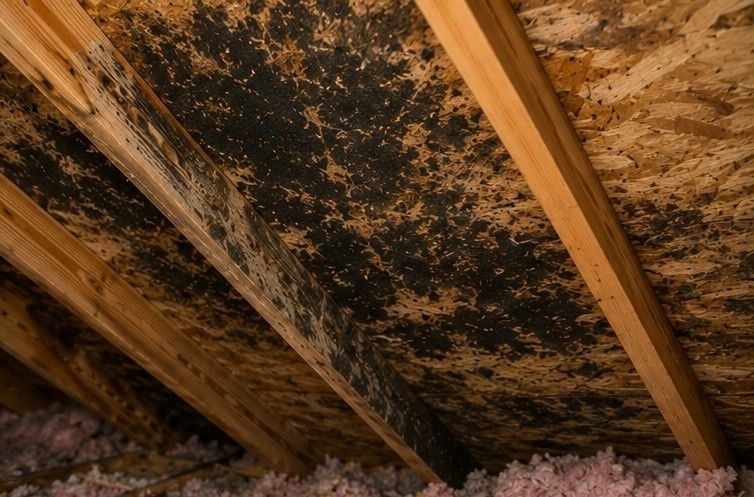
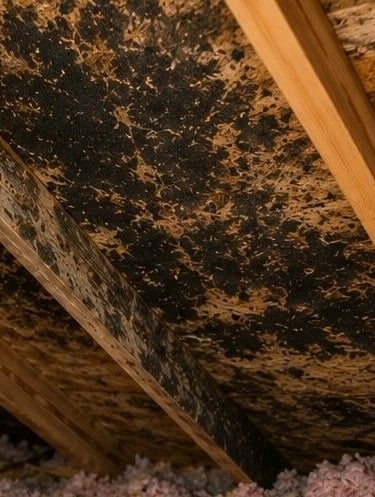
Attic mold has a structural advantage over every other type of mold problem in a Colorado Springs home — it’s above the ceiling, out of sight, rarely accessed and produces almost no detectable signs in the living spaces below until the contamination is already well established across significant areas of the roof structure. Here’s what drives most attic mold discoveries in Colorado Springs properties.
01. A roof inspection or pre-sale inspection flagged potential attic mold
Roofers and home inspectors access attics. Most homeowners don’t. When an attic mold flag appears in a roof inspection report or pre-sale assessment it’s almost always been developing for months or years before that inspection revealed it. The flag is not the beginning of the problem — it’s the first documentation of a problem that’s been spreading silently since the moisture conditions that caused it first established.
02. You had a roof leak that was repaired but the attic wasn’t assessed afterward
A repaired roof doesn’t undo the moisture damage that the leak deposited in the attic before it was fixed. Roof decking, rafter framing and attic insulation that absorbed water from a leak — however briefly — can retain that moisture long enough for mold to establish itself after the leak source is sealed. If your Colorado Springs property had a roof leak repaired in the last two to three years without a subsequent attic mold assessment, the attic warrants inspection.
03. Your energy bills have increased without an obvious explanation
Attic insulation that’s been saturated by moisture — from roof leaks, condensation or ice dam infiltration — loses its thermal performance substantially. If your Colorado Springs home’s heating or cooling costs have increased noticeably without changes in usage patterns, degraded attic insulation from moisture exposure is one of the most common causes — and degraded attic insulation almost always accompanies mold growth in the affected sections.
04. You’ve noticed water staining on upper level ceilings
Water staining on the ceiling of an upper floor room in a Colorado Springs home indicates water has reached the ceiling surface from above — from roof leak infiltration or ice dam water intrusion. Even staining that appears old and dry indicates a moisture event that reached that level — and the attic insulation and decking above that stain almost certainly absorbed significant moisture during the event that produced it.
05. The attic hasn’t been accessed since you purchased the property
If you’ve owned your Colorado Springs property for more than a few years and haven’t physically accessed the attic in that time, you have no current information about what’s happening up there. Attic ventilation degrades over time as baffles become blocked, soffit vents get covered during insulation upgrades and ridge vents deteriorate — and degraded attic ventilation is the most consistent cause of attic mold development in Colorado Springs properties regardless of roof condition.
06. You’ve had ice dams on your roof during Colorado Springs winters
Ice dams form when heat loss through the attic melts roof snow and the meltwater refreezes at the cold eaves. Water backed up behind ice dams infiltrates under shingles and into the roof deck and attic insulation — creating exactly the localised moisture event that generates mold growth in the eave sections of Colorado Springs attics. If your property has experienced ice damming, the attic needs inspection at the eave perimeter specifically.
Attic mold in Colorado Springs rarely announces itself. It spreads across roof decking, consumes rafter framing and degrades insulation without producing a single visible sign in the living spaces below — until the structural damage becomes significant enough that it can’t be ignored any longer.
Attic mold removal requires working in confined, hot, low-clearance spaces with active structural considerations — roof decking integrity, rafter condition and insulation assessment alongside the mold remediation itself. Here’s our process for every attic job across Colorado Springs.
How Front Range Mold Remediation Removes Attic Mold From Colorado Springs Properties
Step 4: Ventilation Correction and Clearance Testing
Every Front Range attic mold job concludes with a ventilation assessment and recommendations — or corrections where ventilation improvements fall within our scope — to address the airflow deficiency that allowed mold to develop. Post clearance air testing confirms safe spore levels in the attic before new insulation is installed and the hatch is closed. Written clearance documentation confirms the attic is remediated and ready for insulation reinstatement.
Step 1: Full Attic Assessment
Mapping Contamination and Identifying the Cause We physically access and assess the entire attic — not just the area visible from the hatch. Contamination on roof decking and rafters is mapped across the full attic footprint, moisture levels in structural elements are measured and the ventilation configuration is assessed to identify whether inadequate airflow is the primary driver of mold development. For Colorado Springs attics we specifically check eave sections for ice dam moisture damage and ridge ventilation for blockage or degradation that’s restricting the airflow the attic needs.
Step 2: Containment
Preventing Spore Dispersal Into the Living Spaces Below Before contaminated attic materials are disturbed we seal the attic access hatch and establish containment at ceiling penetrations — light fixtures, ductwork, plumbing vents — that provide pathways for spores to travel downward into the living spaces below. HEPA air scrubbers manage airborne spores within the attic work environment throughout the removal process.
Step 3: Mold Removal
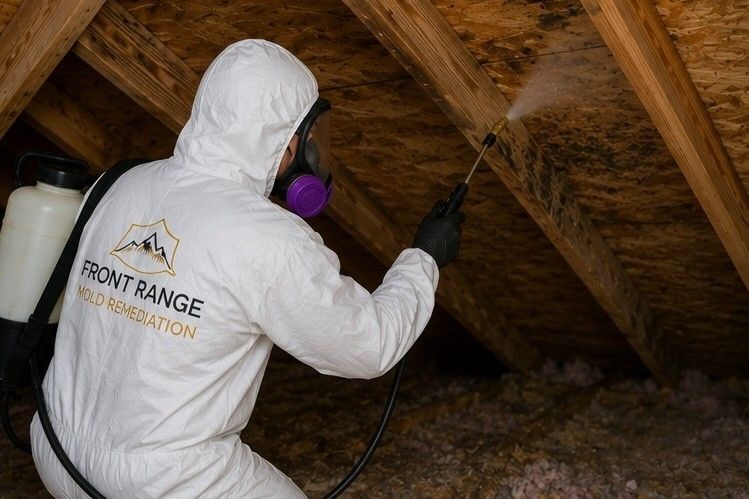
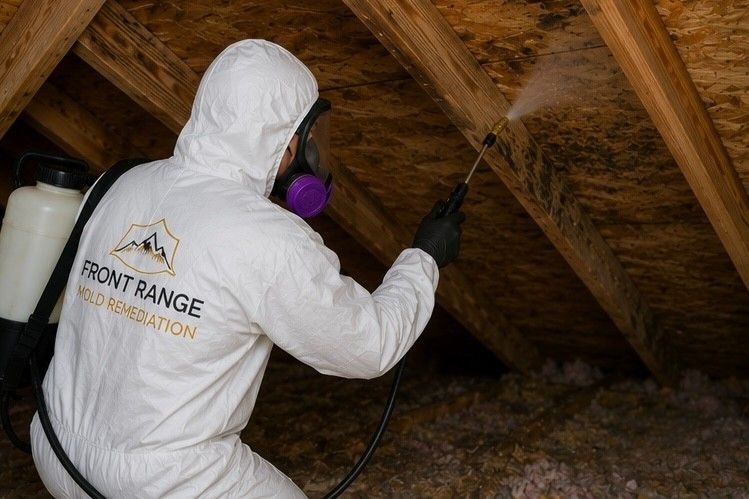
Decking Treatment, Insulation Removal and Rafter Treatment Contaminated attic insulation is removed and disposed of entirely — there is no effective treatment for mold-saturated insulation and leaving it in place recontaminates treated surfaces. Roof decking and rafter surfaces with mold growth are treated with professional grade antimicrobial and fungicidal solutions appropriate for wood surfaces in attic environments. Where roof decking has structural deterioration from long term mold consumption, replacement is identified during assessment and scoped accordingly.
Attic mold removal that doesn’t address ventilation is attic mold removal that will generate a repeat call within two to three years. Fixing the contamination and fixing the cause are both part of every Front Range attic job.
Eight Signs Your Colorado Springs Attic May Have a Mold Problem
Most attic mold signs are detectable from inside the living spaces — without accessing the attic yourself.
1. Water staining on upper floor ceilings that appeared after a Colorado Springs winter
Ceiling staining that developed during or after winter — particularly in the corners of rooms or along exterior walls — indicates water infiltration from above during the cold season. Ice dam water intrusion and roof leak infiltration both produce ceiling staining while depositing moisture in the attic structure above — where mold may already be developing.
2. A musty smell that’s most noticeable on the upper floor of the property
Attic mold spores that migrate downward through ceiling penetrations — light fixtures, ductwork, attic hatch gaps — produce a musty smell that’s most detectable on the upper floor rather than the lower level. If the smell is stronger upstairs than downstairs and doesn’t have an obvious bathroom or kitchen source, the attic is worth inspecting.
3. Higher than expected heating bills during Colorado Springs winters
Attic insulation performance degrades significantly when moisture content rises from roof leak infiltration or condensation. Colorado Springs properties where heating costs have increased notably without changes in occupancy or thermostat settings frequently have moisture-damaged attic insulation — often accompanying active mold growth on the structural surfaces the degraded insulation was covering.
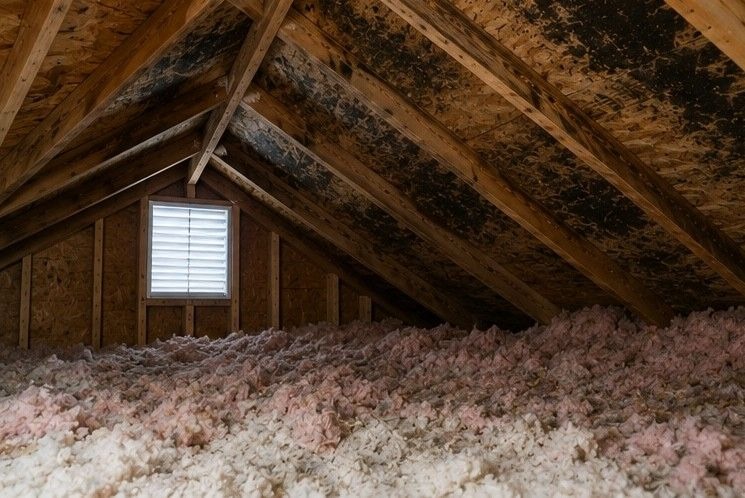
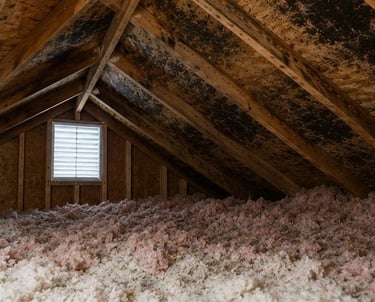
4. Visible dark discoloration on roof decking visible through the attic hatch
If you can see the attic from the hatch without fully entering and there’s visible dark discoloration on the underside of the roof decking — particularly in a pattern that follows the rafter spacing — that’s mold on the roof sheathing. Even a small visible area typically represents more extensive contamination across the full attic footprint.
5. Ice dams forming repeatedly on your Colorado Springs roof
Recurring ice dam formation indicates heat loss through the attic floor assembly that’s warming the underside of the roof unevenly. The same heat loss creates condensation conditions on cold roof decking surfaces during winter — generating the moisture that attic mold requires. Properties with recurring ice dams have both a ventilation problem and a mold risk that compound each other.
6. A home energy audit identified poor attic insulation performance
Energy auditors who identify significant heat loss through the attic floor in Colorado Springs properties are frequently identifying insulation that has been moisture-damaged — either from roof leaks, condensation or ice dam infiltration. Moisture-damaged insulation almost always accompanies mold growth on the structural surfaces it was in contact with.
7. Your attic has roof vents that are blocked, painted over or visibly damaged
Blocked or damaged roof ventilation is the most consistent cause of attic mold in Colorado Springs properties that don’t have active roof leaks. If soffit vents have been covered during insulation upgrades, ridge vents are blocked with debris or gable vents have been sealed, the attic is accumulating the moisture that ventilation would otherwise remove — creating progressive mold conditions with every Colorado Springs winter.
8. The property had a roof replacement without an attic inspection first
Roof replacements that don’t include an attic inspection before new shingles go on miss mold growing on the decking beneath. New shingles over a mold-contaminated deck don’t solve the problem — the mold continues growing on the underside of the deck and spreads further into the rafter framing beneath a brand new roof surface. If your Colorado Springs property had a recent roof replacement without an attic assessment, the attic deserves inspection regardless of the roof condition.
Suspect attic mold in your Colorado Springs property but not sure how to assess it? Our mold inspection and testing team conducts full attic assessments and gives you a written report before any removal decisions are made.
Why Colorado Springs Homeowners Choose Front Range for Attic Mold Removal
We Assess the Full Attic
Not Just What’s Visible From the Hatch Attic mold assessments that are conducted from the access hatch without full physical entry miss contamination remote from the hatch — which is frequently where the most advanced growth is located. We go in, assess the full attic footprint and map contamination across all accessible roof decking and rafter surfaces before establishing scope.
We Address Ventilation as Part of Every Attic Job
Attic mold in Colorado Springs is almost always caused or worsened by inadequate ventilation. Every Front Range attic job includes ventilation assessment and — where improvements fall within our scope — corrections that address the airflow deficiency that allowed mold to develop. A properly ventilated Colorado Springs attic is significantly less susceptible to the condensation and moisture accumulation that generates mold.
Insulation Removal and Reinstatement Handled Within Scope
Attic mold remediation requires removing contaminated insulation before treatment can reach the structural surfaces beneath it — and reinstating new insulation to current R-value standards after clearance testing confirms the attic is clean. We manage both as part of the attic mold remediation scope so you’re not coordinating a separate insulation contractor after the mold job finishes.
Written Clearance Before New Insulation Goes In
We don’t install new attic insulation over a recently remediated attic without post clearance testing confirming safe spore levels first. That sequence — remediate, test, confirm clearance, then insulate — is the standard that protects the new insulation from contamination by any residual spores that surface treatment didn’t fully eliminate.
Attic mold removal requires specific knowledge of Colorado Springs roofing conditions, ventilation requirements and the moisture mechanisms that generate attic contamination locally.
Ready to get your Colorado Springs attic assessed and remediated before the next winter adds another season of moisture to what’s already there? Contact us today for a free estimate.
Attic Mold Removal Across Every Colorado Springs Neighbourhood
Front Range Mold Remediation provides certified attic mold removal across all of Colorado Springs — from older properties in Old Colorado City and Downtown with original roof structures to Broadmoor and Cheyenne Mountain homes where complex rooflines create ventilation challenges that generate attic mold in properties of any age.
Historic Downtown Colorado Springs properties with original roof structures and attic spaces that have never been assessed present attic mold scenarios that require careful navigation of century-old framing alongside modern remediation standards.
Briargate’s residential density includes a significant proportion of properties where soffit vents have been blocked during insulation upgrades — the most common cause of attic mold we encounter in this neighbourhood’s newer residential stock.
Complex rooflines on large Broadmoor properties create multiple attic sections with different ventilation characteristics — and sections with inadequate airflow develop mold independently of sections that are well ventilated, requiring whole-attic assessment rather than targeted spot inspection.
Historic Old Colorado City properties with original roof framing from the late 19th and early 20th century present attic mold on timber that has been accumulating moisture for generations — requiring assessment of structural integrity alongside contamination removal.
Newer Northgate construction with complex rooflines and multiple attic sections presents attic mold scenarios driven by construction-phase ventilation design failures — inadequate ridge-to-soffit ventilation ratios that create condensation conditions in specific attic sections.
Rockrimmon’s mid-century housing stock includes properties where original roof ventilation was minimal by current standards — and decades of inadequate attic airflow have generated mold conditions on roof decking that have been developing undetected for years.
Older Fountain properties with roof structures that have experienced multiple repair interventions over their lifetime frequently present attic mold in localised areas around old repair patches where original ventilation continuity was disrupted during previous roof work.
The Powers Corridor’s mix of residential construction periods means attic conditions range from well-designed modern ventilation systems to completely inadequate original installations — and the older properties in this corridor are among the most consistent sources of significant undetected attic mold in east Colorado Springs.
Black Forest properties under tree canopy experience reduced solar drying of roof surfaces and higher ambient moisture than open terrain properties — conditions that make attic ventilation performance particularly critical and the consequences of ventilation failure more severe.
Mountain-facing roof sections on Cheyenne Mountain properties receive less solar exposure and experience more persistent moisture from mountain weather patterns — creating attic mold risk that’s highest on the north and west facing roof sections where ventilation is most critical.
Frequently Asked Questions
How did mold get into my Colorado Springs attic if I don’t have a roof leak?
The most common cause of attic mold in Colorado Springs properties without active roof leaks is inadequate ventilation — and it’s more prevalent than most homeowners expect. When warm, humid air from the living spaces below rises into the attic and can’t escape through adequate ridge and soffit ventilation, it contacts the cold underside of the roof decking and condenses. That condensation provides the sustained moisture that mold requires — without a single drop of rain ever entering through the roof. Bathroom exhaust fans that vent into the attic rather than through the roof are another consistent cause we encounter regularly in Colorado Springs properties.
Does attic mold affect the structural integrity of my Colorado Springs roof?
Over time — yes. Mold feeds on the cellulose in wood. Roof decking and rafter framing that has sustained mold growth for extended periods loses structural integrity progressively as the wood is consumed. Surface cleaned framing that has been significantly weakened by long term mold growth needs structural assessment before new insulation and roofing materials go back over it. In Colorado Springs properties where attic mold has been developing for multiple years without discovery, structural assessment of roof framing is part of our standard attic remediation scope.
Can attic mold spread to the rest of my Colorado Springs home?
Directly — through ceiling penetrations. Light fixtures, ductwork connections, plumbing vent stack penetrations and attic hatch gaps all provide pathways for mold spores from the attic to enter the living spaces below. Stack effect — the natural upward movement of air through a building — also moves attic air downward through these penetrations at certain pressure conditions. The practical result is that significant attic mold contamination in a Colorado Springs property elevates mold spore concentrations in the living spaces below — often without the occupants identifying the attic as the source. Our mold removal Colorado Springs team assesses upper level living spaces alongside the attic on jobs where ceiling penetrations provide potential migration pathways.
How much does attic mold removal cost in Colorado Springs?
Attic mold removal cost in Colorado Springs depends on the attic square footage affected, whether insulation removal and reinstatement is required, whether structural decking replacement is needed and the extent of ventilation corrections required. Jobs involving surface mold on decking across a portion of the attic with intact insulation typically run $1,500 to $3,500. Full attic jobs with insulation removal, decking treatment across the entire attic footprint and ventilation corrections can reach $4,000 to $8,000. Where structural decking replacement is required costs increase further. We provide a full written estimate after physical attic assessment — because attic mold scope is impossible to establish accurately without going in and looking.
Is attic mold covered by homeowner’s insurance in Colorado Springs?
Coverage depends on cause. Attic mold resulting from a covered roof leak event may be covered under standard Colorado homeowner’s policies as part of the same claim as the roof repair. Attic mold resulting from inadequate ventilation — which is the most common cause in Colorado Springs — is generally treated as a maintenance issue and excluded from standard coverage. Our documentation covers cause assessment clearly — which is what determines coverage applicability for your specific claim.
Need attic mold removed from your Colorado Springs property before winter adds another condensation season to what’s already there? Our emergency mold removal team can respond quickly when the situation is time-sensitive.
Other Mold Services We Offer in Colorado Springs
Attic mold often exists alongside other property moisture issues — here’s what Colorado Springs homes typically need alongside attic remediation.
Mold Removal
Complete physical removal of mold contamination from all affected areas and materials.
Mold Inspection & Testing
Laboratory confirmed identification of black mold before any removal work begins.
Black Mold Removal
Specialist black mold removal with full containment before restoration of affected structural materials.
Mold Damage Restoration
Structural restoration of subfloor and joist systems after crawl space mold removal.
Crawl Space Mold Removal
Below-grade moisture problems that affect crawl spaces and basements simultaneously in Colorado Springs.
Basement Mold Removal
Basement mold removal for Colorado Springs properties with moisture issues at both upper and lower levels.
Commercial Mold Remediation
Mold in a commercial property affects staff, customers and your liability. We work around your schedule.
Emergency Mold Removal
Flood or burst pipe? Mold starts within 48 hours. Our emergency team responds around the clock.
Water Damage Mold Removal
Water intrusion and mold go together. If your property took on water, mold is likely already growing.
Your Colorado Springs Attic Has Been Up There All Winter — When Did You Last Check It?
Most Colorado Springs homeowners haven’t accessed their attic in years. Every winter that passes adds another condensation season to whatever is developing on the roof decking above the ceiling. Front Range Mold Remediation provides certified attic mold removal across every Colorado Springs neighbourhood — free estimates, full attic footprint assessment rather than hatch-access guesswork, insulation removal and reinstatement within scope and written clearance documentation before new insulation goes back in. Same week availability and 24/7 emergency response when a roof event has just occurred.
Above your ceiling. Within our scope. Fixed before the next Colorado Springs winter makes it worse.
Want to understand why Colorado Springs attics develop mold problems so consistently and what the warning signs look like from inside your home? Read our guide on Why Elevation and Newer Construction Change the Risk.