
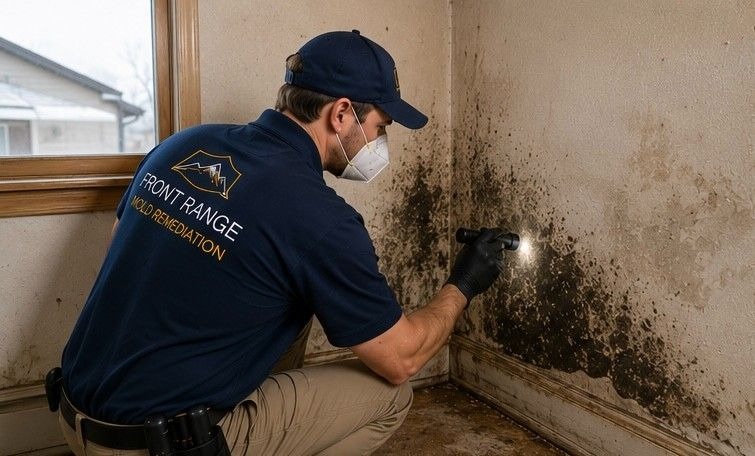
Fountain Colorado Springs Where Older Housing Stock and Deferred Maintenance Create Mold Conditions That Run Deep
Front Range Mold Remediation serves homeowners, renters and property managers throughout Fountain — a southern Colorado Springs community where the combination of older housing stock, more affordable property values and the maintenance histories that accompany both create mold conditions that frequently run deeper and are more established than in newer parts of the city. Fountain properties that have passed through multiple owners, experienced deferred maintenance across several ownership periods and never had a professional mold assessment are among the highest-risk properties we encounter in the entire Colorado Springs area. Our IICRC certified team provides certified mold inspection, removal and full clearance documentation across every Fountain street and property type — with the same standard of work regardless of property value.
Fountain — South Colorado Springs Community With a Housing Stock That Carries Its History
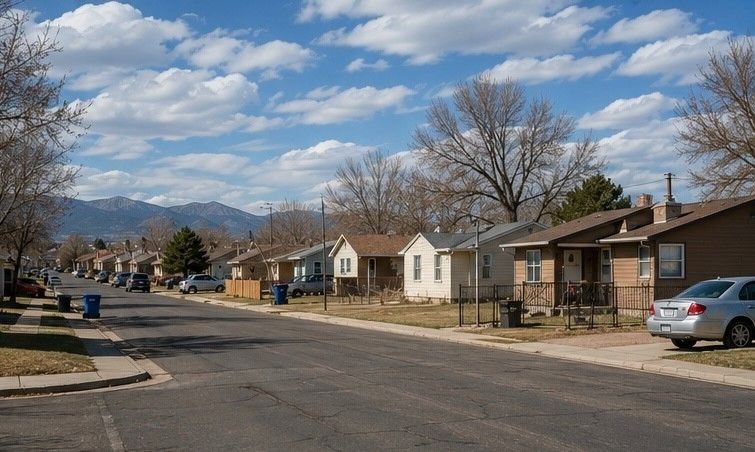
Fountain sits at the southern edge of the Colorado Springs metropolitan area — a separate municipality that functions as a southern suburb of Colorado Springs, located roughly ten miles south of downtown along Interstate 25. The community developed primarily in the 1960s through 1980s as an affordable residential alternative to the higher-priced housing market in Colorado Springs proper, attracting working families, military personnel from nearby Fort Carson and retirees looking for lower cost of living within the broader Colorado Springs area.
That development history defines Fountain’s housing character today. The neighbourhood contains a significant proportion of its original housing stock — properties from the 1960s, 1970s and early 1980s that are now between 40 and 60 years old and that have been through multiple ownership periods, each with its own maintenance priorities and investment levels. The affordable price point of Fountain’s housing market has historically attracted buyers who purchase at the lower end of their budget — which often means that ongoing maintenance investment competes with other financial priorities in ways that create deferred maintenance accumulation across ownership transitions.
Fountain’s proximity to Fort Carson also creates the same military rotation dynamic seen in Northgate — properties that cycle through military family tenancies on assignment schedules that don’t always align with comprehensive maintenance cycles. A Fountain property that has housed several consecutive military families may have had developing moisture issues across multiple tenancies that each successive family lived with but didn’t own long enough to address.
Why Fountain’s Housing History Creates Mold Conditions That Go Deeper Than the Surface
Deferred maintenance, multiple ownership periods and older construction standards combine in Fountain to create mold histories that are among the most established we encounter in the Colorado Springs area.
Aging Plumbing Infrastructure in 40 to 60 Year Old Properties
Fountain’s 1960s through 1980s housing stock has plumbing systems that are at or well past their expected service life. Galvanised steel supply pipes from this era corrode from the inside — producing pinhole leaks that deposit small amounts of water inside wall cavities continuously for months or years before the leak becomes detectable from the finished surface. Drain lines from this period develop slow seeps at joints that wet the sub-floor area beneath kitchens and bathrooms over time. These slow, sustained moisture sources generate the most extensive mold growth because the contamination accumulates continuously rather than in a single dramatic event.
Deferred Maintenance Histories Across Multiple Ownership Periods
A Fountain property that has passed through four or five ownership periods over 50 years carries the cumulative maintenance decisions of each successive owner — some of whom invested in upkeep and some of whom deferred issues that their budget or their ownership timeline didn’t prioritise. Moisture problems that were noticed but not addressed in one ownership period become more extensive in the next — and by the time a current owner decides to investigate a persistent smell or a recurring damp patch, the contamination behind it may have been developing across two or three previous ownership periods.
Original Crawl Space and Basement Systems Without Modern Moisture Control
Fountain’s oldest properties have crawl spaces and basement systems built to 1960s and 1970s standards — either without vapour barriers or with barriers that are now so degraded as to be ineffective. Properties in this age range with never-assessed crawl spaces and basements have been accumulating ground moisture in sub-floor systems and basement wall assemblies for the full life of the building. The floor joist systems in these properties frequently show significant mold contamination that has been developing undetected for decades — particularly in properties where the crawl space access was never conveniently located or the space itself was too low to enter comfortably.
Seasonal Flooding Risk From Fountain Creek and Local Drainage
Fountain sits in the Fountain Creek drainage basin — the same creek that runs through Colorado Springs — and properties in the lower sections of the community experience periodic flooding risk during peak spring snowmelt and heavy summer rainfall events. Even properties that don’t experience visible flooding may experience elevated groundwater that pushes moisture through aging foundations during high water periods. Annual groundwater elevation cycles in flood-adjacent Fountain properties create progressive moisture accumulation in below-grade spaces that compounds year over year.
Military Rotation Tenancies With Inspection Gaps Between Occupancies
Fort Carson’s proximity makes Fountain a popular location for military family housing — and the rotation cycle dynamic creates the same inspection gap problem seen in Northgate, compounded by Fountain’s older housing stock. A developing moisture issue in a 1970s Fountain property occupied by successive military families on two to three year rotations can accumulate across four or five tenancies before any owner is present long enough to notice and address the pattern. By that point the contamination has typically moved well beyond what a visual inspection identifies on the surface.
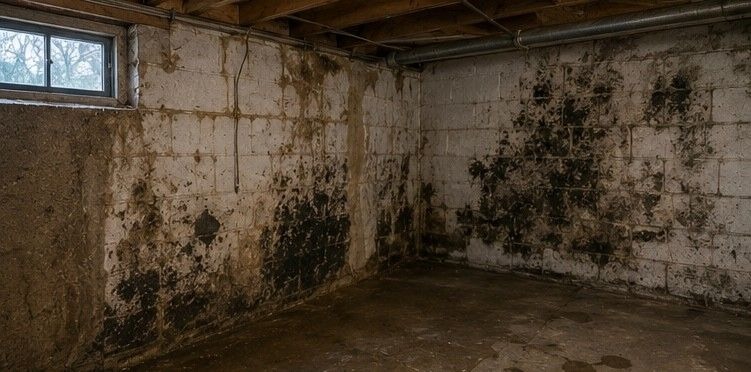
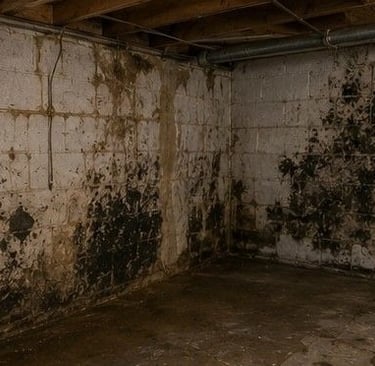
Fountain’s mold risk isn’t about one dramatic event — it’s about the accumulated effect of decades of moisture exposure in properties that were built before modern moisture management existed and have often been maintained on budgets that prioritised visible issues over the invisible ones developing inside walls and under floors.
Mold Services We Provide Throughout Fountain Colorado Springs
Every mold service below is available across this neighbourhood — from certified inspection and testing to emergency response and full structural restoration across all Colorado Springs property types.
Mold Removal
Fountain mold removal addresses contamination that has frequently been developing across multiple ownership periods — often more extensive behind walls and under floors than surface inspection suggests in this older housing stock.
Mold Inspection & Testing
Fountain property inspections assess older construction for the specific moisture accumulation patterns common in 40 to 60 year old housing — aging plumbing systems, original crawl space vapour barriers and basement wall assemblies built to 1960s and 1970s standards.
Black Mold Removal
Black mold in Fountain’s older housing stock — particularly in properties with aging galvanised plumbing and never-assessed crawl spaces — frequently represents contamination that has been developing for years in the chronic moisture conditions of deferred-maintenance properties.
Mold Damage Restoration
Post-removal restoration in Fountain’s older properties addresses structural elements from the 1960s through 1980s build period — dimensional lumber, original insulation systems and basement wall assemblies that reflect their era’s construction standards.
Crawl Space Mold Removal
Crawl space mold removal is among the most common services we provide in Fountain — original or degraded vapour barriers in never-assessed sub-floor spaces have been accumulating ground moisture for decades in some of the oldest crawl spaces in the Colorado Springs area.
Basement Mold Removal
Fountain’s older basement systems — with original wall assemblies, aging window wells and drainage infrastructure that has been through forty to sixty Colorado Springs seasons — present some of the most established basement mold conditions we encounter south of the city centre.
Attic Mold Removal
Original 1960s and 1970s attic ventilation in Fountain properties has been degrading for decades — and attic mold from condensation accumulation in inadequately ventilated roof structures is a consistent finding on inspection jobs throughout the community.
Commercial Mold Remediation
Fountain’s commercial and light industrial properties — including businesses serving the Fort Carson community — require commercial mold remediation scheduled around operations with full documentation for commercial insurance claims.
Emergency Mold Removal
Emergency mold response covers all of Fountain 24/7 — rapid response to plumbing failures in aging infrastructure and water damage events that require immediate containment in older Fountain properties where materials absorb moisture quickly.
Water Damage Mold Removal
Removal Water damage events in Fountain — from aging plumbing failures to seasonal Fountain Creek drainage events — generate mold in older building materials that have already accumulated moisture across decades of previous ownership.
Other Colorado Springs Neighbourhoods We Serve:
Why Fountain Homeowners Choose Front Range Mold Remediation
Same Certified Standard Regardless of Property Value
Fountain’s more affordable housing market doesn’t mean a lower standard of mold remediation. Every Front Range job in Fountain follows the same IICRC certified process — full assessment, proper containment, physical removal of contaminated materials, antimicrobial treatment and post clearance testing — regardless of the property’s market value. The clearance documentation you receive from a Fountain job is identical to what we produce for a Broadmoor estate.
Full Crawl Space Assessment
Properties That Have Never Been Checked For Fountain homeowners who’ve never had their crawl space professionally assessed, our inspection goes in fully — covering the entire sub-floor footprint and producing a written report on what we find before any removal decisions are made. If the crawl space is clean, we tell you that. If it has significant contamination, we document the full extent before recommending scope.
We Assess What Previous Owners Left Behind
Fountain properties with deferred maintenance histories require assessment that accounts for what may have been developing across previous ownership periods — not just what’s visible in the current occupancy. Our Fountain inspections specifically look for the long-term accumulation patterns that older housing stock with multiple owners tends to produce rather than just the recent event patterns common in newer properties.
Honest Scope — No Inflation Because the Property Has History
A property with a complex moisture history doesn’t automatically warrant a larger remediation scope — it warrants honest assessment of what’s actually present. We assess Fountain properties on the evidence we find, not on assumptions about what deferred maintenance properties must have developed. The scope we recommend reflects what the assessment reveals — nothing more and nothing less.


Frequently Asked Questions
How does Fountain’s older housing stock compare to newer Colorado Springs properties for mold risk?
Older housing stock carries higher accumulated mold risk for two primary reasons — construction standards that didn’t include modern moisture management practices, and the time available for moisture to accumulate in building materials that were never designed to resist it. A Fountain property from 1972 has had over fifty years of Colorado Springs freeze-thaw cycles, spring snowmelt events and seasonal moisture accumulation to develop whatever contamination its construction and maintenance history allowed. That doesn’t mean every Fountain property has significant mold — it means the probability of finding undiscovered contamination is higher than in a ten-year-old Northgate build, and the contamination that is present has often had more time to penetrate deeper into structural materials. Our mold inspection and testing team provides Fountain property assessments that account for this construction and moisture history.
I’m buying a Fountain property — should I get a mold inspection before closing?
Yes — and for Fountain’s older housing stock specifically, a dedicated mold inspection is more valuable than relying on the general home inspection alone. Home inspectors assess what’s visible and accessible — they don’t conduct moisture mapping inside wall assemblies, fully assess crawl spaces or air-test for mold spore concentrations. A Fountain property in the 40 to 60 year age range that has had multiple owners has a meaningful probability of having moisture accumulation in crawl spaces, basement wall assemblies or behind finished surfaces that the general home inspection won’t identify. Knowing what you’re buying before you close is significantly less expensive than discovering it during your first renovation.
My Fountain rental property has had several military family tenants — what should I assess between tenancies?
A comprehensive mold and moisture inspection between military tenancies in a Fountain property should cover crawl space condition and vapour barrier integrity, basement wall moisture levels, plumbing system inspection for slow leaks, attic ventilation performance and any areas where tenants reported moisture concerns during their occupancy. Fort Carson rotation cycles of two to three years mean that a developing moisture problem that started early in one tenancy has had the full rotation period to become established before the next family moves in. Our mold inspection and testing team provides between-tenancy assessments for Fountain landlords with written reports documenting property condition at each tenancy transition.
Does Fountain Creek flooding history affect mold risk in properties near the creek?
Yes — properties in Fountain’s lower sections near Fountain Creek have experienced periodic groundwater elevation events during peak snowmelt and heavy rainfall that push moisture through aging foundations regardless of whether visible flooding occurred inside the property. Repeated seasonal groundwater cycles in creek-adjacent Fountain properties create cumulative below-grade moisture accumulation that compounds with each successive year — generating progressive mold growth in basement and crawl space environments that traces to no single dramatic flood event. Our water damage mold removal team assesses Fountain properties near the creek accounting for this cumulative seasonal moisture pattern rather than looking only for evidence of discrete flood events.
What’s the most common mold finding in Fountain properties during professional inspection?
Crawl space floor joist contamination is the single most consistent finding on inspection jobs in Fountain — followed closely by basement wall assembly moisture and mold in properties where the original wall system hasn’t been assessed since construction. The combination of original vapour barriers that have been degrading for forty to sixty years, ground moisture from Fountain’s drainage basin position and properties that have never had sub-floor professional assessment produces crawl space conditions where mold has had optimal moisture and time to establish itself thoroughly. Properties in Fountain that have never had a crawl space inspection have a high probability of finding significant contamination when they finally do.
Concerned about what decades of moisture history may have produced in your Fountain Colorado Springs property? Our crawl space mold removal team handles the most common mold scenario in Fountain — contact us for a free assessment.
Your Fountain Property’s Mold History Doesn’t Have to Define Its Future — Let’s Find Out What’s Actually There
Fountain properties carry moisture histories that span decades and multiple ownership periods — but what’s actually present is always established by assessment, not assumption. Front Range Mold Remediation provides certified mold inspection, removal and clearance documentation across all of Fountain — free estimates, full crawl space and basement assessment, honest scope based on what the assessment finds and written clearance documentation before sign off. Same week availability and 24/7 emergency response for urgent situations across the full community.
Serving all of Fountain — same certified standard as every Colorado Springs neighbourhood we work in.
Want to understand how deferred maintenance in older Colorado Springs properties creates mold conditions that span multiple ownership periods? Read our guide on Why Basements in Fountain Face a Different Mold Risk Than the Rest of Colorado Springs.