
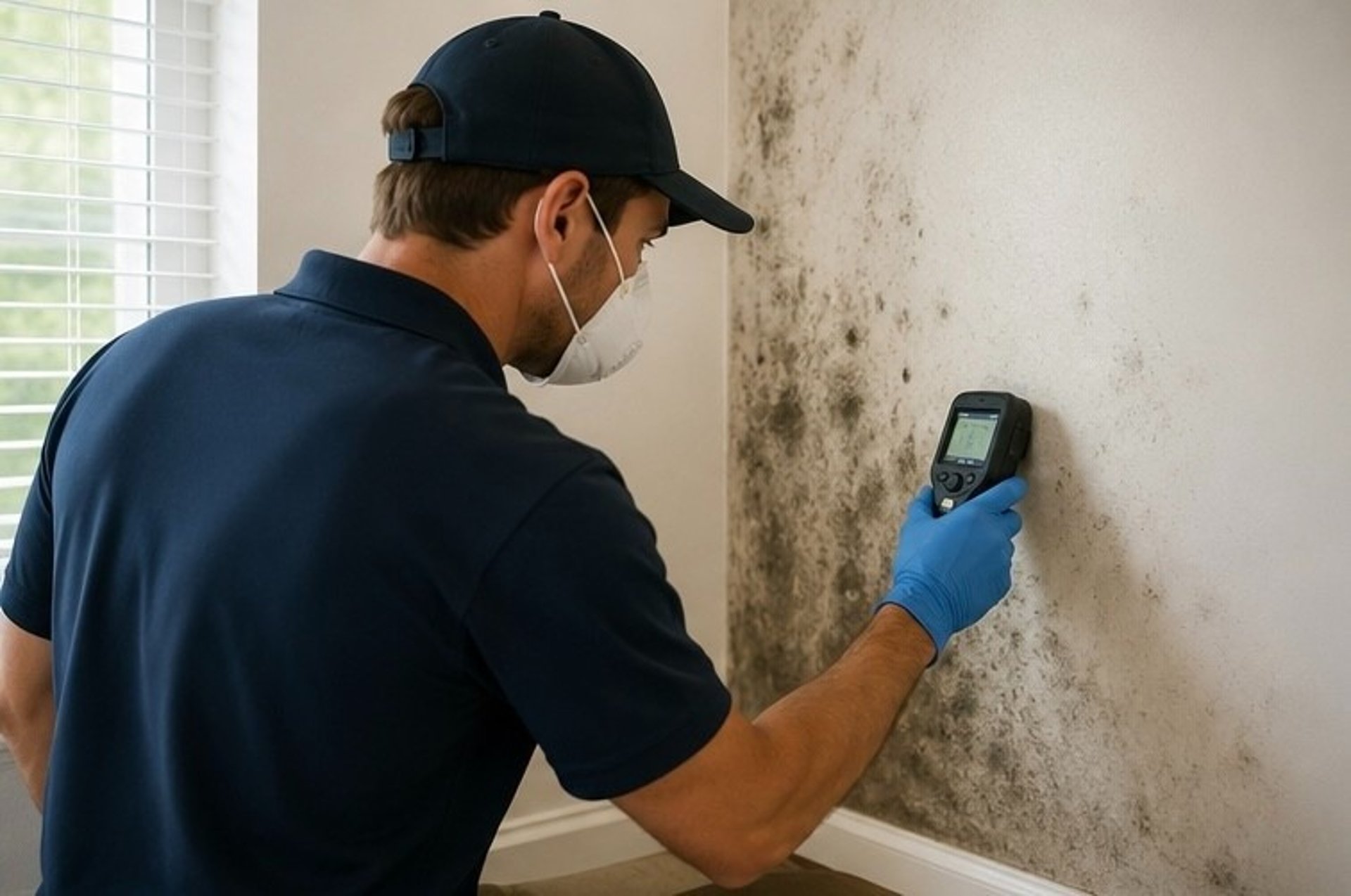
Mold Inspection & Testing Colorado Springs Know Exactly What You’re Dealing With Before You Spend a Dollar on Removal
Front Range Mold Remediation provides certified mold inspection and testing services across Colorado Springs for homeowners, property managers and businesses who need a professional assessment before committing to any remediation work. Our IICRC certified inspectors assess the full property — not just the area you’re concerned about — identifying visible mold growth, tracing moisture sources, collecting air and surface samples where needed and delivering a written report that tells you exactly what’s present, where it is and how far it’s spread. We serve every Colorado Springs neighbourhood from Downtown and Old Colorado City to Briargate, Black Forest and Cheyenne Mountain.
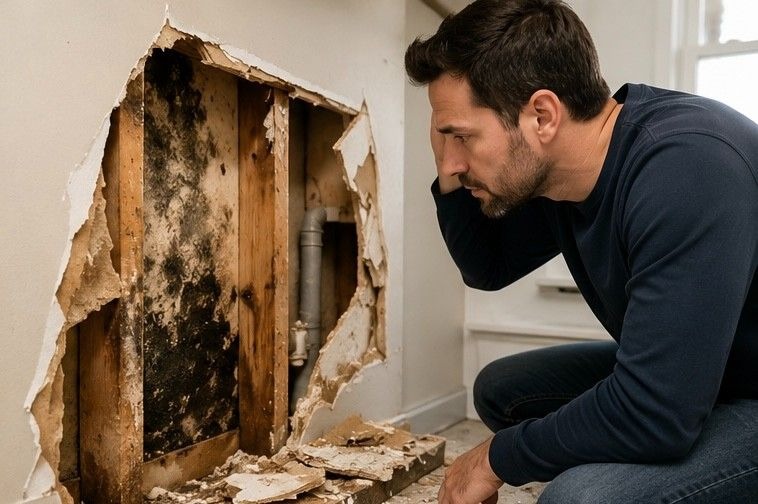
The Situations That Make Colorado Springs Homeowners Finally Call for a Mold Inspection
Most people don’t call for a mold inspection because they’ve found mold. They call because something has been nagging at them for weeks — a smell they can’t locate, a health pattern they can’t explain or a water event they handled themselves and now aren’t sure about. By the time those feelings become a phone call the contamination is almost always further along than the homeowner expects. Here’s what we hear most often.
01. You can smell it but can’t find it
A musty smell that hits you when you open a door, walk into the basement or run the HVAC for the first time in autumn isn’t a coincidence. Mold growing inside wall cavities, under flooring or in ductwork produces that smell long before it’s visible anywhere. If it’s there consistently, it’s established somewhere — and a professional inspection is the only way to find it accurately.
02. You had water damage and never had the property assessed afterward
A burst pipe, roof leak, flooding event or appliance overflow that was dried out visually but never professionally assessed is one of the highest risk scenarios we encounter. Materials that appear dry on the surface can retain moisture inside for weeks — and mold establishes itself in that internal dampness without producing any visible sign for months.
03. You’re buying or selling a Colorado Springs property
Mold discovered after a sale closes is one of the most common sources of real estate disputes in Colorado. Pre-purchase inspection gives buyers certainty before committing. Pre-listing inspection gives sellers a clean report that keeps transactions on track and removes the risk of a last minute mold flag derailing a deal at the inspection stage.
04. Someone in your household has unexplained health symptoms
Chronic respiratory irritation, recurring headaches, persistent fatigue or skin reactions that don’t respond to standard treatment and improve when the person leaves the property for several days — these patterns warrant a mold inspection before any other explanation is pursued. Mold exposure is frequently the last thing investigated and often the first thing that should have been.
05. You’re a landlord and a tenant has raised a mold concern
In Colorado, landlords have a legal obligation to maintain habitable properties. A tenant raising a mold concern — documented in writing — creates a liability exposure that grows the longer it goes unaddressed. A professional inspection with a written report protects you legally regardless of what the assessment finds.
06. Your property is older than 25 years and has never been inspected
Colorado Springs has significant housing stock built before modern vapour barriers, waterproofing membranes and ventilation standards existed. A property that has never had a professional mold assessment is a property where moisture problems have been accumulating undetected — in crawl spaces, behind walls and under flooring — for potentially decades.
Any of these sound like your situation? That’s not unusual — these are the circumstances behind the majority of mold inspection calls we receive across Colorado Springs every week. The sooner the property is assessed the smaller the scope of any remediation that follows.
A mold inspection is only as valuable as the process behind it. A visual walk through that misses what’s inside the walls, under the floor or circulating through the HVAC isn’t an inspection — it’s a guess. Here’s what a Front Range Mold Remediation inspection actually covers from the moment we arrive at your Colorado Springs property.
How Front Range Mold Remediation Conducts a Property Inspection in Colorado Springs
Step 4: Written Report
A Document You Can Actually Use Every inspection concludes with a written report covering findings, moisture source identification, confirmed or suspected mold locations and recommended next steps. This report is usable for insurance claims, real estate transactions, landlord-tenant disputes and your own decision making about whether and how to proceed with remediation.
Step 1: Full Property Walk Through
Every Area, Not Just the Problem Zone We inspect the entire property systematically — not just the area you called about. Mold rarely stays contained to one location. We check basements, crawl spaces, attics, bathroom cavities, kitchen voids, around windows and penetrations, inside HVAC systems and along exterior wall lines where condensation commonly develops in Colorado Springs winters. Every area gets assessed before we start drawing conclusions about scope.
Step 2: Moisture Mapping
Finding the Source Not Just the Symptom Using moisture meters and thermal imaging where needed we map active moisture sources and historical water damage patterns throughout the property. This separates old staining from active moisture — a critical distinction that determines whether a problem is ongoing or historical and what the appropriate response actually is.
Step 3: Air & Surface Sampling
When Testing Is the Right Call Where visual inspection identifies suspected mold growth or elevated moisture in concealed areas we collect air samples and surface swabs for laboratory analysis. This identifies the specific mold species present, quantifies spore concentration levels and confirms whether contamination is active and airborne — information that directly shapes the remediation approach and scope.
Every inspection follows IICRC protocols and delivers findings in writing — because a verbal assessment you can’t document isn’t worth much when you need to act on it.
Eight Signs Your Colorado Springs Property Needs a Professional Mold Inspection
Some are obvious. Most aren’t. Here’s what warrants a professional assessment rather than a DIY check.
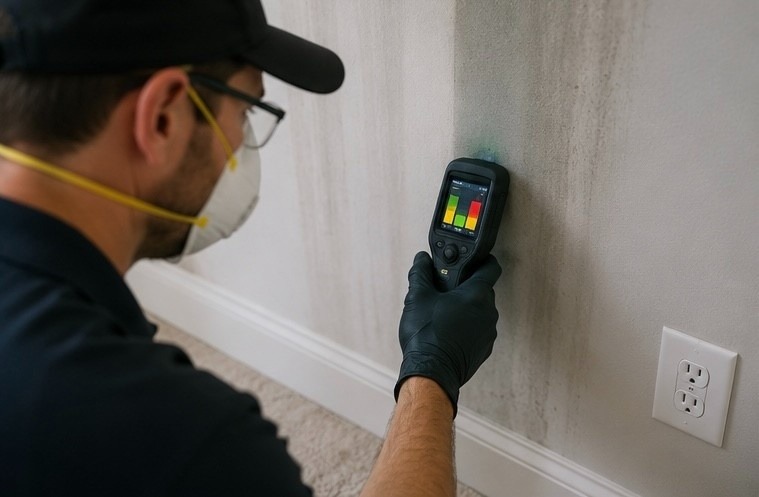
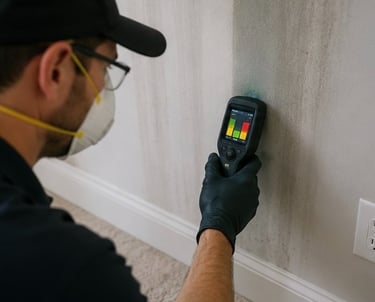
1. A smell that’s specific to one room, one level or one area of the property
Localised musty odours that don’t travel through the whole home almost always indicate contained mold growth nearby — inside a wall, under flooring or in a void space that isn’t visible from the room.
2. Discoloration on walls or ceilings that reappears after cleaning
Surface discoloration that keeps returning within days or weeks of being cleaned is mold growing through the material from behind — not surface dirt that cleaning can address.
3. Condensation forming regularly on interior walls or cold surfaces
Regular condensation on interior wall faces, window frames or cold water pipes indicates humidity levels that are creating ongoing moisture conditions inside wall assemblies where mold colonises without visible surface evidence.
4. Recent renovation work that opened up wall or floor cavities
Renovation work that exposed old wall cavities, subfloor voids or roof spaces in a Colorado Springs property built before 1990 frequently uncovers mold growth that has been developing undetected for years. If renovation work revealed anything unexpected — discoloration, unusual smells or damp materials — a professional inspection before closing those cavities back up is essential.
5. An HVAC system that hasn’t been inspected since a water event
HVAC systems that drew air through a property during or after a flood, pipe burst or significant leak may have pulled mold spores into ductwork where they’ve since colonised. If your system has ever run through a moisture event without subsequent inspection the ductwork is worth including in a full property assessment.
6. A property that’s been vacant or unventilated for an extended period
Vacant Colorado Springs properties — particularly through winter — develop moisture conditions that active occupation and regular ventilation would normally manage. Extended vacancy is one of the most consistent preconditions for significant mold development we encounter on inspection jobs.
7. You’re preparing a property for rental and need documentation
Colorado landlords increasingly need documented property condition records for compliance, insurance and tenant protection purposes. A pre-tenancy mold inspection with a written report protects you from liability claims before they arise.
8. A previous remediation company completed work but never provided clearance testing
Remediation without post clearance testing is remediation without proof. If a previous company treated mold in your Colorado Springs property but never confirmed the results with air sampling, an independent inspection is the only way to verify the work was actually effective.
Confirmed mold during your inspection? Our mold removal Colorado Springs team handles full remediation with containment, physical removal and post clearance verification.
Why Colorado Springs Property Owners Choose Front Range for Mold Inspection & Testing
We Inspect the Whole Property
Not Just What You Point Us To Every Front Range inspection covers the entire property systematically. We don’t limit the assessment to the area you’re concerned about because mold in one location almost always indicates moisture conditions that have affected other areas too — and missing those means the inspection has failed before remediation even begins.
Written Reports That Are Actually Usable
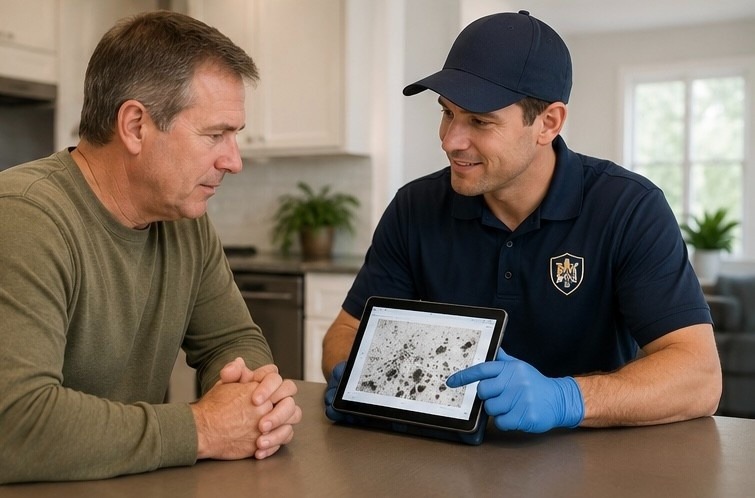
Our inspection reports document findings, moisture source identification and recommended next steps in clear written format. Whether you need the report for an insurance claim, a real estate transaction, a landlord-tenant dispute or your own decision making — it’s written to be used, not filed and forgotten.
We Don’t Inflate Findings to Create Remediation Work
Our inspection business and our remediation business operate to the same standard — honesty before anything else. If the inspection finds nothing significant we tell you that. If it finds something manageable we tell you that too. We don’t manufacture urgency to create a remediation job that isn’t warranted.
IICRC Certified Inspectors on Every Job
Every inspector we send to a Colorado Springs property holds IICRC certification in mold inspection — not general contracting credentials applied loosely to an inspection context. The person assessing your property is specifically trained for this work.
An inspection is only useful if it’s thorough, honest and delivered in a format you can act on.
Ready to get your property properly assessed? Contact us today for a free estimate on a full property mold inspection.
Mold Inspection & Testing Across Every Colorado Springs Neighbourhood
Front Range Mold Remediation conducts certified mold inspections and testing across all of Colorado Springs — from the historic properties of Old Colorado City and Downtown to the newer residential corridors in Northgate and the high value estates of Broadmoor and Cheyenne Mountain.
Historic brick buildings and commercial conversions in Downtown Colorado Springs carry decades of moisture history inside wall assemblies — making thorough mold inspection here more complex than standard residential builds.
Briargate’s high density residential developments frequently present finished basement moisture conditions that require full property inspection rather than isolated area assessment to identify the complete scope of contamination.
High value Broadmoor properties with extensive below-grade footprints require systematic inspection across multiple lower levels — areas where moisture accumulates quietly over years before producing visible surface evidence.
Properties in Old Colorado City’s historic district require inspection approaches that account for 19th century construction methods — rubble foundations, timber framing and no vapour barriers — that behave fundamentally differently to modern builds during moisture assessment.
Newer Northgate construction doesn’t eliminate mold inspection need — early plumbing issues and inadequate mechanical ventilation in recently built homes create mold conditions that pre-purchase and post-water-event inspections regularly uncover.
Rockrimmon’s established northwest neighbourhood contains mid-century housing where crawl space and basement conditions have rarely been professionally assessed — making comprehensive inspection particularly valuable for homeowners planning renovation or sale.
Older housing stock in Fountain frequently presents deferred maintenance histories where mold inspection uncovers contamination that has been developing across multiple ownership periods — requiring thorough full-property assessment rather than targeted inspection.
The high residential density along the Powers Corridor means moisture problems in shared construction types tend to replicate across multiple properties — making inspection findings here relevant to broader neighbourhood patterns we’re familiar with from regular work in this area.
Black Forest properties on large forested lots with older construction present some of the most complex mold inspection scenarios in Colorado Springs — tree coverage traps moisture, older foundations absorb it and crawl spaces accumulate years of undisturbed contamination.
Mountain proximity creates unique humidity patterns in Cheyenne Mountain properties that standard inspection protocols need to account for — particularly in upper floor wall assemblies and attic spaces where condensation driven mold develops differently than in lower elevation Colorado Springs neighbourhoods.
Frequently Asked Questions
What’s the difference between a mold inspection and mold testing?
A mold inspection is a physical assessment of your property — a certified inspector walks through the building identifying visible mold, moisture sources and conditions that indicate hidden contamination. Mold testing involves collecting air or surface samples that go to a laboratory for analysis to identify specific mold species and quantify spore concentrations. Inspection tells you where the problem is. Testing tells you what the problem is and how significant the airborne component is. Most professional assessments include both where the inspection findings warrant it — though in cases of clearly visible, extensive contamination testing is sometimes less critical than getting straight to remediation. Our mold inspection and testing process always starts with the physical inspection before recommending whether laboratory sampling adds meaningful value to your specific situation.
How long does a mold inspection take in a Colorado Springs home?
For a standard single family home a thorough inspection typically takes between one and two hours depending on property size, the number of areas of concern and how accessible crawl spaces and attic spaces are. Larger properties, multi-unit buildings or homes with complex below-grade layouts take longer. We don’t rush inspections to fit more jobs into a day — a compressed inspection that misses what’s inside the walls isn’t worth the time it takes.
Do I need to be home during the mold inspection?
It’s helpful but not always essential. For the initial walk through we prefer to have the homeowner or property manager present so we can ask questions about the property’s history — prior water events, maintenance work, previous repairs and any symptoms occupants have noticed. That context helps us prioritise inspection areas and interpret findings accurately. For access to all areas of the property — particularly locked crawl space hatches, attic access points and utility rooms — someone needs to be available to provide entry.
Will a mold inspection damage my walls or floors?
A standard visual and air quality inspection is entirely non-invasive. We use moisture meters and thermal imaging to detect conditions behind surfaces without opening anything. In cases where inspection findings strongly indicate contamination inside a wall cavity or under flooring we may recommend limited exploratory access — but this is always discussed with the property owner before anything is opened and is never done without explicit agreement.
How soon will I get my inspection report?
Written inspection reports are provided within 24 hours of the assessment for standard residential inspections. Where laboratory air samples are collected turnaround depends on the laboratory — typically two to three business days for standard analysis. We don’t sit on findings. If the inspection identifies something that warrants urgent attention we communicate that verbally on site before the written report follows.
If inspection confirms active mold contamination our black mold removal and mold damage restoration teams can be scheduled immediately following the assessment.
Other Mold Services We Offer in Colorado Springs
Inspection is where every mold job starts. Here’s what comes next depending on what we find.
Mold Removal
Complete physical removal of mold contamination from all affected areas and materials.
Black Mold Removal
Black mold carries specific health risks that require specialist containment and removal procedures.
Mold Damage Restoration
Once mold is removed the structural damage it left behind still needs fixing.
Crawl Space Mold Removal
The most overlooked part of any Colorado Springs home and the most common place mold takes hold.
Basement Mold Removal
Basements hold moisture longer than any other part of a property — and mold follows moisture.
Attic Mold Removal
Poor ventilation and slow roof leaks make attics one of the most common sites of undetected mold growth.
Commercial Mold Remediation
Mold in a commercial property affects staff, customers and your liability. We work around your schedule.
Emergency Mold Removal
Flood or burst pipe? Mold starts within 48 hours. Our emergency team responds around the clock.
Water Damage Mold Removal
Water intrusion and mold go together. If your property took on water, mold is likely already growing.
Stop Guessing What’s in Your Colorado Springs Property — Get a Certified Answer
A mold inspection from Front Range Mold Remediation gives you a documented, certified assessment of exactly what’s present in your Colorado Springs property — before you commit to any remediation work, before you list it for sale and before another Colorado winter adds another season of moisture to whatever is already developing inside your walls. Free estimates, same week availability across all Colorado Springs neighbourhoods and a 24/7 emergency line for situations that can’t wait.
Written report. Certified inspector. Honest findings. No obligation to proceed with anything until you’re ready.
Want to understand what a professional mold inspection actually covers? Read our guide on Mold Inspection and Testing for Black Forest's Well and Septic Homes before we arrive.