
Basement Mold Removal Colorado Springs The Problem That Gets Worse Every Season You Leave It
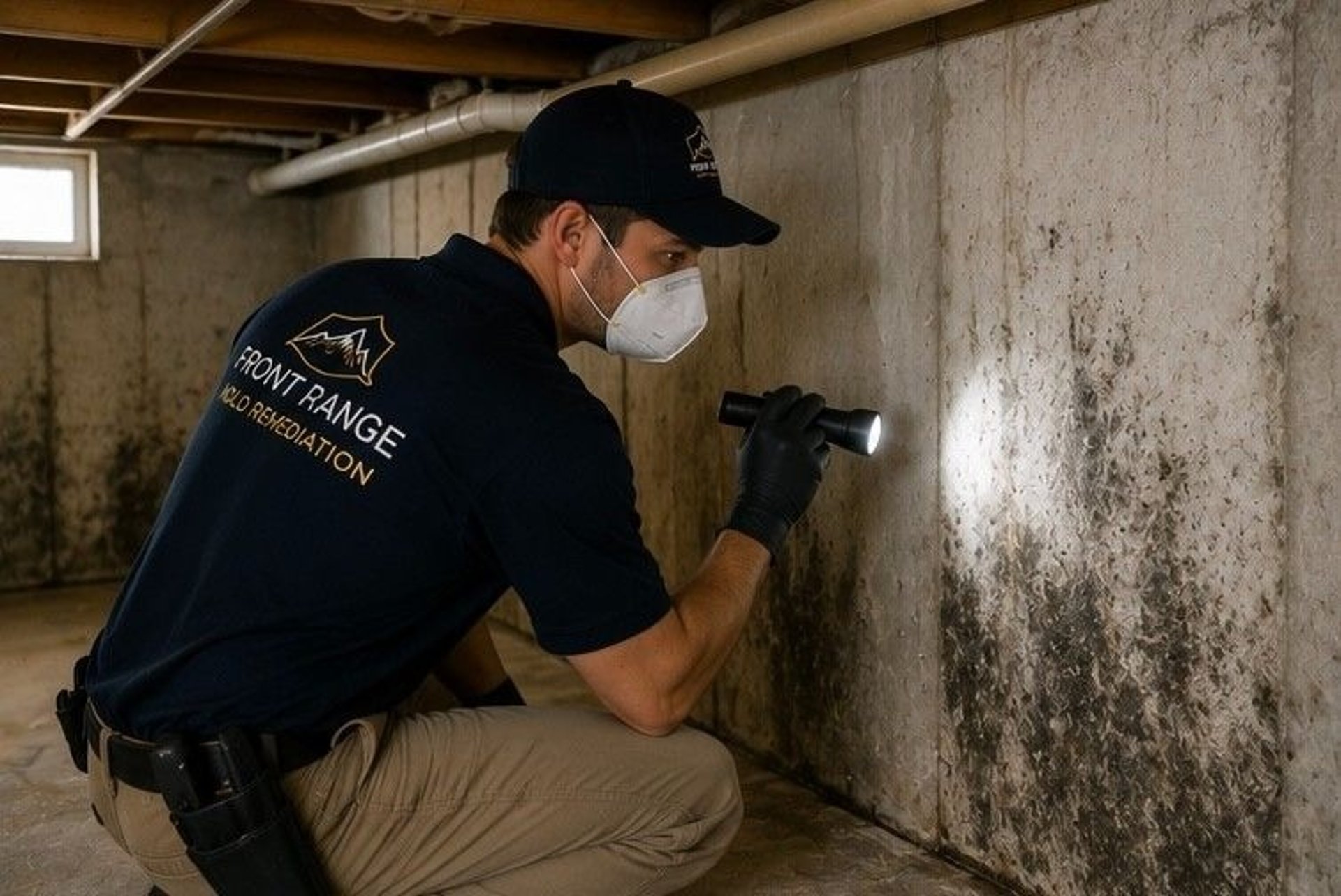
Front Range Mold Remediation provides certified basement mold removal services across Colorado Springs for homeowners dealing with one of the most common and most consequential mold problems in local residential properties. Colorado Springs basements face a specific combination of challenges — freeze-thaw moisture intrusion through foundations, spring snowmelt drainage pressure, aging waterproofing systems and below-grade humidity that stays elevated long after surface moisture dries out. These conditions make basement mold in Colorado Springs properties not just likely but almost inevitable in older homes that haven’t had consistent moisture management. Our IICRC certified team removes basement mold completely — treating walls, floors and ceiling assemblies, addressing moisture sources and providing written clearance documentation across every Colorado Springs neighbourhood.
What Colorado Springs Homeowners Are Dealing With When Basement Mold Finally Becomes Impossible to Ignore
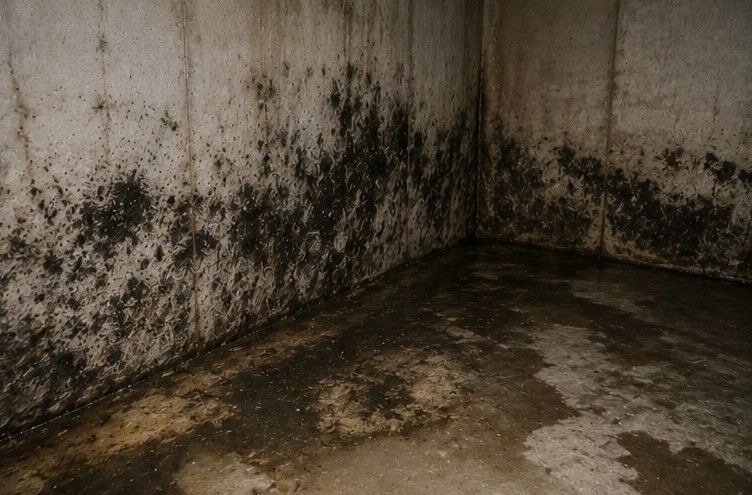
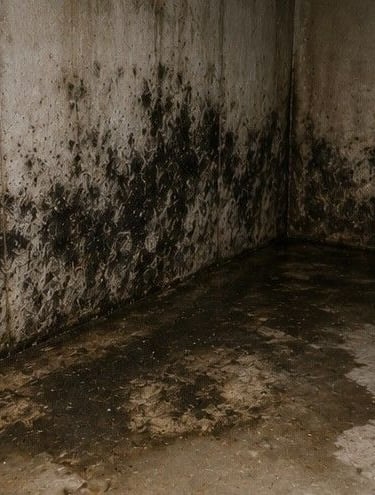
Basement mold in Colorado Springs has a specific pattern — it builds slowly through winter and spring moisture cycles, stays hidden behind finished wall systems or in unfinished corners that nobody regularly inspects, and announces itself through a smell or a health pattern rather than obvious visible growth. By the time most homeowners call us the contamination is significantly more established than what they initially noticed.
01. A musty smell that hits you at the top of the basement stairs
The smell of active mold growth rises with warm air through the basement stairwell — it’s often the first thing people notice when they open the basement door, particularly in spring when Colorado Springs freeze-thaw cycles have been pushing moisture through foundations all winter. If the smell is strongest at the top of the stairs rather than the bottom it means mold is actively releasing spores into the basement air continuously.
02. Visible staining on basement walls that reappears after painting or sealing
White efflorescence on concrete walls indicates water moving through the foundation — a persistent moisture source. Dark staining that returns weeks after painting indicates mold growing through the paint from the substrate beneath it. Neither is a cosmetic problem that painting addresses — both indicate active moisture conditions that are generating ongoing contamination.
03. A finished basement that’s developed a smell since it was completed
Finished basements in Colorado Springs properties that develop a musty smell within a few years of completion almost always have moisture behind the finished wall system — condensation on cold concrete walls beneath drywall and insulation that wasn’t addressed with adequate vapour management during the build. By the time the smell is noticeable the mold behind the finished wall has typically been growing for months.
04. Your basement floods or takes on water every spring
Annual spring flooding or seepage is the most consistent predictor of basement mold in Colorado Springs. Even minor seasonal seepage that dries out within a few days creates enough repeated moisture cycling in wall bases and floor assemblies to generate mold growth — particularly in the corners and wall-floor junctions where water sits longest and evaporation is slowest.
05. You’re finishing or renovating your basement and found something unexpected inside the walls
Renovation work that opens finished basement walls in Colorado Springs properties built more than ten years ago regularly uncovers mold growth that has been developing behind the finished surface for years — sometimes for the entire life of the original fit-out. Finding unexpected discoloration, damaged insulation or an intense smell when opening a basement wall cavity means stopping work and calling for professional assessment before continuing.
06. Someone in your household gets worse in the basement than anywhere else
If a family member’s respiratory symptoms, headaches or fatigue are consistently worse when they spend time in the basement compared to other parts of the home, the basement air quality is the most likely explanation. Below-grade spaces with active mold accumulate higher airborne spore concentrations than above-grade rooms because reduced air exchange keeps contaminated air circulating longer.
Basement mold in Colorado Springs doesn’t stabilise — it spreads. Each moisture cycle through winter and spring adds to the contamination and extends it further along wall assemblies, into floor junctions and upward into the floor structure above.
Basement mold removal in Colorado Springs requires understanding the specific moisture dynamics of below-grade spaces — not just applying standard mold removal protocols to a room that happens to be underground. Here’s our process for every basement job across Colorado Springs.
How Front Range Mold Remediation Removes Mold From Colorado Springs Basements
Step 4: Moisture Source Resolution & Clearance Testing
Every basement mold job concludes with identification and documentation of the moisture source — foundation crack sealing recommendations, drainage improvement requirements, dehumidification needs or vapour barrier deficiencies — so you know exactly what needs addressing to prevent recurrence. Post clearance air testing confirms safe spore levels throughout the basement before sign off and the written results come to you as documentation of the completed job.
Step 1: Full Basement Assessment
Finished and Unfinished Areas We assess the entire basement — not just the visible affected area. Finished basement walls that show no visible mold frequently conceal significant contamination behind drywall. Unfinished areas reveal what finished sections hide. We use moisture meters and thermal imaging to identify active moisture in wall assemblies and floor systems without opening everything up unnecessarily — then establish a scope based on what the full assessment reveals rather than what’s visible from the room.
Step 2: Containment
Preventing Basement Mold From Reaching Upper Levels Basement mold disturbed without containment sends spores upward through the stairwell and any floor penetrations into the living spaces above. Before removal begins we seal the basement stairwell, establish negative air pressure containment around affected areas and deploy HEPA air scrubbers to capture spores generated during removal — protecting the rest of the Colorado Springs property while we work below.
Step 3: Mold Removal
Physical Extraction and Antimicrobial Treatment Contaminated drywall, insulation and flooring that has mold growth through it gets physically removed and disposed of. Concrete walls, block foundations and structural elements that can be effectively treated receive professional grade antimicrobial and fungicidal application penetrating the surface to eliminate mold at depth. We don’t leave contaminated material in place behind a treated surface — if it needs to come out to eliminate the contamination properly, it comes out.
Basement mold removal that doesn’t address the moisture source is mold removal on a timer. We fix the contamination and document the cause — so you know what needs resolving to keep it from coming back.
Eight Signs Your Colorado Springs Basement Has a Mold Problem
Some are obvious. Most develop gradually enough that they become background noise before anyone acts on them.
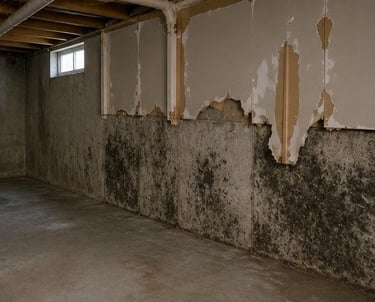
1. A persistent musty smell in the basement that’s present year-round but worse in spring
Year-round smell indicates established mold growth — not seasonal dampness. Worse in spring indicates that winter freeze-thaw moisture cycles have fed the contamination through the cold months and peak moisture conditions in spring are driving peak spore release. This pattern is extremely common in Colorado Springs basement mold cases.
2. White powdery deposits on concrete or block foundation walls
Efflorescence — mineral salts left behind as water evaporates from masonry — is a visual indicator of water moving through foundation walls. It’s not mold itself but it’s reliable evidence of the moisture pathway that is or will be generating mold in the wall assembly around it.
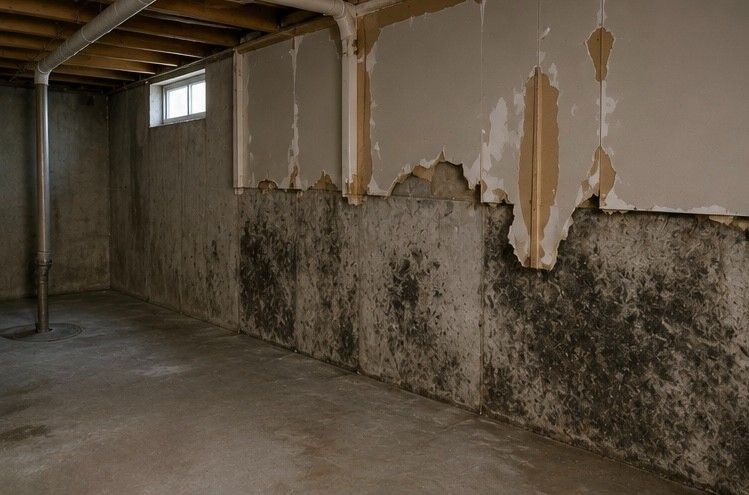
3. Drywall at the base of finished basement walls that feels soft or shows bubbling paint
Basement drywall that absorbs repeated moisture cycling from floor level seepage softens, loses structural integrity and develops paint failure at the surface. By the time the surface shows these signs the mold growth inside the wall assembly is typically well established.
4. Rust staining on metal fixtures, pipes or appliances in the basement
Rust on metal surfaces in a basement indicates sustained elevated humidity — the same humidity that generates mold growth on organic building materials nearby. If metal fixtures in your Colorado Springs basement are rusting faster than they should the humidity level in that space is high enough to support mold growth in wall assemblies and on organic materials throughout the area.
5. Visible dark growth in corners, behind stored items or along wall-floor junctions
Wall-floor junctions and corners are where moisture sits longest in basement environments — and where mold establishes its first colonies. Growth in these locations that has been present for more than a few weeks has almost certainly spread into the wall assembly behind the visible surface.
6. A dehumidifier that fills its tank unusually quickly or runs continuously
A basement dehumidifier that fills within hours or runs without cycling off is indicating a basement humidity level that building materials cannot tolerate long term. That moisture load is going somewhere — into wall assemblies, under flooring and onto any organic surface in the basement environment.
7. Your basement has flooded at least once without professional drying
Any Colorado Springs basement flood that was addressed with consumer fans and a wet vac rather than professional drying equipment left residual moisture in wall assemblies, subfloor systems and concrete that the visible surface didn’t reveal. If that flood was more than four weeks ago and the basement wasn’t professionally assessed for mold afterward, the assessment is overdue.
8. You’ve noticed condensation forming on cold water pipes or the underside of the floor above
Condensation on cold water pipes and on the underside of the floor assembly above the basement indicates the dew point of the basement air is being reached on cold surfaces — a clear indicator that basement humidity is high enough to generate mold growth on organic materials throughout the space.
Not sure whether your Colorado Springs basement has a mold problem or just a moisture problem? Our mold inspection and testing team can assess both and tell you exactly what you’re dealing with before any removal decisions are made.
Why Colorado Springs Homeowners Choose Front Range for Basement Mold Removal
We Understand Colorado Springs Basement Moisture
Dynamics Freeze-thaw foundation cracking, spring snowmelt drainage pressure, below-grade condensation and finished basement vapour management failures — these are the specific moisture mechanisms that generate basement mold in Colorado Springs properties. Understanding them changes how we assess, scope and remediate every basement job rather than applying a one-size approach that misses the underlying cause.
We Assess Behind Finished Walls Not Just the Visible Surface
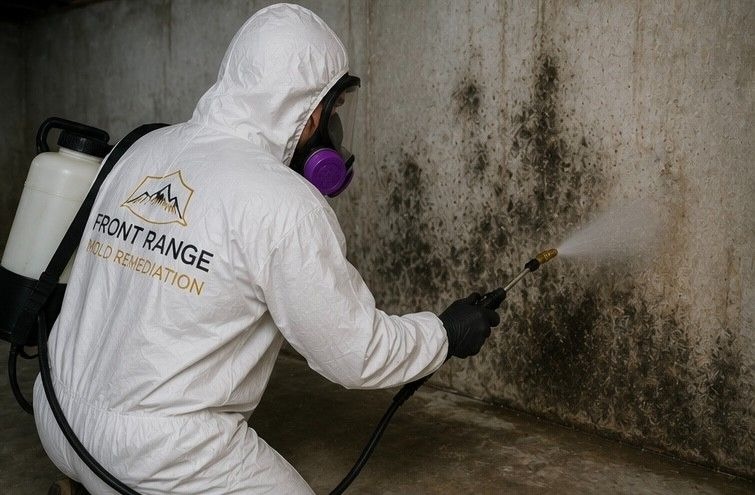
Finished basements that show no visible mold frequently have significant contamination behind drywall and insulation. Our assessment process uses moisture meters and thermal imaging to identify what’s happening inside finished wall assemblies before establishing scope — so the removal job addresses what’s actually present rather than just what’s visible from the room.
Full Scope Removal, Moisture Source Documentation and Clearance Testing
We remove the contamination, document the moisture source and provide written clearance testing results — all under one scope. No handoff between a mold company and a separate moisture remediation contractor. No clearance testing that you have to arrange separately. One certified team handles the complete job.
We Work in Occupied Colorado Springs Homes
Basement mold removal doesn’t have to mean vacating your Colorado Springs home for a week. Our containment protocols protect the living spaces above while we work below — and our scheduling accommodates occupied properties so the disruption to your household is minimised without compromising the containment and removal standards the job requires.
Basement mold in Colorado Springs has specific causes that require specific knowledge — not just generic mold removal applied to a below-grade space.
Ready to get your Colorado Springs basement assessed and the mold removed properly? Contact us today for a free no obligation estimate.
Basement Mold Removal Across Every Colorado Springs Neighbourhood
Front Range Mold Remediation provides certified basement mold removal across all of Colorado Springs — from the historic below-grade spaces of Downtown and Old Colorado City to the finished basements of Briargate and Broadmoor and the flood-risk properties of Fountain and Powers Corridor.
Below-grade spaces in Downtown Colorado Springs historic buildings experience some of the most complex moisture dynamics in the city — century-old foundations, urban drainage pressure and original construction with no below-grade waterproofing creating chronic basement moisture conditions.
Finished basements in Briargate’s residential developments are among the most common basement mold scenarios we encounter — vapour management failures behind finished wall systems that allow condensation to generate mold growth invisible from the finished room surface.
Large Broadmoor properties with extensive basement footprints — multiple rooms, home theatres, wine cellars — present basement mold scopes that require full below-grade assessment across multiple interconnected spaces rather than isolated room-by-room inspection.
Victorian era basement spaces in Old Colorado City with rubble stone foundations and no original waterproofing present basement moisture conditions that have been accumulating since the property was built — requiring assessment approaches that account for construction methods over a century old.
Newer Northgate properties with finished basements present basement mold conditions driven by inadequate vapour management during construction — concrete walls that weren’t properly waterproofed before framing and insulation were installed against them.
Mid-century Rockrimmon properties with original unfinished basements present basement mold conditions that have been developing on concrete walls and structural elements without any barrier to slow the moisture accumulation driving contamination.
Older Fountain properties with basements that flood seasonally from snowmelt are among the most consistent basement mold scenarios we handle in Colorado Springs — annual moisture events creating progressive contamination that compounds across each successive spring.
High residential density along the Powers Corridor means aging municipal drainage infrastructure occasionally backs up during heavy spring moisture events — creating basement seepage situations in multiple properties simultaneously that generate mold growth in the weeks following the event.
Black Forest properties with basements experience ground moisture pressure from forested lot conditions that maintains elevated basement humidity year-round — creating a chronic mold risk environment that requires consistent moisture management to control.
Mountain proximity creates snowmelt drainage pressure against Cheyenne Mountain property foundations through spring — pushing moisture into basement walls from outside and creating the sustained below-grade humidity that generates mold growth in finished and unfinished basement spaces alike.
Frequently Asked Questions
Is all basement mold in Colorado Springs dangerous?
All basement mold warrants professional assessment and removal — but not all basement mold carries the same level of health risk. Common mold species found in Colorado Springs basements cause respiratory irritation, allergy symptoms and long term air quality degradation in living spaces above. Black mold — Stachybotrys chartarum — carries significantly higher health risk through mycotoxin production and requires specialist containment and removal protocols. The only way to determine which mold species you’re dealing with is laboratory testing — which is why our mold inspection and testing process includes species identification where the assessment warrants it.
Can I use my basement during mold removal?
During active basement mold removal — particularly during the containment setup and physical material removal phases — we recommend limiting access to the basement entirely. Our containment protocols protect the living spaces above from spore dispersal, but the basement itself is a work zone during active remediation. For occupied Colorado Springs properties we schedule work to minimise the period when basement access is restricted and communicate clearly about when areas are safe to re-enter during the job.
How do I stop basement mold from coming back after removal in a Colorado Springs property?
The most important factor is resolving the moisture source identified during the remediation assessment — foundation crack sealing, perimeter drainage improvement, dehumidification equipment appropriately sized for the basement volume and vapour management in finished wall systems. No mold treatment prevents regrowth indefinitely if the moisture conditions that generated the original contamination remain in place. We document the moisture source on every job specifically so the homeowner knows exactly what needs addressing to prevent recurrence — because repeat remediation jobs caused by unresolved moisture are a poor outcome for both parties.
My Colorado Springs basement smells but I can’t see any mold should I still get it checked?
Yes — and this is one of the most important points about basement mold in Colorado Springs. Visible mold represents the surface expression of contamination that is almost always more extensive inside wall assemblies, behind stored items and in floor junctions than what’s visible from the room. A musty smell without visible growth frequently indicates mold that’s well established inside finished wall systems or in areas not visible from normal standing position in the room. Professional assessment with moisture meters and thermal imaging identifies what the visible inspection misses.
Does a finished basement make mold removal more complicated in Colorado Springs?
Yes — significantly. Finished basement walls conceal the concrete or block foundation surface behind framing, insulation and drywall. Mold growing on the cold concrete surface behind a finished wall, or in the insulation between the concrete and the drywall, is invisible from the finished room and requires opening the wall system to assess and address. Finished basement mold removal always involves more disruption than unfinished basement work — but skipping the assessment of what’s behind the finished surface to avoid that disruption is the most common reason basement mold recurs after treatment in Colorado Springs properties.
Dealing with recurring basement mold in your Colorado Springs property? Our black mold removal team handles the most serious basement contamination cases — contact us and we’ll assess the full scope.
Other Mold Services We Offer in Colorado Springs
Basement mold often connects to other moisture problems throughout the property — here’s what Colorado Springs homes typically need alongside basement remediation.
Mold Removal
Complete physical removal of mold contamination from all affected areas and materials.
Mold Inspection & Testing
Laboratory confirmed identification of black mold before any removal work begins.
Black Mold Removal
Specialist black mold removal with full containment before restoration of affected structural materials.
Mold Damage Restoration
Structural restoration of subfloor and joist systems after crawl space mold removal.
Crawl Space Mold Removal
Below-grade moisture problems that affect crawl spaces and basements simultaneously in Colorado Springs.
Attic Mold Removal
Poor ventilation and slow roof leaks make attics one of the most common sites of undetected mold growth.
Commercial Mold Remediation
Mold in a commercial property affects staff, customers and your liability. We work around your schedule.
Emergency Mold Removal
Flood or burst pipe? Mold starts within 48 hours. Our emergency team responds around the clock.
Water Damage Mold Removal
Water intrusion and mold go together. If your property took on water, mold is likely already growing.
Your Colorado Springs Basement Mold Problem Gets Bigger Every Spring — Let’s End the Cycle
Every Colorado Springs winter adds another freeze-thaw moisture cycle to whatever is already developing in your basement walls. Every spring adds another seepage event. The contamination that’s manageable this year becomes the structural problem next year if nothing changes. Front Range Mold Remediation provides certified basement mold removal across every Colorado Springs neighbourhood — free estimates, same week assessment availability, full scope from removal through to moisture source documentation and written clearance testing before sign off. 24/7 emergency response when flooding has just occurred and the clock is already running.
Below grade. Above our standard. Fixed properly with proof.
Want to understand why Colorado Springs basements develop mold problems so consistently? Read our guide on Why Basements in Fountain Face a Different Mold Risk Than the Rest of Colorado Springs.