
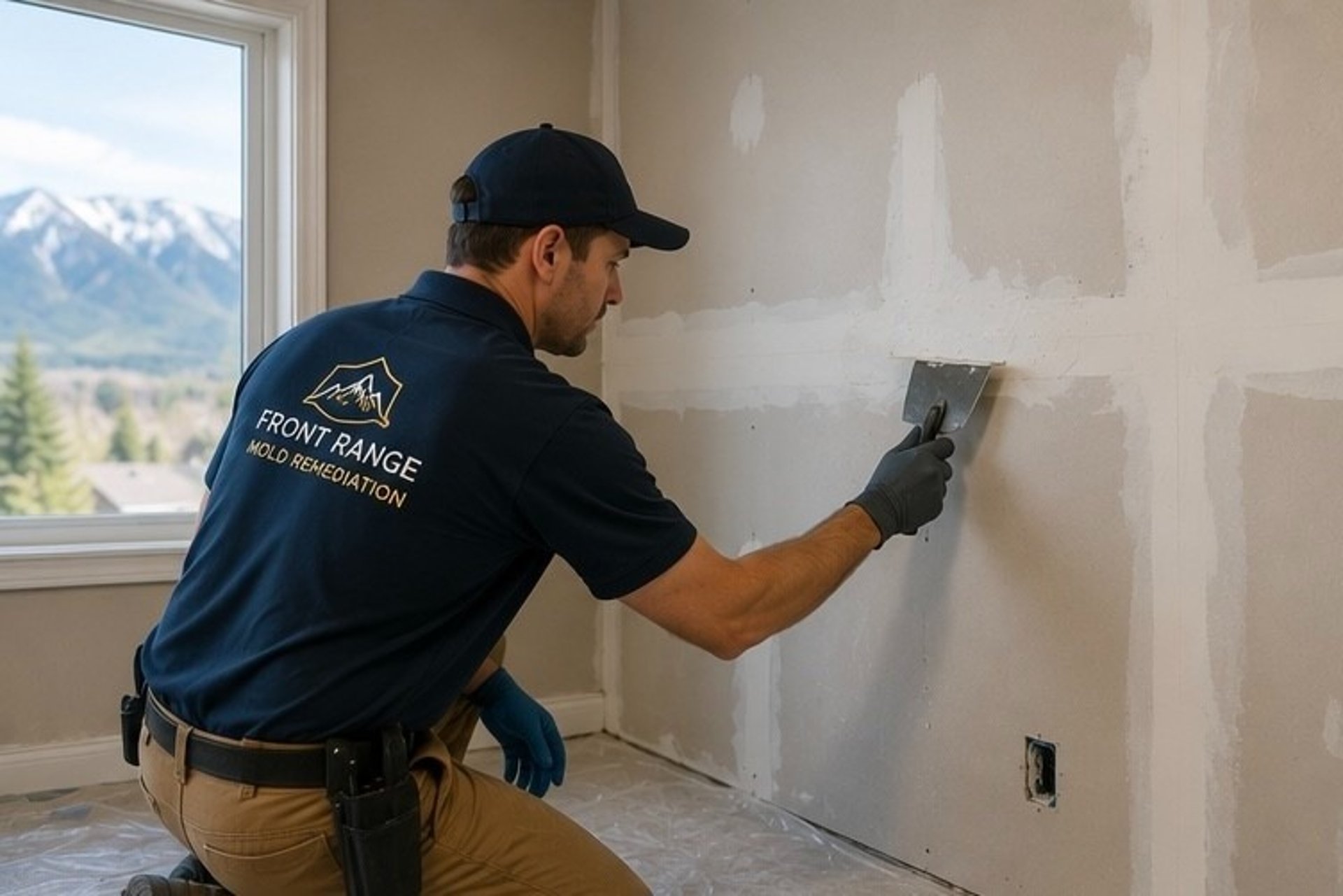
Mold Damage Restoration Colorado Springs Because Removing the Mold Is Only Half the Job
Front Range Mold Remediation provides certified mold damage restoration services across Colorado Springs for homeowners and property managers whose properties have sustained structural damage from mold contamination — whether discovered recently or after years of undetected growth. Mold doesn’t just discolor surfaces. It breaks down drywall paper, degrades wood framing, destroys insulation and compromises flooring systems from the inside out. Once the mold is removed the damaged materials left behind need professional restoration before the property is safe, structurally sound and liveable again. We handle both — certified mold removal and full structural restoration — under one scope, one contract and one set of documentation that covers the complete job for insurance purposes. We serve every Colorado Springs neighbourhood from Downtown and Old Colorado City to Briargate, Black Forest and Fountain.
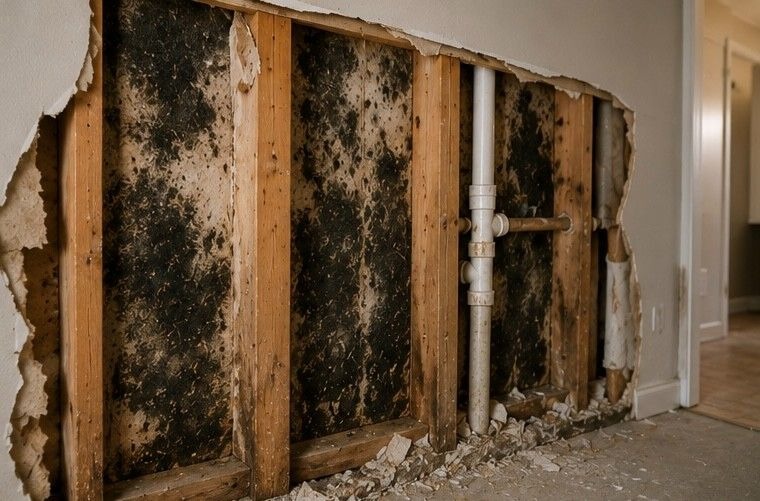
What Colorado Springs Homeowners Are Left With After Mold Is Removed
Most people focus entirely on getting the mold out — which is the right priority. But the moment the remediation is complete the full extent of the structural damage mold left behind becomes visible. Walls that need rebuilding, insulation that needs replacing, flooring that needs lifting and subfloor systems that need assessment — the restoration phase of a mold job is frequently as significant in scope and cost as the removal itself. Here’s what we walk into most often on restoration jobs across Colorado Springs.
01. Walls and ceilings that were opened during remediation and need rebuilding
Mold remediation that reaches into wall cavities requires removing sections of drywall to access contaminated framing and insulation. Once those materials are out the wall is open — exposed framing, missing insulation, no finished surface. That’s not a cosmetic issue. It’s a structural and thermal performance gap that needs proper restoration before the room is functional and before the property passes any inspection.
02. Insulation that absorbed moisture and lost its performance entirely
Insulation that has been exposed to chronic moisture — the kind that generates mold — doesn’t just carry contamination. It compresses, loses its R-value and in the case of fibreglass batts becomes a matted, ineffective mass that provides almost no thermal or acoustic performance. Replacing contaminated insulation is not optional if you want the restored wall assembly to perform the way it should.
03. Wood framing that has been structurally compromised by long term mold growth
Mold feeds on the cellulose in wood. In Colorado Springs properties where mold has been growing inside wall cavities or crawl spaces for months or years, the framing it’s been feeding on is weaker than it looks. Surface cleaned framing that has lost structural integrity needs assessment — and in cases where load-bearing elements are affected, replacement is the only appropriate response.
04. Flooring systems damaged by the moisture that caused the mold
Hardwood flooring that cupped or buckled from moisture intrusion, subfloor sheathing that has softened and delaminated, tile adhesive that failed when the substrate beneath it stayed wet — these are the flooring damage patterns we encounter most frequently on restoration jobs in Colorado Springs properties. The flooring often needs to come up entirely to assess and restore the subfloor system properly before new surface materials go down.
05. A property that multiple contractors now need to coordinate across
The most common frustration we hear from Colorado Springs homeowners after mold remediation is being left to coordinate a separate drywall contractor, a separate insulation company and a separate flooring contractor to complete a job that the remediation company started. Front Range Mold Remediation handles the full scope — removal and restoration — so you’re dealing with one company, one schedule and one set of documentation rather than three separate contractors who don’t communicate with each other.
06. Insurance documentation that needs to cover both removal and restoration
Insurance claims for mold damage in Colorado Springs are significantly more straightforward when removal and restoration are documented together under one scope of work. Separate contractors producing separate documentation creates gaps that adjusters query and delays that extend the claims process. Our combined scope produces a single set of documentation — cause assessment, removal records, restoration scope and completion sign off — that covers the entire claim.
Mold damage restoration isn’t a cosmetic cleanup after the real work is done. In most Colorado Springs properties it’s a structural rebuilding job — and it deserves the same certified standard as the remediation that preceded it.
Restoration after mold remediation follows a specific sequence — because starting restoration before the property is fully dried and cleared creates the same moisture conditions that generated the original contamination. Here’s how we manage the complete process from post-remediation assessment through to finished restoration.
How Front Range Mold Remediation Handles Mold Damage Restoration in Colorado Springs Properties
Step 4: Final Documentation
One Complete Record Covering the Entire Job Every Front Range mold damage restoration job concludes with complete written documentation covering the full scope from initial mold removal through to restoration completion — including post clearance testing results, structural assessment findings, materials replaced and final moisture readings confirming the restored assembly is dry and stable. This single document covers everything your insurance company, future buyer or property manager needs.
Step 1: Post-Remediation Assessment
Establishing What Needs Restoring Before restoration begins we conduct a full structural assessment of all areas affected by mold removal — identifying which materials can be restored, which need to be replaced entirely and what the moisture levels in remaining structural elements are before anything is enclosed. Enclosing wet framing or damp subfloor systems during restoration is one of the most common causes of mold recurrence after a restoration job and we don’t do it.
Step 2: Structural Drying
Getting Moisture Out Before Closing Up Any structural elements remaining after mold material removal — framing, concrete, masonry, subfloor systems — need to reach safe moisture levels before restoration materials go over them. We deploy industrial drying equipment and dehumidification systems and monitor moisture readings until every structural component meets the dry standard required before enclosure. This step is non-negotiable regardless of how dry things appear visually.
Step 3: Structural Restoration
Rebuilding What Mold Damaged Once drying is complete and moisture readings confirm safe levels we begin the physical restoration work — replacing drywall, installing new insulation to current R-value standards, restoring flooring systems, repairing or replacing compromised framing and finishing surfaces to match the surrounding property. We work to a finished standard, not a patch standard — restored areas should be indistinguishable from the unaffected parts of the property.
Restoration done to a patch standard leaves Colorado Springs homeowners with properties that look fixed on the surface while remaining structurally vulnerable underneath. We restore to finished standard — and document every step.
Eight Signs Your Colorado Springs Property Needs Professional Mold Damage Restoration
Mold damage goes deeper than the surface. Here’s what indicates structural restoration is required not just cosmetic repair.
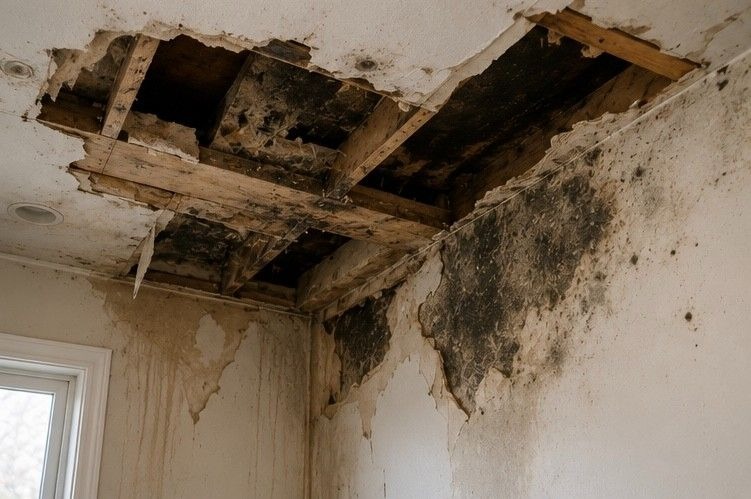
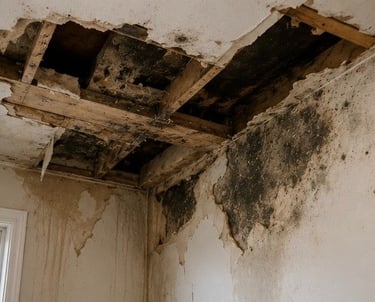
1. Drywall that feels soft, crumbles at the edges or has visible deterioration beyond surface staining
Drywall paper that mold has been feeding on loses its structural integrity — it becomes soft, friable and unable to hold fasteners or finish properly. Patching over deteriorated drywall produces a finish that fails within months. The affected sections need to come out and be replaced with new board.
2. A persistent musty smell that remains after mold removal was completed
If a musty smell remains in a property after certified mold removal was completed it indicates either residual contamination that wasn’t fully addressed or moisture remaining in structural materials that weren’t properly dried before the restoration phase began. Either way it warrants immediate reassessment before any further restoration work proceeds.
3. Flooring that is visibly warped, buckled, soft underfoot or separating at joints
These are all indicators of subfloor moisture damage beneath the surface material. The subfloor sheathing beneath warped hardwood or buckled laminate has almost certainly been compromised — and restoring the surface without addressing the subfloor system produces a floor that will continue to move, squeak and deteriorate regardless of what’s put on top of it.
4. Wood framing that is visibly discolored, soft to the touch or shows surface checking
Framing that mold has been consuming shows surface checking — fine cracks running along the grain — soft spots where the wood compresses under light pressure and discoloration that goes deeper than surface staining. Any of these in load bearing elements needs structural assessment before restoration proceeds over it.
5. Insulation that is matted, compressed, discolored or has an odour
Insulation in this condition has lost its thermal performance, may still carry mold contamination and cannot be restored by drying or treatment. Replacement is the only appropriate response — and the new insulation needs to go in after the cavity has been properly dried and confirmed at safe moisture levels.
6. Open wall or ceiling cavities following remediation that have been left exposed
Exposed wall cavities after mold removal are a time-sensitive restoration priority in Colorado Springs — particularly through winter when temperature differentials between inside and outside accelerate condensation inside open wall assemblies. The longer cavities are left open after remediation the greater the risk of new moisture accumulation before restoration closes them up.
7. A property where mold was discovered during renovation and work stopped mid-project
Renovation projects that uncovered mold and stopped work while remediation was arranged are common in Colorado Springs — and they leave properties in a partially opened state where restoration needs to integrate with the original renovation scope rather than simply patching back to pre-renovation condition.
8. An insurance claim that requires documented restoration completion to close
Insurance adjusters in Colorado Springs require documented restoration completion — not just remediation completion — before closing mold damage claims. If your claim is open and awaiting restoration documentation, a combined removal and restoration scope from a single certified contractor is the most efficient path to claim resolution.
Not sure whether your property needs full restoration or targeted repairs? Our mold inspection and testing team can assess the structural damage alongside the contamination and give you a clear picture of the complete scope before any work begins.
Why Colorado Springs Homeowners Choose Front Range for Mold Damage Restoration
One Company Handles the Complete Job From certified mold removal through to finished structural restoration
Front Range Mold Remediation manages the entire scope under one contract. No handoff between a remediation company and a separate restoration contractor. No coordination gaps. No competing documentation from two different companies covering the same insurance claim. One team, one timeline, one set of paperwork.
We Restore to Finished Standard
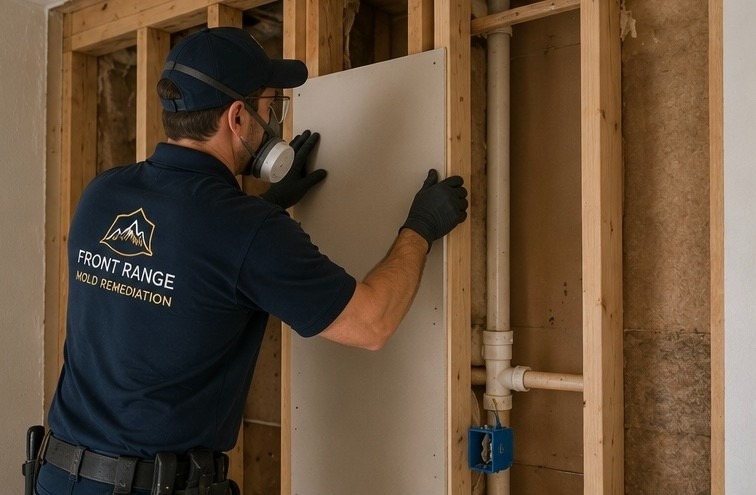
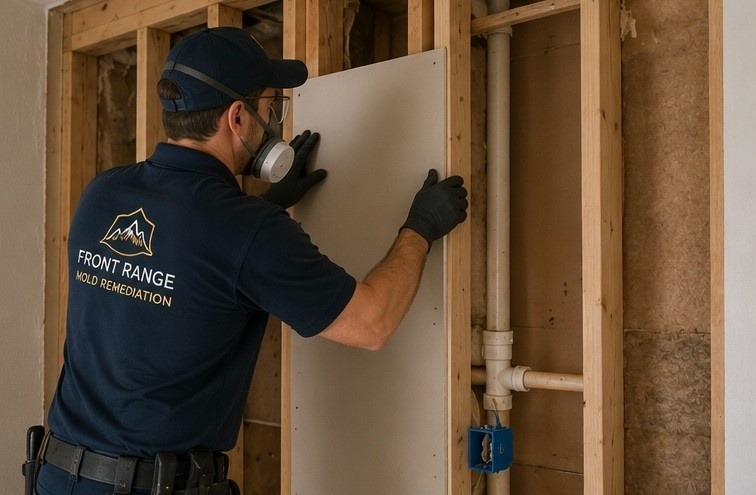
Not Patch Standard Restoration work that patches visibly damaged areas while leaving compromised materials underneath doesn’t solve the problem — it delays it. Every Front Range restoration job is completed to a finished standard that matches surrounding unaffected areas of the property. Restored walls, floors and ceilings should be indistinguishable from the rest of the property when we’re done.
Structural Drying Before Enclosure
Always We don’t close up wall cavities, install new insulation or lay new flooring over structural elements that haven’t reached confirmed safe moisture levels. Every Front Range restoration job includes moisture monitoring of structural components before enclosure — because restoration over wet framing or damp subfloor systems recreates the conditions that generated the original mold problem.
Complete Insurance Documentation From a Single Source
Our combined removal and restoration documentation covers everything an insurance adjuster needs in a single package — cause assessment, remediation scope and records, post clearance testing results, structural assessment findings, restoration scope and completion sign off. That documentation package significantly reduces the back and forth that extends Colorado Springs mold damage claims.
Restoration after mold removal is where most Colorado Springs homeowners get handed off to someone else. We don’t do that.
Ready to get your Colorado Springs property properly restored after mold removal? Contact us today for a free combined removal and restoration estimate.
Mold Damage Restoration Across Every Colorado Springs Neighbourhood
Front Range Mold Remediation provides certified mold damage restoration across all of Colorado Springs — handling the complete scope of structural repair that follows mold removal in properties ranging from historic Downtown buildings and Old Colorado City Victorian homes to newer residential builds in Briargate and Northgate.
Historic Downtown Colorado Springs properties frequently require restoration that integrates with century old construction methods — replacing damaged materials in ways that maintain structural integrity without compromising the building fabric that gives these properties their character.
Briargate’s residential density means mold damage restoration jobs here often involve finished basement spaces where multiple systems — framing, insulation, drywall, flooring — need coordinated restoration under a single scope.
High value Broadmoor properties with premium finishes require restoration that matches existing materials and finish quality — a standard we apply to every job regardless of property value but one that matters particularly in this neighbourhood’s context.
Victorian era construction in Old Colorado City presents restoration challenges unique to 19th century building methods — timber framing dimensions, plaster substrates and rubble stone foundations that require specialist knowledge to restore properly.
Mold damage restoration in newer Northgate properties typically involves modern construction systems — engineered lumber, OSB sheathing, composite flooring — where replacement with matching materials and correct moisture barrier installation prevents recurrence.
Mid-century Rockrimmon properties frequently present restoration jobs where original construction materials are no longer available — requiring restoration approaches that integrate modern materials effectively with existing mid-century building fabric.
Older Fountain properties with deferred maintenance histories often present mold damage restoration scopes that are larger than initially apparent — because long term moisture accumulation affects multiple systems simultaneously rather than isolating to a single area.
High residential density along the Powers Corridor means mold damage restoration jobs here frequently involve shared wall construction where restoration in one unit needs to account for the structural relationship with adjacent properties.
Black Forest properties on large forested lots frequently present crawl space and subfloor restoration scopes that require careful moisture management — because the ground moisture conditions that caused the original mold problem remain present and need to be addressed as part of the restoration scope.
High value Cheyenne Mountain properties with complex lower level layouts — basements, wine cellars, mechanical rooms — present restoration scopes that require careful sequencing to restore multiple interconnected spaces without creating new moisture pathways during the process.
Frequently Asked Questions
How long does mold damage restoration take in a Colorado Springs property?
Timeline depends entirely on the scope of structural damage. A single room requiring drywall replacement, new insulation and surface finishing typically takes three to five days once structural drying is confirmed complete. Larger scopes involving multiple rooms, flooring system replacement and framing repair can take two to three weeks. The variable that most affects timeline is how long the structural drying phase takes before restoration materials can safely go in — and that depends on how saturated the remaining structural elements are when remediation completes.
Does mold damage restoration require building permits in Colorado Springs?
It depends on the scope of structural work involved. Cosmetic restoration — drywall replacement, insulation and surface finishing — typically doesn’t require permits in Colorado Springs. Structural work involving load-bearing framing repair or replacement may require a permit depending on the extent. Front Range Mold Remediation identifies permit requirements during the initial assessment and manages the application process where permits are needed — so you’re not navigating the El Paso County permitting system yourself while also dealing with a mold remediation job.
Can mold damage restoration be covered by homeowner’s insurance in Colorado Springs?
Yes — when mold damage resulted from a covered event. Structural damage caused by mold that grew from a burst pipe, storm water intrusion or appliance failure is typically covered under standard Colorado homeowner’s policies as part of the same claim that covers the mold removal. Our combined removal and restoration documentation package is specifically structured to give insurance adjusters everything they need in a format that minimises claim delays. Our water damage mold removal team handles cases where water damage and mold damage need to be documented together under a single claim.
Will restored areas of my Colorado Springs property look the same as before?
That’s the standard we work to. Restored drywall is finished, primed and ready for paint to match surrounding areas. Replacement flooring is matched to existing materials where possible or integrated with a clean transition where an exact match isn’t achievable. Replacement insulation meets or exceeds the original R-value specification. We don’t patch to a visible patch standard — we restore to a finished standard where the remediated area integrates with the rest of the property rather than advertising that work was done there.
Should I get mold damage restoration done by the same company that did the mold removal?
It’s significantly more efficient when one company handles both. The remediation company already has full knowledge of what was removed, where the moisture source was, what structural elements were affected and what the post clearance results showed. Handing that scope to a separate restoration contractor means starting the knowledge transfer from scratch — and creates documentation gaps between two separate companies’ records that insurance adjusters regularly flag during claims processing. Front Range Mold Remediation handles both under one scope specifically to avoid these coordination problems.
Dealing with structural damage after mold removal in your Colorado Springs property? Our mold removal Colorado Springs team handles full remediation and restoration under one scope — contact us for a combined free estimate.
Other Mold Services We Offer in Colorado Springs
Mold damage restoration is the final phase of a complete mold remediation scope. Here’s everything that comes before it.
Mold Removal
Complete physical removal of mold contamination from all affected areas and materials.
Mold Inspection & Testing
Laboratory confirmed identification of black mold before any removal work begins.
Black Mold Removal
Specialist black mold removal with full containment before restoration of affected structural materials.
Crawl Space Mold Removal
The most overlooked part of any Colorado Springs home and the most common place mold takes hold.
Basement Mold Removal
Basements hold moisture longer than any other part of a property — and mold follows moisture.
Attic Mold Removal
Poor ventilation and slow roof leaks make attics one of the most common sites of undetected mold growth.
Commercial Mold Remediation
Mold in a commercial property affects staff, customers and your liability. We work around your schedule.
Emergency Mold Removal
Flood or burst pipe? Mold starts within 48 hours. Our emergency team responds around the clock.
Water Damage Mold Removal
Water intrusion and mold go together. If your property took on water, mold is likely already growing.
Your Colorado Springs Property Isn’t Fully Restored Until the Structure Behind the Walls Is Too
Mold removal without structural restoration leaves Colorado Springs properties with open cavities, missing insulation and compromised framing that create new moisture pathways before the next winter season begins. Front Range Mold Remediation handles the complete scope — certified removal followed by finished structural restoration — under one contract, one timeline and one documentation package that covers everything your insurance company needs. Free estimates, same week availability across all Colorado Springs neighbourhoods and a 24/7 emergency line for urgent situations.
One company. Complete scope. Finished result — from mold removal through to restored walls, floors and ceilings.
Want to understand what mold damage restoration actually involves before your assessment? Read our guide on Mold Damage Restoration in Broadmoor's Historic Estates so you know the right questions to ask.