
Old Colorado City Where 160 Years of Colorado History Lives Inside the Walls, and So Does the Moisture
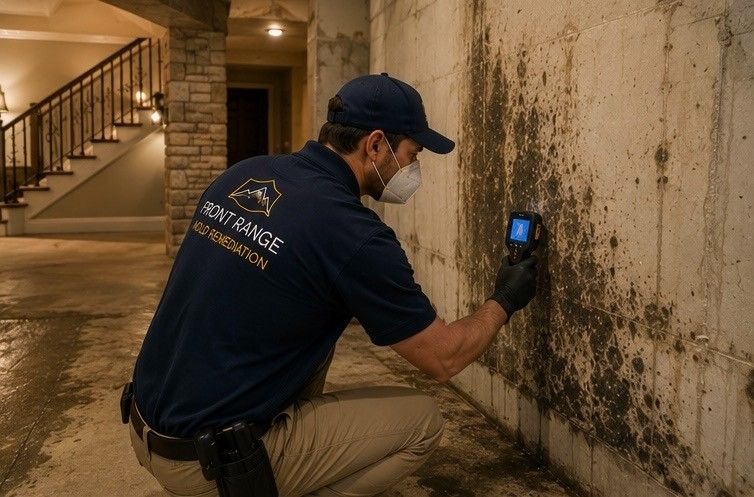
Front Range Mold Remediation serves homeowners, tenants and property managers throughout Old Colorado City — the historic heart of original Colorado Springs and one of the most architecturally significant neighbourhoods in El Paso County. The Victorian era homes, historic brick commercial buildings and converted residential properties along Colorado Avenue and the surrounding streets carry over 160 years of moisture history inside their walls, foundations and sub-floor structures — making professional mold assessment here more complex, and more important, than in any newer part of the city. We serve every property type across Old Colorado City with certified inspection, specialist assessment of historic building materials and full remediation documentation.
Old Colorado City — Founded in 1859, Still Carrying That Moisture History Today
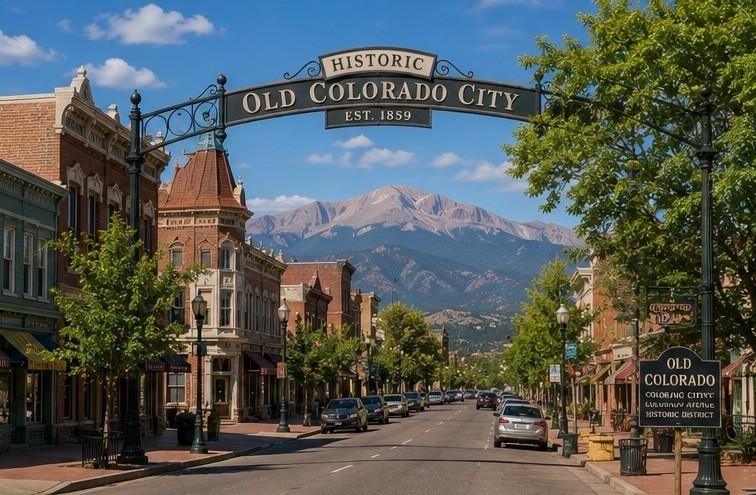
Old Colorado City holds the distinction of being the original settlement of Colorado Springs — established in 1859 as a separate municipality before eventually being annexed by Colorado Springs in 1917. The neighbourhood runs along Colorado Avenue from 8th Street to 31st Street — a historic commercial and residential corridor that has been continuously occupied for over 160 years and that contains some of the oldest standing structures in El Paso County.
The built environment of Old Colorado City reflects every period of Colorado Springs’ development. Victorian era residential properties from the 1880s and 1890s sit alongside early 20th century craftsman homes, mid-century residential conversions and the contemporary mixed-use developments that have filled gaps in the historic streetscape over the past two decades. The commercial strip along Colorado Avenue contains buildings that have operated continuously for well over a century — many now housing retail shops, restaurants and galleries in structures that were never designed for their current occupancy type.
What makes Old Colorado City unique from a moisture management perspective is the cumulative nature of its buildings’ moisture history. A Victorian-era home in Old Colorado City has experienced 130-plus Colorado winters — each one adding another freeze-thaw cycle to the foundation, another season of condensation in the unventilated sub-floor void and another year of moisture accumulation in timber framing that was never treated with modern moisture-resistant products. The mold found in Old Colorado City properties isn’t just the result of a recent event — it’s often the accumulated product of generations of moisture exposure in building materials that have been absorbing and retaining water since the Gilded Age.
Why Old Colorado City’s Historic Character Creates Mold Conditions Unlike Anywhere Else in Colorado Springs
The characteristics that make Old Colorado City historically significant — original construction materials, Victorian era building methods and century-old foundations — are the same characteristics that make mold assessment here fundamentally different from the rest of Colorado Springs.
Rubble Stone and Brick Foundations Without Waterproofing
Old Colorado City’s oldest properties sit on rubble stone or fired brick foundations laid in the 19th century with lime mortar that has been weathering for well over a century. These foundations were never waterproofed — the concept of below-grade waterproofing membranes didn’t exist when most Old Colorado City properties were built. Every Colorado Springs spring snowmelt and every freeze-thaw cycle adds to the progressive moisture permeability of these historic foundations, creating basement and sub-floor moisture conditions that have been accumulating since the property was built.
Timber Framing That Has Absorbed Moisture for Generations
Victorian era construction in Old Colorado City used solid timber framing — dimensional lumber cut from old growth timber that absorbed moisture differently from modern engineered wood products. That timber has been exposed to Colorado Springs’ seasonal moisture cycles for generations without the benefit of modern moisture-resistant treatments, vapour barriers or sealed wall assemblies. Mold that has established itself in Old Colorado City timber framing has had decades to penetrate deeply into the wood structure — making physical removal more extensive and more complex than in modern construction.
Plaster Interior Surfaces That Mask Sub-Surface Contamination
Old Colorado City’s Victorian era properties frequently retain original plaster interior finishes — three-coat lime plaster over wood lath that predates drywall by decades. Plaster walls that have absorbed moisture from old Colorado City’s historic foundations develop mold growth on the lath and framing behind the plaster face without producing visible surface signs until the contamination is well advanced — because lime plaster, unlike paper-faced drywall, doesn’t show mold staining on its surface as readily.
Commercial Building Conversions With Residential Moisture Loads
Colorado Avenue’s commercial buildings that have been converted to mixed use — retail on the ground floor, residential above — were originally designed for commercial occupancy that generates fundamentally different moisture loads than residential use. The ventilation systems, drainage designs and wall assemblies in these buildings weren’t calculated for the daily humidity output of kitchens, bathrooms and occupied residential spaces. Mold in converted Old Colorado City commercial buildings frequently traces back to this fundamental mismatch between original building design and current occupancy use.
Fountain Creek Proximity and Seasonal Flood Risk
Old Colorado City sits adjacent to Fountain Creek — which runs along the neighbourhood’s southern boundary and has a documented history of flooding during Colorado Springs spring snowmelt events. Properties on the creek-adjacent streets in Old Colorado City experience seasonal flood risk that modern drainage infrastructure only partially mitigates. Repeated low-level flooding events that don’t reach catastrophic levels still deposit moisture in sub-floor systems and foundation cavities that generates progressive mold accumulation with each successive spring.
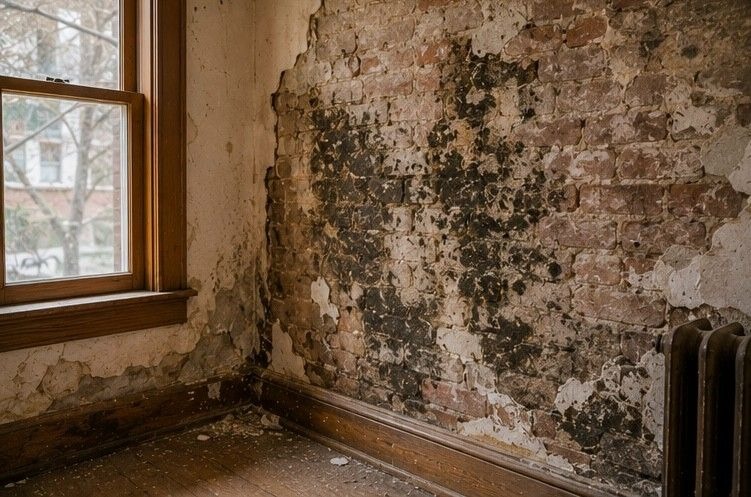
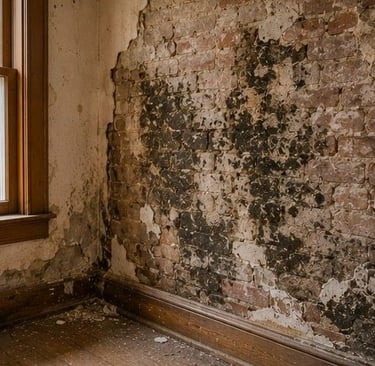
Old Colorado City’s historic character is irreplaceable. The moisture problems that come with 160-year-old construction are also, unfortunately, well documented — and they require assessment approaches that understand how these specific building materials behave rather than applying modern construction assessment protocols to century-old buildings.
Mold Services We Provide Across Old Colorado City Colorado Springs
Every service below covers Old Colorado City properties — from Victorian era brick building assessments to emergency response for the older residential and commercial stock throughout this 19th century Colorado Springs neighbourhood.
Mold Removal
Mold removal in Old Colorado City historic properties requires understanding 19th century construction materials — timber framing, rubble stone foundations and lime plaster — that respond to remediation differently from modern drywall and engineered wood construction.
Mold Inspection & Testing
Old Colorado City property inspections assess historic building materials — original timber framing, brick foundations and plaster walls — using moisture mapping approaches calibrated for construction that predates modern vapour barriers by several generations.
Black Mold Removal
Black mold in Old Colorado City’s chronically damp historic foundations and sub-floor timber structures has often been growing for years before discovery — making containment and physical removal protocols particularly important in these older building environments.
Mold Damage Restoration
Restoration in Old Colorado City historic properties requires sensitivity to original building materials and period-appropriate repair approaches — not standard drywall and insulation replacement applied to buildings where those materials were never originally used.
Crawl Space Mold Removal
Old Colorado City’s Victorian era properties with original sub-floor voids — never designed as accessible crawl spaces — carry decades of accumulated ground moisture and mold growth in timber framing that has never been inspected or treated.
Basement Mold Removal
Historic Old Colorado City basements with rubble stone or brick foundations and original lime mortar have been absorbing Colorado Springs moisture for over a century — creating basement mold conditions that are among the most advanced and most structurally complex we encounter in the entire city.
Attic Mold Removal
Victorian era roof structures in Old Colorado City with original timber rafters and no ridge ventilation develop attic mold through condensation accumulation that modern ventilated rooflines don’t experience in the same way.
Commercial Mold Remediation
Old Colorado City’s active Colorado Avenue commercial district includes restaurants, retail and gallery spaces in historic buildings — requiring commercial mold remediation sensitive to historic fabric and scheduled around active business operations.
Emergency Mold Removal
Emergency mold response in Old Colorado City covers the full historic neighbourhood 24/7 — with assessment approaches that account for historic construction materials when establishing scope and containment requirements.
Water Damage Mold Removal
Water damage in Old Colorado City’s historic properties — from Fountain Creek flooding to plumbing failures in century-old systems — requires combined water damage and mold assessment that understands how moisture moves through Victorian era building fabric.
Other Colorado Springs Neighbourhoods We Serve:
Why Old Colorado City Property Owners Choose Front Range Mold Remediation
We Understand Historic Building Materials
Not Just Modern Construction Assessing mold in a Victorian era Old Colorado City property requires understanding how lime mortar foundations absorb moisture, how old growth timber responds to fungal growth over decades and how lime plaster walls mask sub-surface contamination differently from modern drywall. Our Old Colorado City assessments are informed by the specific building history of this neighbourhood — not generic residential protocols applied to buildings that predate those protocols by a century.
Honest Scope Assessment for Properties
With Complex Moisture Histories Old Colorado City properties with 100-plus year moisture histories can produce mold assessment findings that are more extensive than expected. We document scope honestly — presenting findings clearly and explaining what’s required before any work begins, rather than scoping work incrementally in a way that obscures the full picture from a homeowner who deserves complete information before committing to remediation.
Restoration That Respects Historic Character
Mold damage restoration in Old Colorado City historic properties can’t default to standard drywall and insulation replacement where original building materials require period-appropriate repair approaches. We identify restoration options that maintain the historic character of Old Colorado City properties where possible — and where material replacement is unavoidable, we ensure what goes back matches the surrounding historic fabric as closely as practicable.
Assessment of Commercial and Residential Properties Alike
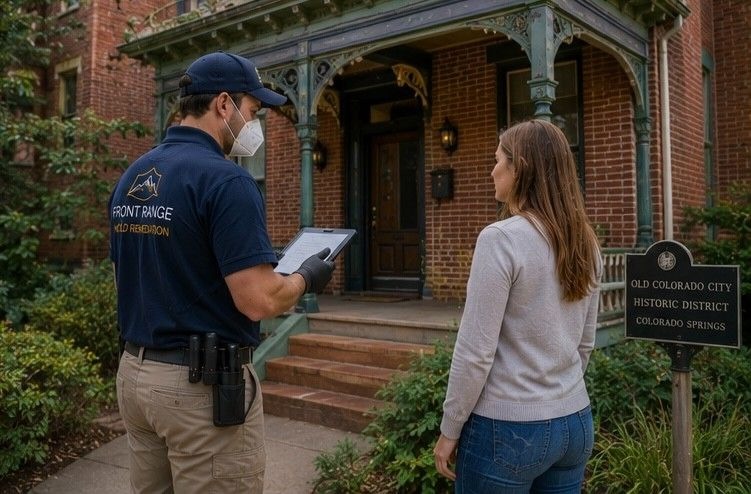
Old Colorado City’s mix of active commercial buildings, residential conversions and mixed-use properties means mold assessment here covers every property type — from occupied retail spaces on Colorado Avenue to the Victorian residential properties on the surrounding streets. Our team handles both commercial and residential assessment and remediation across the full Old Colorado City neighbourhood.
Frequently Asked Questions
Does the age of my Old Colorado City property mean mold is inevitable?
Not inevitable — but significantly more likely, and more likely to be extensive when present, than in newer Colorado Springs properties. Victorian era construction created moisture accumulation conditions that modern building methods specifically try to prevent — and over 100-plus years those conditions have had ample time to generate contamination in building materials that were never designed to resist it. That doesn’t mean every old Colorado City property has a significant mold problem — it means that the probability of finding undiscovered contamination in an Old Colorado City property that has never been professionally assessed is considerably higher than in a 20-year-old Briargate build. A professional inspection establishes what’s actually present — which is always more useful than assumption in either direction.
Can old plaster walls in my Old Colorado City home be assessed for mold without damaging them?
To a significant degree — yes. Moisture meters and thermal imaging can identify elevated moisture content and temperature anomalies behind plaster surfaces without physical intervention in most cases. Where moisture readings indicate likely contamination behind a plaster wall and the assessment warrants investigation, limited exploratory access is discussed with the property owner before anything is opened — and where possible we identify the least historically significant section of the wall assembly for any necessary investigation access. We don’t demolish historic plaster walls to assess for mold when non-invasive tools can establish whether a problem is present and where it’s located.
My Old Colorado City property is a rental — what are my obligations when a tenant reports mold in a historic building?
The same legal obligations apply regardless of whether your rental property is a modern apartment or a Victorian era Old Colorado City home — Colorado law requires landlords to maintain habitable conditions and to respond to documented mold complaints within a reasonable timeframe. The complexity of historic building remediation doesn’t modify your legal obligation to act — it just means the remediation process may be more involved than in a standard residential building. Our mold inspection and testing team provides rapid assessment with written documentation that demonstrates prompt landlord response — which is what matters legally regardless of the property type.
How does Fountain Creek flooding history affect mold risk in Old Colorado City properties near the creek?
Properties within the Fountain Creek flood influence area in Old Colorado City experience periodic low-level moisture events from creek overflow and sub-surface groundwater that rises during high water periods. Even events that don’t produce visible flooding inside a property still elevate groundwater levels around foundations — pushing moisture through the historic masonry and rubble stone foundations of nearby properties. Cumulative moisture from recurring creek-adjacent events in Old Colorado City builds up progressively in sub-floor and basement materials over years, generating mold that traces to no single dramatic flood event but to the accumulated moisture of many modest ones. Our water damage mold removal team assesses properties with Fountain Creek flood history accounting for this cumulative moisture pattern.
Is it safe to stay in my Old Colorado City historic home during mold remediation?
It depends on the scope and location of the contamination. For localised remediation in an isolated area of an Old Colorado City property — a single room or confined basement section — remaining in the unaffected parts of the home is often feasible with appropriate containment. For extensive remediation involving multiple rooms, significant structural material removal or work in the primary living areas of the property, temporary displacement during active work phases is recommended — particularly for anyone with respiratory sensitivities who may be affected by even well-contained disturbance of historic materials that have accumulated decades of contamination.
Have questions about mold in your Old Colorado City historic property that need specialist answers? Call us directly at (719) 283-8691 or visit our black mold removal page for information on the most serious contamination scenarios we encounter in historic Colorado Springs properties.
Old Colorado City’s Historic Properties Deserve Assessment That Understands Their History
A Victorian era Old Colorado City property has been absorbing Colorado Springs moisture since before modern waterproofing existed. The mold assessment it deserves accounts for that history — not a generic residential protocol applied to a building that predates it by a century. Front Range Mold Remediation provides certified mold inspection, removal and documentation across all of Old Colorado City — free estimates, historic building material assessment, restoration sensitive to the neighbourhood’s character and written clearance documentation before sign off. Same week availability and 24/7 emergency response across the full historic neighbourhood.
Serving all of Old Colorado City — certified process, historic understanding, documented results.
Want to understand why Old Colorado City’s Victorian era construction creates such specific mold challenges? Read our guide on Crawl Space Mold in Old Colorado City's Century-Old Homes.