
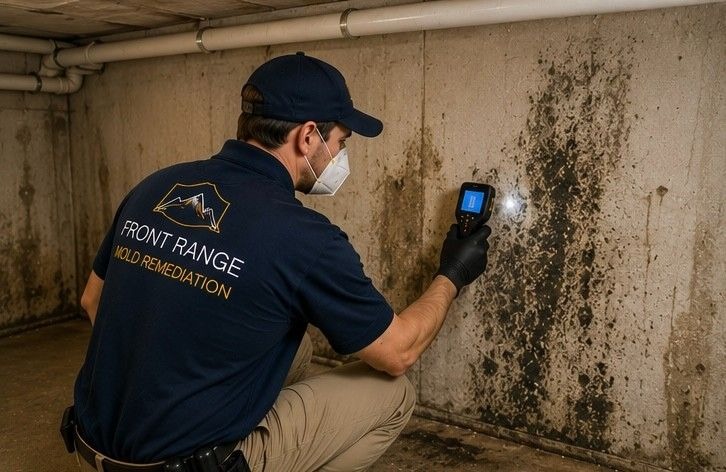
Cheyenne Mountain Colorado Springs Mountain Proximity Creates Moisture Conditions That High Value Properties Can’t Afford to Ignore
Front Range Mold Remediation serves homeowners and property managers throughout Cheyenne Mountain — one of Colorado Springs’ most coveted residential communities and one where the proximity to Cheyenne Mountain creates specific moisture dynamics that affect properties differently from every other neighbourhood in the city. Mountain snowmelt drainage, elevated ambient humidity from the mountain’s eastern face, morning fog and the specific condensation patterns that high-altitude terrain proximity generates combine to create below-grade and attic moisture conditions in Cheyenne Mountain properties that require both specialist assessment and high documentation standards for the insurance and real estate contexts that high value property transactions involve. Our IICRC certified team provides certified mold inspection, removal and full clearance documentation across all of Cheyenne Mountain.
Cheyenne Mountain — Colorado Springs’ Most Coveted Address and Its Specific Moisture Geography
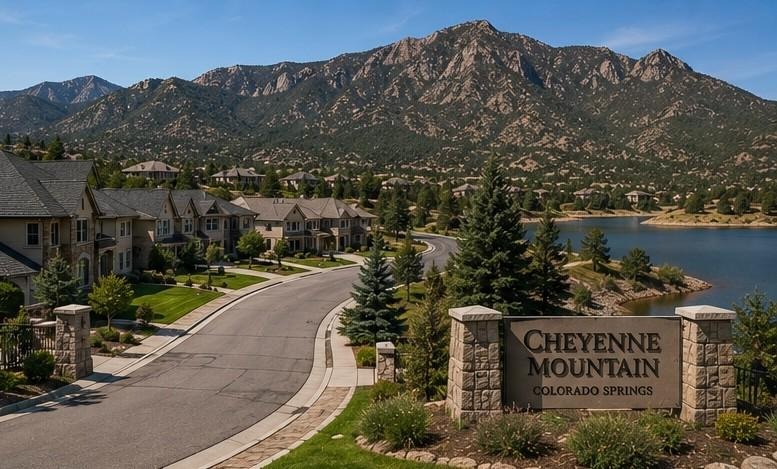
Cheyenne Mountain sits at the southwestern edge of Colorado Springs — a prestigious residential community nestled between the Broadmoor area to the north and the Cheyenne Mountain State Park to the south and west. The neighbourhood occupies the lower eastern slopes and foothills terrain at the base of Cheyenne Mountain itself — one of Colorado’s most recognisable peaks — and contains some of the most valuable residential real estate in El Paso County.
The community’s development spans multiple periods — from early 20th century estates built by Colorado Springs’ most affluent residents when the Broadmoor Hotel defined the social character of southwest Colorado Springs, through mid-century large lot residential development, to contemporary luxury builds on the remaining terrain parcels that the mountain’s topography has made both exclusive and challenging to develop. Property sizes tend to be generous — large lots with significant setbacks, mature landscaping and in many cases substantial building footprints that include extensive below-grade areas.
The mountain geography that makes Cheyenne Mountain such a distinctive address also creates its specific moisture management challenges. Sitting at the base of a 9,565-foot mountain means that Cheyenne Mountain properties exist in a microclimate that’s measurably different from flat Colorado Springs terrain — more morning fog, more frequent cloud shadow that reduces solar drying, higher ambient humidity from the mountain’s influence on local air mass behaviour and the seasonal snowmelt drainage from Cheyenne Mountain’s eastern face that flows toward and around Cheyenne Mountain neighbourhood foundations every spring.
Why Cheyenne Mountain’s Mountain Geography Creates Mold Conditions That Scale With Property Complexity
Cheyenne Mountain’s mold risk isn’t just about the mountain moisture — it’s about what that moisture does in the complex, extensive below-grade spaces that characterise the neighbourhood’s high value properties.
Mountain Snowmelt Drainage Against Foundations From Above
Cheyenne Mountain properties on the lower slopes and foothill terrain receive snowmelt drainage from the mountain above them every spring — water that flows downslope and accumulates against the upslope foundation walls of properties that sit in the drainage path. Unlike Broadmoor properties that experience drainage from Cheyenne Mountain’s snowmelt more diffusely, properties in the steeper terrain sections of Cheyenne Mountain neighbourhood experience more concentrated drainage that creates hydrostatic foundation pressure during peak snowmelt periods. Properties without properly maintained perimeter drainage systems specifically designed for upslope drainage face annual foundation moisture intrusion that generates progressive below-grade contamination.
Elevated Ambient Humidity From Mountain Microclimate
The microclimate at the base of Cheyenne Mountain is measurably more humid than flat Colorado Springs terrain — morning fog from the mountain’s influence on local air mass behaviour, more frequent cloud cover from mountain weather systems and the generally higher humidity of terrain adjacent to significant topographic elevation create ambient moisture conditions that affect all surfaces in Cheyenne Mountain properties. Interior surfaces adjacent to exterior walls — particularly in below-grade spaces and attic areas — experience condensation dynamics driven by this elevated ambient humidity that open terrain Colorado Springs properties don’t replicate.
Extensive Below-Grade Footprints With Complex Moisture Environments
Cheyenne Mountain’s high value properties frequently have among the most extensive and complex below-grade footprints in Colorado Springs — multiple basement levels, wine storage areas, mechanical rooms, home theatres and walk-out basement sections that expose multiple foundation faces to the external moisture conditions of mountain terrain simultaneously. Each of these spaces has its own temperature, humidity and moisture exposure profile — and the interaction between the mountain’s moisture dynamics and the complex below-grade geometry of Cheyenne Mountain properties creates a set of moisture management challenges that standard below-grade assessment approaches don’t fully capture.
Reduced Solar Exposure on Mountain-Facing and Shaded Property Sections
Cheyenne Mountain’s location means that properties on the neighbourhood’s western and southwestern sections have foundation walls and roof sections that face the mountain — receiving limited direct solar exposure that the mountain itself blocks. These mountain-facing surfaces stay cooler and retain moisture longer after weather events than sun-exposed faces do — creating persistent condensation conditions on cold surfaces in below-grade and attic spaces on the mountain-facing sides of Cheyenne Mountain properties that generate mold in areas where solar drying would otherwise provide passive moisture management.
Historic Estate Properties With Waterproofing Systems Designed for Previous Eras
Cheyenne Mountain’s oldest properties — the early 20th century estates built by Colorado Springs’ original elite residents — have below-grade waterproofing systems designed and installed under the construction standards of their era. Original damp-proofing rather than modern waterproofing membranes, original perimeter drainage designs that have been modified or extended over multiple ownership periods and foundation materials that have been absorbing mountain terrain moisture for eighty to a hundred years create below-grade conditions where the gap between the waterproofing system’s original design performance and the moisture load it’s currently managing has been widening for generations.
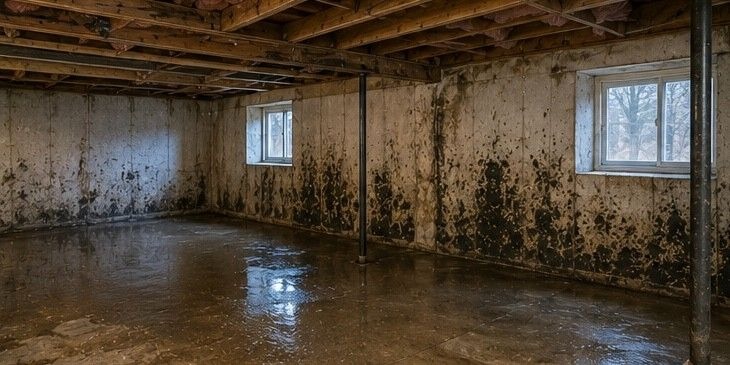
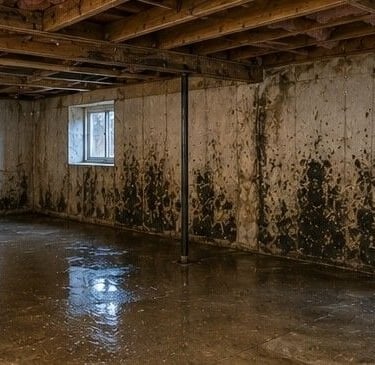
Cheyenne Mountain’s property values reflect what its geography provides — mountain proximity, prestigious address and spectacular natural setting. That same geography creates moisture management requirements that scale with the size and complexity of the properties it hosts. Professional mold assessment in Cheyenne Mountain isn’t a precaution — it’s routine maintenance for properties that exist in a genuinely elevated moisture environment.
Mold Services We Provide Throughout Cheyenne Mountain Colorado Springs
Every mold service below is available across this neighbourhood — from certified inspection and testing to emergency response and full structural restoration across all Colorado Springs property types.
Mold Removal
Cheyenne Mountain mold removal addresses contamination driven by mountain terrain moisture dynamics — below-grade spaces with upslope drainage pressure, elevated ambient humidity from mountain microclimate and complex multi-level basement footprints that require systematic space-by-space assessment and treatment.
Mold Inspection & Testing
Cheyenne Mountain property inspections assess mountain terrain moisture dynamics alongside standard residential assessment — upslope drainage patterns, ambient humidity levels, condensation risk on mountain-facing surfaces and complex below-grade moisture environments in high value estate properties.
Black Mold Removal
Black mold in Cheyenne Mountain below-grade spaces — where mountain snowmelt drainage maintains chronic foundation moisture and elevated ambient humidity creates sustained condensation conditions — requires specialist containment and removal with the documentation standards that high value property insurance claims require.
Mold Damage Restoration
Post-removal restoration in Cheyenne Mountain properties requires premium finish standards — matching the surrounding high-quality materials in estate properties where restored areas must integrate seamlessly with finishes that reflect the property’s value level.
Crawl Space Mold Removal
Crawl space sections beneath Cheyenne Mountain properties on complex terrain footprints experience mountain proximity moisture dynamics that make vapour barrier performance here critical — and the consequences of vapour barrier failure more severe than in flat terrain properties.
Basement Mold Removal
Multi-level Cheyenne Mountain basement systems — including wine cellars, mechanical rooms and walk-out sections — require systematic below-grade assessment treating each distinct moisture environment independently rather than as a single undifferentiated below-grade space.
Attic Mold Removal
Mountain-facing attic sections in Cheyenne Mountain properties receive limited solar exposure and experience elevated condensation conditions from mountain microclimate humidity — creating attic mold risk that’s concentrated in specific sections of the roof structure rather than uniformly distributed.
Commercial Mold Remediation
Commercial and hospitality properties in the Cheyenne Mountain area — including tourism-adjacent businesses serving the resort and state park — require commercial mold remediation maintaining the premium environment standards appropriate for this Colorado Springs location.
Emergency Mold Removal
Emergency mold response covers all of Cheyenne Mountain 24/7 — with the documentation standards and response capability appropriate for high value property emergencies where insurance claim requirements begin from the moment the emergency team arrives.
Water Damage Mold Removal
Water damage events in Cheyenne Mountain — from mountain snowmelt foundation intrusion to plumbing failures in complex high value property plumbing systems — require combined water damage and mold assessment that accounts for the mountain terrain moisture dynamics that accelerate mold establishment in this neighbourhood’s specific environmental conditions.
Other Colorado Springs Neighbourhoods We Serve:
Why Cheyenne Mountain Homeowners Choose Front Range Mold Remediation
We Understand Mountain Terrain Moisture Dynamics
The moisture conditions at the base of Cheyenne Mountain are genuinely different from flat Colorado Springs terrain — and assessing mold in a Cheyenne Mountain property requires understanding how upslope drainage, elevated ambient humidity and mountain microclimate condensation patterns interact with complex high value property construction. Our Cheyenne Mountain assessments account for these terrain-specific factors rather than applying standard residential assessment assumptions that were calibrated for different environmental conditions.
Restoration to Premium Finish Standard
Mold damage restoration in Cheyenne Mountain properties is completed to a standard that matches the surrounding premium finishes — not to a baseline residential standard applied regardless of what the rest of the property looks like. Restored areas in Cheyenne Mountain estate properties should be indistinguishable from the unaffected surrounding finishes — that’s the standard we work to on every job in this neighbourhood.
High Value Property Documentation Standards
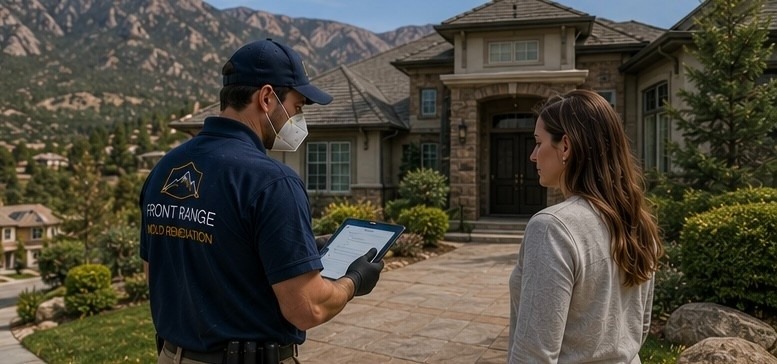
Every Front Range mold job in Cheyenne Mountain produces complete documentation — cause assessment, scope of work, post clearance testing results — structured to meet the requirements of high value property insurance adjusters, real estate transaction due diligence and the premium property management standards that Cheyenne Mountain properties operate under. The documentation package from a Cheyenne Mountain job is comprehensive enough to satisfy the scrutiny that high value property claims and transactions require.
Complex Below-Grade Assessment Capability
Cheyenne Mountain’s multi-level basement footprints, wine cellars, mechanical rooms and walk-out sections require assessment capability that treats each distinct below-grade space as a separate moisture environment — not a single assessment of the main basement applied to the whole below-grade footprint. We assess each distinct space in Cheyenne Mountain’s complex estate properties independently before establishing the complete remediation scope.
Frequently Asked Questions
How does Cheyenne Mountain’s specific terrain affect mold risk differently from other southwest Colorado Springs properties like Broadmoor?
Broadmoor and Cheyenne Mountain share some moisture risk factors — both experience snowmelt drainage from the southwest Colorado Springs terrain — but Cheyenne Mountain properties sit closer to and more directly at the base of the mountain, experiencing more concentrated upslope drainage and a more pronounced microclimate effect from the mountain’s influence on local air mass behaviour. Morning fog is more frequent in Cheyenne Mountain than in Broadmoor, ambient humidity is somewhat higher and the condensation patterns on cold surfaces in below-grade and attic spaces are driven by this elevated ambient moisture as well as by seasonal snowmelt. Our mold inspection and testing team assesses Cheyenne Mountain properties accounting for these terrain-specific distinctions rather than treating Cheyenne Mountain and Broadmoor as equivalent moisture environments.
My Cheyenne Mountain property has a wine cellar — does mountain humidity create specific mold risk there?
Wine cellars maintained at cellar temperatures in Cheyenne Mountain properties exist at the intersection of two elevated humidity environments — the intentionally humid cellar interior and the elevated ambient humidity of mountain terrain proximity. The wall assembly separating the wine cellar from adjacent spaces experiences temperature and humidity differentials that create condensation conditions on the cold side of the assembly — typically the cellar wall interior — where mold can establish itself on the wall surface and in the insulation behind it. In Cheyenne Mountain properties where the wine cellar adjoins a below-grade space that also receives upslope drainage moisture, the combined moisture load is more challenging to manage than in a wine cellar in flat terrain. We assess wine cellars as distinct moisture environments in Cheyenne Mountain estate properties — because treating them as standard below-grade spaces misses the specific conditions that drive contamination here.
How does the Cheyenne Mountain State Park proximity affect properties on the neighbourhood’s western edge?
Properties directly adjacent to Cheyenne Mountain State Park on the neighbourhood’s western boundary experience terrain conditions similar to Black Forest properties — shaded foundation areas from adjacent woodland, moisture retention from organic material on the forest floor at the property boundary and reduced solar drying of foundation perimeters on the park-facing side of the property. For Cheyenne Mountain properties with western or southwestern foundations adjacent to park terrain, the upslope drainage and terrain moisture factors that affect the broader neighbourhood are compounded by the specific moisture conditions of park-adjacent wooded terrain. Our basement mold removal team assesses Cheyenne Mountain properties on the park boundary accounting for this compounded terrain moisture dynamic.
What documentation standards should I expect for a mold remediation insurance claim on a high value Cheyenne Mountain property?
High value property insurance claims in Cheyenne Mountain require more comprehensive documentation than standard residential claims — because the scope of work is more complex, the materials and finishes involved are more valuable and adjusters on high value claims review documentation more carefully. At minimum, Cheyenne Mountain mold remediation documentation for an insurance claim should include a cause assessment report identifying the specific moisture source and how it relates to covered event criteria, detailed scope of work with material specifications for all removed and treated elements, contractor IICRC certification documentation, post clearance laboratory test results and before-and-after photographic documentation of every affected area. Our documentation package is structured specifically to meet these requirements from the start of every job — not assembled retrospectively after the adjuster identifies gaps.
Is pre-listing mold inspection important for Cheyenne Mountain properties specifically?
Particularly important — for two reasons specific to this neighbourhood. First, Cheyenne Mountain’s mountain terrain moisture dynamics mean that below-grade moisture accumulation is a genuine ongoing risk rather than an occasional event, and buyers or their representatives who understand the neighbourhood’s moisture geography will expect evidence of professional moisture and mold assessment. Second, Cheyenne Mountain properties transact at values where the financial consequence of a mold flag during a buyer’s inspection is proportionately more significant than in lower value Colorado Springs markets. A clean pre-listing mold assessment with written clearance documentation supports transaction confidence and removes a negotiating point that a mid-transaction mold discovery would otherwise create. Our mold inspection and testing team provides Cheyenne Mountain pre-listing assessments with documentation structured for real estate transaction use.
Concerned about mountain terrain moisture and mold in your Cheyenne Mountain Colorado Springs property? Our water damage mold removal team handles the combined drainage and mold scenarios most common in mountain proximity properties — contact us for a free estimate.
Cheyenne Mountain’s Setting Is Exceptional — Its Moisture Management Requirements Are Too
Properties at the base of Cheyenne Mountain exist in a genuinely elevated moisture environment — mountain snowmelt drainage, elevated ambient humidity and complex below-grade footprints that create moisture management requirements that don’t apply to the same degree anywhere else in Colorado Springs. Front Range Mold Remediation provides certified mold inspection, removal and documentation across all of Cheyenne Mountain — free estimates, mountain terrain moisture assessment, complex below-grade space coverage and documentation standards appropriate for high value property insurance claims and real estate transactions. Same week availability and 24/7 emergency response across the full neighbourhood.
Serving all of Cheyenne Mountain — mountain terrain expertise, premium documentation standards, certified results.
Want to understand how Cheyenne Mountain’s terrain creates moisture conditions that affect properties differently from the rest of Colorado Springs? Read our guide on Black Mold Removal for Cheyenne Mountain's Shaded, Canyon-Adjacent Homes.