
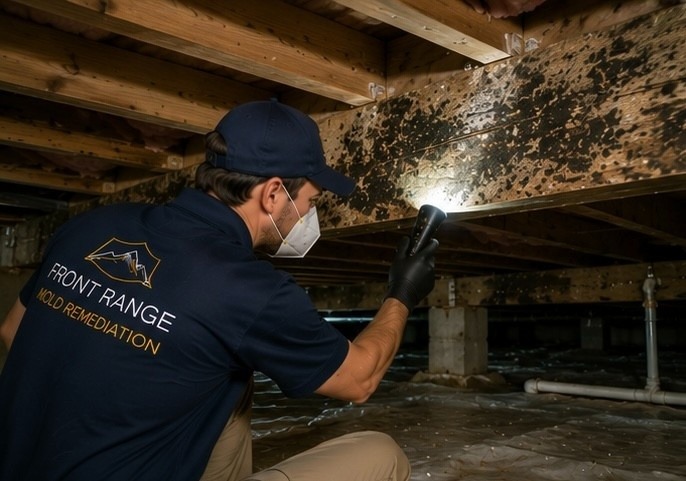
Black Forest Colorado Springs Forested Lots and Persistent Ground Moisture Create Some of the Highest Mold Risk in the Colorado Springs Area
Front Range Mold Remediation serves homeowners throughout Black Forest — a northeast Colorado Springs residential community where large forested lots, ponderosa pine canopy and the specific moisture dynamics of treed terrain create mold conditions in crawl spaces, basements and attics that exceed what most other Colorado Springs neighbourhoods experience. The combination of persistent ground moisture from tree canopy shade, older construction that predates modern vapour barriers and properties on large lots where sub-floor spaces have rarely been accessed creates some of the most advanced and most extensive crawl space mold contamination we encounter in the entire Colorado Springs area. Our IICRC certified team provides certified mold inspection, removal and clearance documentation across Black Forest with the specialist knowledge that forested terrain mold assessment requires.
Black Forest — Northeast Colorado Springs’ Forested Community and the Moisture Dynamics That Come With It
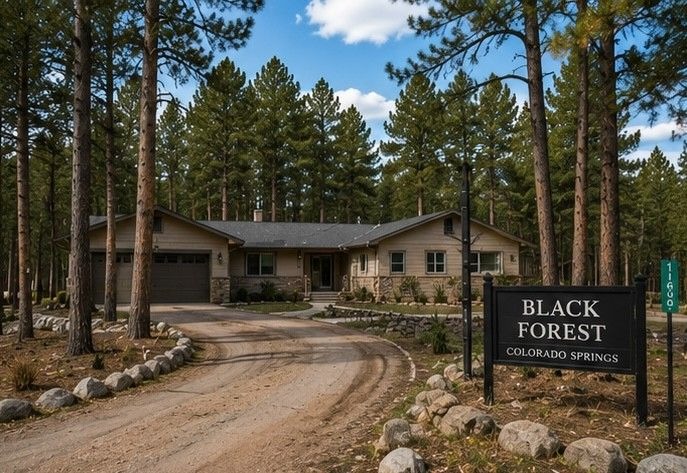
Black Forest occupies the northeast quadrant of the Colorado Springs area — a large, low-density residential community situated on the Black Forest plateau northeast of the city proper, characterised by large lots ranging from one to ten acres, ponderosa pine forest cover that gives the area its name and a rural residential character that distinguishes it sharply from the denser urban and suburban neighbourhoods of Colorado Springs itself.
The community developed primarily from the 1960s through the 1990s — single-family homes on generous lots in a forested setting that attracted Colorado Springs residents seeking privacy, space and natural surroundings. The housing stock reflects that development timeline — a mix of 1960s and 1970s ranch-style homes, 1980s and 1990s larger family builds and more recent custom construction on the remaining large lot parcels — with construction quality ranging from modest original builds to substantial custom homes depending on the ownership history of each lot.
What defines Black Forest from a moisture management perspective is the forest itself. Ponderosa pine canopy over large Black Forest properties shades the ground around and beneath the house year-round — dramatically reducing the solar exposure that would otherwise help manage soil moisture content and drying around foundations. The forest floor under pine canopy retains moisture far longer after rainfall and snowmelt than open terrain ground does — creating persistently damp soil conditions around Black Forest foundations and crawl spaces that open terrain properties in other parts of Colorado Springs don’t experience.
Why Black Forest’s Forested Setting Creates Mold Conditions That Go Deeper Than Other Colorado Springs Neighbourhoods
The same forest that makes Black Forest one of Colorado Springs’ most distinctive residential communities creates the persistent ground moisture conditions that make it one of the highest mold risk areas in the region.
Persistent Ground Moisture From Forest Floor Conditions
Ponderosa pine needle accumulation on the forest floor beneath Black Forest properties creates a moisture-retaining organic layer that keeps soil beneath the tree canopy persistently damp — evaporating slowly into the air and into crawl space environments rather than drying quickly after rainfall and snowmelt the way open terrain does. This persistent ground moisture evaporation elevates crawl space humidity in Black Forest properties to levels that are structurally different from what the same properties would experience without the surrounding forest — and it does so continuously rather than seasonally, meaning Black Forest crawl spaces face elevated humidity conditions year-round rather than just during Colorado Springs’ wet season.
Tree Canopy Shading of Foundation Areas and Roof Surfaces
Beyond the forest floor moisture retention, the canopy itself shades foundation perimeters and roof surfaces that solar exposure would otherwise help dry after moisture events. Black Forest foundation walls on the north and west sides of properties — already the least solar-exposed faces — receive minimal direct sunlight through forest canopy, remaining cooler and damper than equivalent foundation walls in open terrain. Roof surfaces under heavy canopy similarly retain morning dew and post-snowfall moisture longer than exposed roofs — contributing to the attic condensation conditions that generate mold on roof decking in properties where ventilation is the primary moisture management mechanism.
Large Lot Properties With Sub-Floor Spaces That Have Never Been Assessed
Black Forest’s large lot properties — many with crawl spaces beneath the main living area and detached structures — have sub-floor spaces that the combination of property size, remote location and limited crawl space access height has made easy to avoid inspecting. Properties on five-acre forested lots where the crawl space access is at the rear of the structure across difficult terrain have a very low probability of having been regularly inspected — which means that whatever mold conditions the forest’s ground moisture has been generating in those sub-floor spaces has had the full life of the building to develop undisturbed.
Older Construction Without Vapour Barriers Adequate for Forest Conditions
Black Forest’s 1960s through 1980s construction was built to the moisture management standards of that era — which were designed for average Colorado terrain conditions, not for the elevated ground moisture of forested lot properties. A crawl space vapour barrier system designed for a typical Colorado Springs residential lot is underspecified for the persistently higher ground moisture conditions of a Black Forest forested lot. Properties where original vapour barriers were installed to standard residential specifications — rather than the higher specification appropriate for forested terrain — have been allowing excess moisture evaporation into their crawl spaces since construction.
Wildfire Recovery Properties and Post-Fire Moisture Dynamics
Black Forest experienced one of Colorado’s most destructive wildfires in 2013 — and the properties rebuilt following that event, or adjacent to the recovery zone, exist in a landscape where the forest’s moisture retention characteristics changed significantly in the affected area. Post-fire landscapes in the recovery zone have different soil moisture dynamics than mature forest — with increased runoff and changed evaporation patterns that affect moisture behaviour around the foundations of rebuilt and adjacent properties differently from pre-fire conditions.
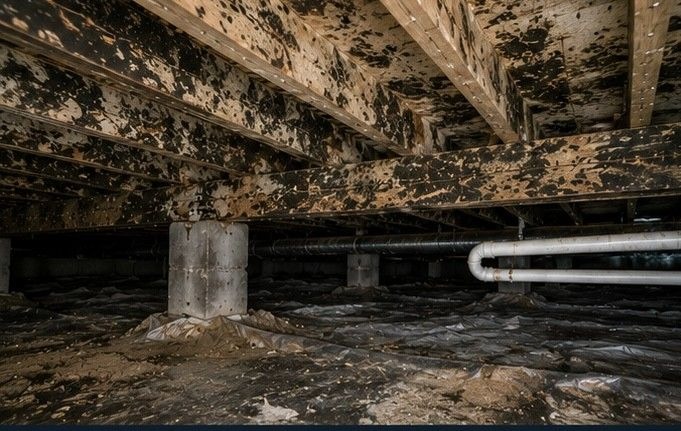
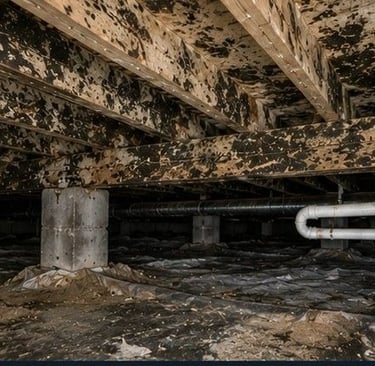
Black Forest’s mold risk is as persistent as the forest that creates it. The moisture conditions that generate crawl space and attic contamination in this community don’t go away between seasons — they moderate slightly and then return, year after year, in properties that were never designed to manage the specific moisture load that forested terrain imposes.
Mold Services We Provide Throughout Black Forest Colorado Springs
Every mold service below is available across this neighbourhood — from certified inspection and testing to emergency response and full structural restoration across all Colorado Springs property types.
Mold Removal
Black Forest mold removal addresses contamination driven by the persistent ground moisture of forested terrain — floor joist systems, foundation wall assemblies and attic structures in properties where forest canopy creates moisture conditions that exceed what standard Colorado Springs residential construction was designed to manage.
Mold Inspection & Testing
Black Forest property inspections specifically assess crawl spaces, attic ventilation and foundation moisture under forested terrain conditions — accounting for the persistently elevated ground moisture that ponderosa pine canopy creates around and beneath Black Forest properties year-round.
Black Mold Removal
Black mold in Black Forest’s crawl spaces — where persistent forest floor moisture has been elevating ground humidity in never-assessed sub-floor spaces for decades — represents some of the most advanced and most thoroughly established Stachybotrys contamination we encounter in the Colorado Springs area.
Mold Damage Restoration
Post-removal restoration in Black Forest properties addresses structural elements that have been exposed to forested terrain moisture conditions — floor joist systems, foundation wall assemblies and roof structure components where mold consumption has compromised structural integrity over extended periods.
Crawl Space Mold Removal
Crawl space mold removal is the most consistently needed service we provide in Black Forest — forested terrain ground moisture, inadequate original vapour barriers and properties that have never been assessed create the conditions for the most advanced crawl space contamination in the Colorado Springs area.
Basement Mold Removal
Black Forest basements beneath forested lot properties experience persistent ground moisture pressure from forest floor conditions that maintains below-grade humidity at levels above what open terrain basement environments face — generating chronic mold conditions in basement wall assemblies that require both removal and moisture source management.
Attic Mold Removal
Attic mold in Black Forest properties driven by tree canopy shading of roof surfaces and reduced solar drying — combined with older ventilation systems in 1960s through 1980s construction — creates consistent attic condensation mold in this northeast Colorado Springs community.
Commercial Mold Remediation
Commercial properties in Black Forest — including home-based businesses, equestrian facilities and rural commercial operations on large forested lots — face the same persistent terrain moisture conditions as residential properties and require the same certified remediation approach.
Emergency Mold Removal
Emergency mold response covers all of Black Forest 24/7 — including the remote large lot properties where access requires planning and where the absence of nearby emergency infrastructure makes rapid professional response particularly valuable.
Water Damage Mold Removal
Water damage events in Black Forest — from internal plumbing failures to storm damage on forested properties where tree fall and branch impact create roof breaches — generate mold in properties whose existing moisture conditions accelerate establishment faster than in open terrain Colorado Springs properties.
Other Colorado Springs Neighbourhoods We Serve:
Why Black Forest Homeowners Choose Front Range Mold Remediation
We Understand Forested Terrain Moisture Dynamics
Black Forest’s moisture conditions are fundamentally different from urban and suburban Colorado Springs — and assessing mold in a forested lot property requires understanding how persistent ground moisture from forest floor conditions differs from the seasonal moisture patterns that drive mold in other parts of the city. Our Black Forest assessments account for the year-round elevated humidity of forested terrain rather than applying seasonal moisture assessment assumptions that don’t reflect how this specific environment actually behaves.
Remote Property Access and Large Scope Assessment Capability
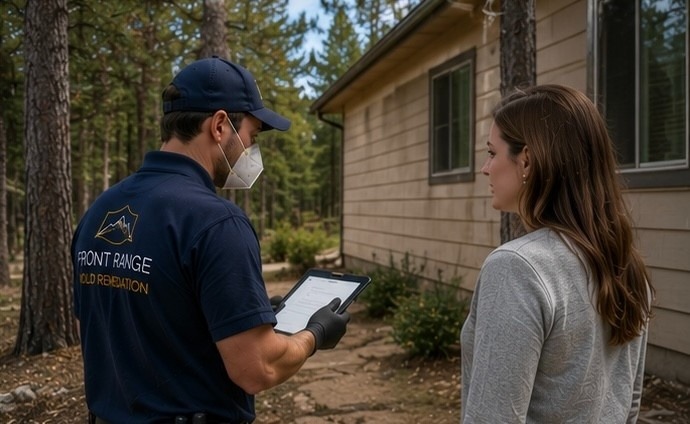
Black Forest properties on large lots with remote crawl space access require assessment capability that includes appropriate equipment, staffing and access planning for properties that aren’t readily accessible from a standard vehicle access point. We assess Black Forest properties of all sizes and configurations — including those where crawl space access requires navigating terrain that’s not part of a standard residential inspection scenario.
Full Crawl Space Assessment on Large Lot Properties
Black Forest’s large lot properties often have crawl spaces that are physically remote from the access point — requiring full physical entry and complete footprint coverage to assess the areas where forest moisture has been generating contamination furthest from the access hatch. We go in fully on every Black Forest crawl space assessment — because the most advanced contamination in forested terrain crawl spaces is consistently in the areas that are hardest to reach and least frequently inspected.
Vapour Barrier Specification for Forested Terrain Conditions
Crawl space vapour barrier replacement in Black Forest properties needs to be specified for forested terrain moisture loads — not to the standard residential specification designed for open terrain Colorado Springs lots. We install vapour barriers appropriate for the elevated ground moisture conditions of Black Forest’s forested lots rather than the minimum residential specification that’s adequate for drier terrain elsewhere in the city.
Frequently Asked Questions
How does the ponderosa pine forest around my Black Forest property specifically affect mold risk?
Ponderosa pine creates two distinct moisture effects on Black Forest properties. The forest floor needle layer retains moisture and releases it slowly through evaporation — keeping soil beneath the canopy persistently damp in a way that open terrain soil doesn’t replicate. That persistent ground moisture evaporation elevates crawl space humidity in Black Forest properties year-round rather than seasonally. Simultaneously, the canopy shades foundation perimeters and roof surfaces that solar exposure would otherwise help dry after moisture events — meaning that moisture that reaches Black Forest foundations and roofs through rainfall and snowmelt dissipates more slowly than it would on equivalent open terrain properties in other parts of Colorado Springs. Both effects work together to create moisture conditions in Black Forest crawl spaces and attics that are structurally more challenging to manage than what the same construction would face in a treeless Colorado Springs location. Our crawl space mold removal team assesses Black Forest properties accounting for both of these terrain effects rather than treating them as standard Colorado Springs residential lots.
My Black Forest property is on a five-acre forested lot and the crawl space has never been accessed — what should I expect?
Honestly — prepare for the possibility of significant findings, though the specific extent depends on the property’s construction, vapour barrier history and how long it’s been in its current configuration. Black Forest crawl spaces that have been exposed to forested terrain ground moisture for thirty to fifty years without inspection or vapour barrier maintenance have had optimal moisture conditions and adequate time to develop significant floor joist contamination. A never-assessed Black Forest crawl space from the 1970s or 1980s is one of the higher-probability scenarios for finding advanced mold contamination in the Colorado Springs area. That said, assessment always establishes what’s actually present rather than what probability suggests — and some Black Forest crawl spaces that haven’t been assessed turn out to be in better condition than expected. The only way to know is to go in and look.
Does the 2013 Black Forest fire affect mold risk in properties in or near the recovery zone?
Post-fire landscape recovery in the Black Forest fire area changed the moisture dynamics of affected terrain — removing the mature forest canopy that previously managed soil moisture, increasing runoff during rainfall events on denuded slopes and creating changed evaporation patterns as the recovering landscape gradually re-establishes. Properties rebuilt in the fire recovery zone exist in a changed moisture environment compared to the pre-fire forested terrain — one that’s evolving as the forest recovers. Properties adjacent to the recovery zone boundary may experience changed drainage patterns from the recovering terrain. Our mold inspection and testing team assesses properties in and adjacent to the Black Forest fire recovery zone accounting for these post-fire moisture dynamic changes.
How do I protect my Black Forest crawl space from the persistent moisture that the forest creates?
The most effective protection combines an appropriately specified vapour barrier — heavier gauge polyethylene with full coverage and properly sealed overlaps and perimeter sealing — with adequate crawl space ventilation to remove the moisture-laden air that ground evaporation introduces even through an effective barrier. For Black Forest properties where forested terrain moisture loads exceed what passive ventilation can manage, mechanical crawl space ventilation or encapsulation systems provide additional moisture management. Every Front Range crawl space remediation job in Black Forest includes vapour barrier assessment and replacement or upgrade — because addressing the contamination without improving the moisture management that caused it doesn’t solve the problem for more than a single season.
Are Black Forest properties more likely to have black mold specifically compared to other Colorado Springs neighbourhoods?
The persistent elevated humidity in Black Forest crawl spaces creates conditions that are more favourable to Stachybotrys chartarum than the more seasonal moisture patterns in drier parts of Colorado Springs — because Stachybotrys requires sustained rather than intermittent moisture to establish and grow. A Black Forest crawl space with a failed or absent vapour barrier that has maintained elevated humidity year-round for decades has provided exactly the sustained moisture environment that black mold requires — more consistently and for longer than a crawl space in an open terrain Colorado Springs property that experiences elevated moisture seasonally but dries down between events. This doesn’t mean every Black Forest crawl space has black mold — but the probability of finding Stachybotrys in a never-assessed Black Forest crawl space is higher than in comparable open terrain properties elsewhere in the city.
Concerned about what persistent forest moisture may have produced in your Black Forest crawl space or attic? Our black mold removal team handles the most serious contamination scenarios in forested Colorado Springs properties — contact us for a free assessment.
Black Forest’s Forest Is What Makes It Special — The Moisture It Creates Is What Makes Mold Assessment Essential
The persistent ground moisture of Black Forest’s forested terrain creates mold conditions in crawl spaces and attics that exceed what most Colorado Springs neighbourhoods experience — and that have had decades to develop in properties whose sub-floor spaces were never designed for forested terrain moisture loads. Front Range Mold Remediation provides certified mold inspection, removal and clearance documentation across all of Black Forest — free estimates, full crawl space footprint assessment including remote large lot access, forested terrain vapour barrier specification and written clearance documentation before sign off. Same week availability and 24/7 emergency response across the full Black Forest community.
Serving all of Black Forest — forested terrain expertise, certified process, documented results.
Want to understand why Black Forest’s forested lots create higher mold risk than other Colorado Springs neighbourhoods? Read our guide on Mold Inspection and Testing for Black Forest's Well and Septic Homes.