
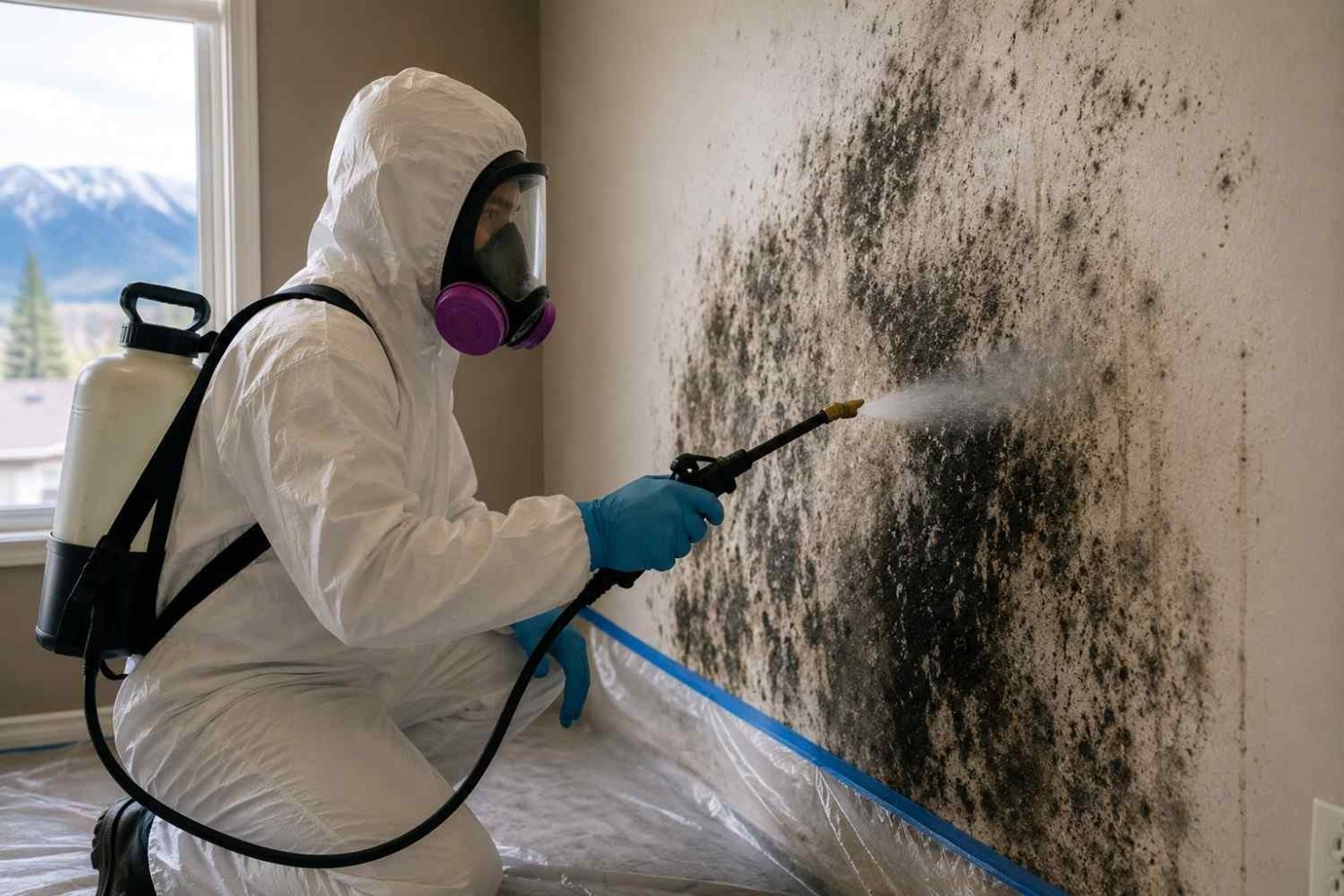
Black Mold Removal Colorado Springs This Isn’t Something to Handle With Bleach and a Mask
Front Range Mold Remediation provides certified black mold removal services across Colorado Springs for homeowners, landlords and commercial property managers dealing with one of the most serious contamination problems a building can develop. Black mold — scientifically classified as Stachybotrys chartarum — produces mycotoxins that create genuine health risks with prolonged exposure, spreads aggressively through moisture rich building materials and requires specialist containment procedures that standard mold removal doesn’t always apply. We serve every Colorado Springs neighbourhood from Broadmoor and Cheyenne Mountain to Briargate, Fountain and Black Forest — with IICRC certified technicians, full containment protocols and post clearance testing that proves the job is actually done before we leave your property.
What Colorado Springs Homeowners Are Dealing With When They Call About Black Mold
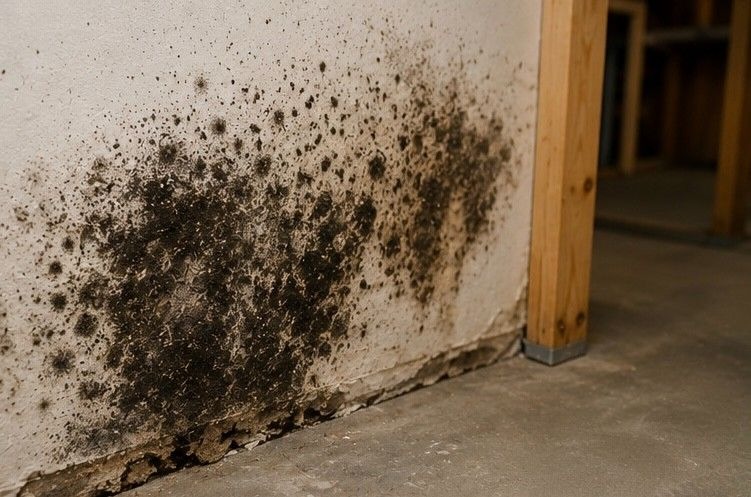
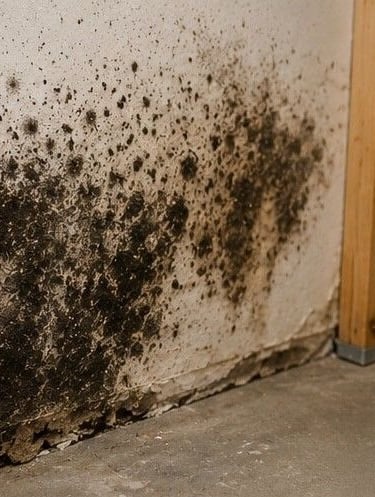
Black mold rarely announces itself dramatically. It usually starts as something easy to dismiss — a patch of dark discoloration in a corner, a smell that comes and goes, a family member whose health seems off without an obvious explanation. By the time most Colorado Springs homeowners call us about black mold the contamination has been present for weeks or months — and in older properties with poor ventilation or a history of moisture problems it’s often been there far longer than that.
01. You found dark black or greenish-black patches that look different from regular mold
Not all dark mold is Stachybotrys but the appearance is distinctive — slimy, dark greenish-black patches that often appear in clusters on materials that stay persistently damp. Drywall paper, ceiling tiles, wood framing and insulation behind walls are the most common substrates in Colorado Springs homes. If what you’re looking at has a wet or gelatinous appearance rather than a fuzzy surface texture, treat it as black mold until a professional assessment confirms otherwise.
02. Someone in your home has been unwell in ways that don’t add up
Mycotoxin exposure from black mold produces a cluster of symptoms that gets misdiagnosed constantly — chronic fatigue, persistent headaches, respiratory irritation, cognitive difficulties described as brain fog, skin reactions and mood changes. These symptoms appear gradually as exposure accumulates and they’re easy to attribute to anything else. The pattern that points to black mold specifically is that symptoms consistently improve when the affected person spends several days away from the property.
03. You disturbed something during renovation and the smell that came out was overwhelming
Opening a wall cavity, pulling up old flooring or accessing a crawl space during renovation work in a Colorado Springs property built before 1990 and encountering an immediate, intense musty smell is one of the clearest indicators that you’ve just exposed significant mold growth. Stop work immediately. Disturbing black mold colonies without containment releases concentrated spore loads into the air and spreads contamination through the property within hours.
04. Your property had a water event that wasn’t professionally dried within 48 hours
Black mold requires persistent moisture to establish itself — it doesn’t colonise from a single brief wetting. But a property that experienced flooding, a burst pipe, a roof leak or an appliance overflow and wasn’t professionally dried within 48 hours has almost certainly provided the sustained moisture conditions that Stachybotrys needs. If the water event was more than a few weeks ago and the property wasn’t professionally assessed afterward, the time to check is now — not when the smell becomes undeniable.
05. A previous attempt to clean it didn’t work and it came back darker and larger
Bleach and commercial mold sprays kill surface mold on non-porous materials. On drywall, wood and insulation — where black mold actually lives — surface products clean what’s on top while the mycelium network inside the material continues growing. If you treated a patch and it returned within weeks looking worse than before, surface treatment was never going to solve it. Physical removal of the contaminated material is the only approach that addresses what’s actually happening inside the wall.
06. Your property is in a high moisture area of Colorado Springs and has never been checked
Properties near foothills drainage channels in Rockrimmon, on low lying ground in Fountain, in older Downtown buildings with no vapour barriers or in Black Forest where tree coverage traps ground moisture — these are the Colorado Springs locations where black mold establishes itself most aggressively and most silently. If your property sits in one of these areas and has never had a professional assessment, the absence of visible mold doesn’t mean the absence of a problem.
Black mold in a Colorado Springs property is not a maintenance problem you manage over time. It’s a contamination event that gets worse every week it’s left untreated — and the cost of removal scales directly with how long it’s been there.
Black mold removal requires a more controlled process than standard mold remediation. The containment requirements are stricter, the personal protective equipment standards are higher and the post clearance verification is non-negotiable. Here’s exactly what our process looks like on a black mold job in Colorado Springs from initial assessment through to written clearance.
How Front Range Mold Remediation Removes Black Mold From Colorado Springs Properties
Step 4: Post Clearance Testing
Written Proof the Job Is Done Post remediation air sampling is mandatory on every black mold job we complete — not optional. Samples are sent to an independent laboratory and results are provided to you in writing confirming that mycotoxin-producing spore levels have returned to safe limits throughout the property. This clearance report is what your insurance company needs, what a future buyer’s inspector will ask for and what gives you genuine confidence that the contamination is gone — not just covered over.
Step 1: Assessment & Identification
Confirming What You’re Dealing With Before containment is established we conduct a full property assessment to identify the extent of black mold growth, map moisture sources and determine how far contamination has spread beyond the visible area. In cases where visual identification isn’t conclusive we collect surface samples for laboratory analysis to confirm Stachybotrys chartarum before proceeding — because the removal protocol for confirmed black mold is more rigorous than standard remediation and the cost reflects that additional scope.
Step 2: Strict Containment
Preventing Spore Dispersal Before Anything Is Touched Black mold disturbed without proper containment releases mycotoxin-carrying spores into the air that travel through HVAC systems and settle on surfaces throughout the property within hours. Before any contaminated material is touched we establish negative air pressure containment barriers around the affected area, seal HVAC vents and deploy HEPA air scrubbers to capture airborne spores during the removal process. This step is not optional and it’s not abbreviated regardless of job size.
Step 3: Physical Removal & Antimicrobial Treatment
Eliminating the Colony, Not Just the Surface Contaminated drywall, insulation, wood framing and any other porous material that has black mold growing through it gets physically removed and double-bagged for disposal — not treated in place. Once material removal is complete all affected and adjacent surfaces receive professional grade antimicrobial and antifungal treatment that eliminates remaining contamination at the microscopic level and creates a treated barrier against regrowth during the drying phase.
Black mold removal without post clearance testing is removal without proof. Every Front Range black mold job ends with a laboratory verified clearance report — because our standard isn’t a clean-looking wall, it’s documented safe air quality.
Eight Signs Your Colorado Springs Property May Have a Black Mold Problem
Black mold is one of the harder problems to self-diagnose accurately — here’s what warrants a professional assessment specifically for Stachybotrys.
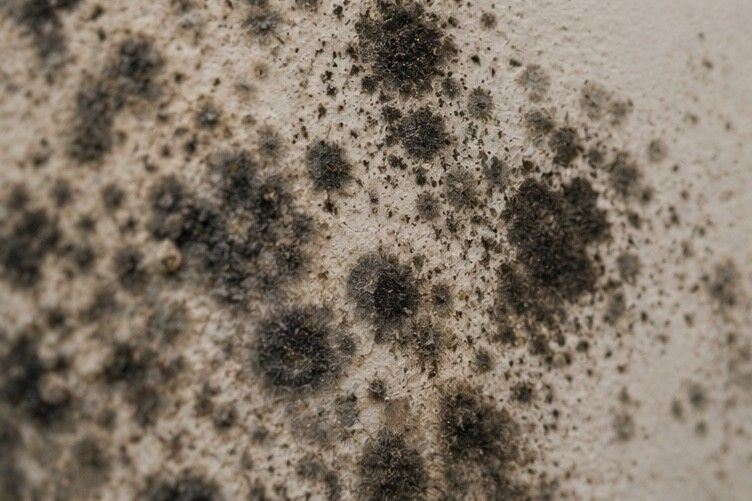
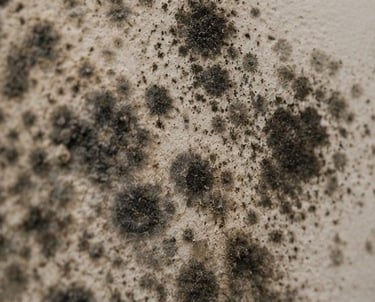
1. Dark patches with a slimy or wet appearance rather than a dry fuzzy texture
Standard household mold typically presents as fuzzy growth in green, grey or white. Black mold presents as a darker, often wet-looking growth that may appear in irregular clusters — typically on materials that have been persistently damp rather than briefly wet.
2. Mold growth on materials that have been wet for an extended period
Stachybotrys requires sustained moisture — it doesn’t colonise from brief or superficial wetting. If the material where you’ve found dark mold growth has been chronically damp for weeks or months, the probability of black mold is significantly higher than for mold found on surfaces with only occasional moisture exposure.
3. A strong, distinctive earthy or musty smell concentrated in one area
Black mold produces volatile organic compounds as it metabolises organic building materials — creating a smell that’s often described as earthy, musty or reminiscent of rotting wood. When that smell is strongly concentrated in one specific area of a Colorado Springs property it frequently indicates active black mold colonisation nearby rather than general background moisture.
4. Unexplained neurological symptoms in household members
Standard mold exposure typically produces respiratory and allergic symptoms. Prolonged black mold exposure — through mycotoxin inhalation — can produce neurological symptoms including cognitive difficulties, memory problems, unusual mood changes and heightened sensitivity to light and sound. These symptoms in combination with a property that has known or suspected moisture history warrant immediate professional assessment.
5. Mold found in a location that stays permanently damp
Areas of Colorado Springs properties that maintain persistent dampness — the back corner of a basement that never fully dries, a crawl space with inadequate vapour barrier, a bathroom wall cavity around a slow leak — are the highest risk locations for black mold specifically. If mold is found in a location you know has been consistently wet for months, assume black mold until proven otherwise.
6. Health symptoms that returned after you thought you’d dealt with the mold
If you treated mold yourself previously and health symptoms in household members improved temporarily then returned, the original contamination wasn’t fully eliminated. Black mold growing inside wall materials behind a treated surface will regenerate and resume mycotoxin production — producing the same health effects that improved while surface contamination was temporarily suppressed.
7. A property that flooded and wasn’t fully dried within 48 hours
This is the single most consistent precondition for black mold development in Colorado Springs properties. Any property that took on significant water — from any source — and wasn’t professionally dried within 48 hours needs a professional assessment for black mold before the next winter season adds another moisture cycle to whatever has been developing since.
8. Visual mold found during a real estate inspection
A real estate inspector who flags potential black mold in a Colorado Springs property is not overreacting. A professional assessment with laboratory confirmation — or clearance — is the appropriate response regardless of how small the visible area appears. What’s visible on the surface of a Colorado Springs property is rarely representative of what’s present inside the wall.
Not sure whether what you’ve found is black mold or a less toxic variety? Our mold inspection and testing team can collect samples for laboratory confirmation before any removal work begins.
Why Colorado Springs Homeowners Trust Front Range for Black Mold Removal Specifically
We Follow Black Mold Protocols
Not Standard Mold Protocols There’s a meaningful difference between the containment, PPE and post clearance requirements for black mold removal versus standard mold remediation. Our technicians are trained to apply the stricter protocols that Stachybotrys requires — not the abbreviated version that gets applied to all mold jobs regardless of type. The difference is in the containment setup, the material disposal procedures and the mandatory post clearance testing that we won’t skip regardless of job size.
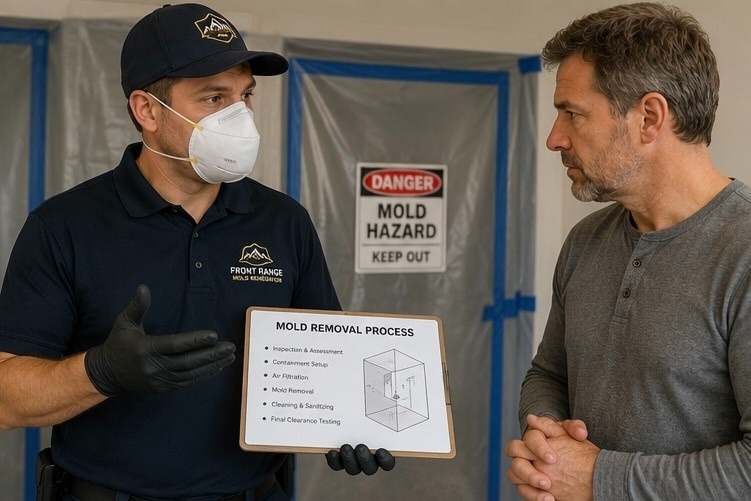
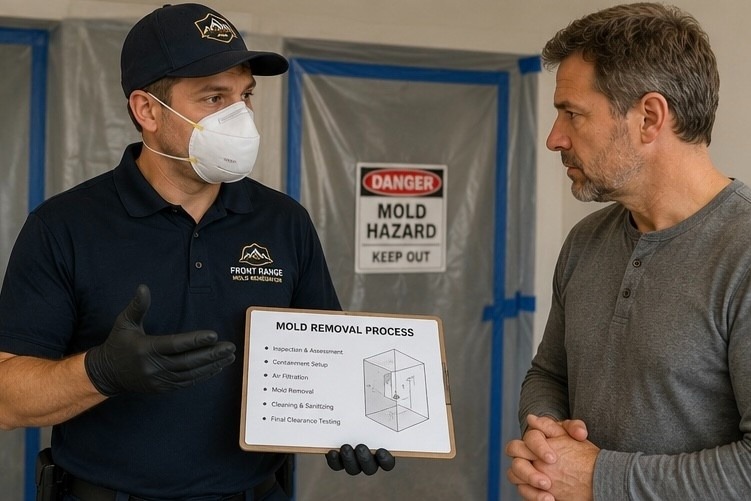
Laboratory Confirmed Clearance on Every Black Mold Job
We don’t sign off on black mold jobs based on visual inspection of the remediated area. Post remediation air sampling goes to an independent laboratory and written results come back to you before we consider the job complete. That documentation is what your insurance adjuster, your real estate agent and your own peace of mind actually need — not a verbal assurance from the company that did the work.
We Find the Moisture Source
Not Just the Mold Black mold that keeps returning after treatment is almost always the result of an unresolved moisture source. Every Front Range black mold job includes identification and documentation of the moisture pathway that allowed contamination to develop — whether that’s a slow plumbing leak, foundation seepage, inadequate crawl space ventilation or an HVAC condensation issue. If you don’t fix what created the conditions, the mold comes back regardless of how well the removal was executed.
Honest Assessment of What Needs Removing and What Doesn’t
We don’t remove more material than contamination requires and we don’t treat materials in place that need to come out. That distinction matters for your budget and for the integrity of the job — over-removal creates unnecessary structural repair costs while under-removal leaves contaminated material inside your walls. Our scope is based on what the contamination actually requires, not what generates the largest invoice.
Black mold removal done incorrectly spreads contamination further than it would have gone untreated. Here’s what makes the difference on a job this specific.
Ready to get your Colorado Springs property professionally assessed and the black mold removed properly? Contact us today for a free no obligation estimate.
Black Mold Removal Across Every Colorado Springs Neighbourhood
Front Range Mold Remediation provides certified black mold removal across all of Colorado Springs — from the historic properties of Old Colorado City and Downtown where moisture has been accumulating for generations to the newer residential builds in Northgate where early construction issues create unexpected contamination in properties only a few years old.
Century old brick construction and commercial conversions in Downtown Colorado Springs provide the sustained moisture conditions and organic building materials that black mold colonises most aggressively — we handle black mold removal across the full range of Downtown property types.
Finished basements and aging plumbing systems in Briargate’s dense residential developments create the chronic moisture conditions behind walls where black mold establishes itself without producing visible surface evidence for months.
Extensive below-grade spaces in high value Broadmoor properties — wine cellars, home theatres, mechanical rooms — provide the persistent dampness and organic materials that black mold requires, often going uninspected for years before contamination becomes significant.
Victorian era construction in Old Colorado City uses timber framing and rubble stone foundations with no vapour barriers — materials that absorb and retain moisture over decades in ways that create some of the most advanced black mold contamination we encounter in Colorado Springs.
Newer Northgate construction isn’t immune to black mold — inadequate mechanical ventilation during building combined with early plumbing failures create sustained moisture conditions in wall cavities that Stachybotrys colonises within weeks of the moisture event.
Rockrimmon’s northwest position and proximity to natural drainage channels means properties here experience higher ground moisture during snowmelt — creating crawl space and basement conditions where black mold is among the more common findings on professional inspection.
Older housing stock in Fountain with deferred maintenance histories frequently presents black mold contamination that has been developing across multiple ownership periods — often discovered during renovation work that opens wall cavities for the first time in decades.
High residential density along the Powers Corridor means plumbing infrastructure serves large numbers of properties simultaneously — and aging shared systems create moisture events that affect multiple homes before anyone identifies the source.
Black Forest’s forested lots trap ground moisture around older foundations and limit the drying that open terrain properties benefit from — creating the sustained dampness in crawl spaces and lower levels where black mold establishes its deepest roots in Colorado Springs.
Mountain Mountain proximity creates morning condensation and higher ambient humidity in Cheyenne Mountain properties year-round — conditions that penetrate into wall assemblies and create the sustained moisture environment where black mold develops in upper floor cavities and attic spaces.
Frequently Asked Questions
How do I know if the mold in my Colorado Springs home is actually black mold?
Colour alone isn’t a reliable indicator — many common mold types appear dark green, grey or black and visual identification isn’t conclusive. The factors that raise the probability of Stachybotrys specifically are the material it’s growing on, how long that material has been wet and whether the growth has a slimy or wet appearance rather than a dry fuzzy texture. Drywall paper, wood framing and ceiling tiles that have been chronically damp for weeks or months are the highest risk substrates. Laboratory surface sampling is the only way to confirm Stachybotrys chartarum definitively — and for any mold growth that raises genuine concern our mold inspection and testing team can collect samples before any removal decisions are made.
Is black mold in my Colorado Springs home a medical emergency?
Acute toxicity from a single brief exposure to black mold is uncommon in otherwise healthy adults — the health risks associated with Stachybotrys chartarum develop primarily through prolonged repeated exposure to elevated mycotoxin levels. If household members — particularly children, elderly residents or anyone with respiratory conditions or compromised immunity — have been experiencing symptoms consistent with mold toxicity exposure for weeks or months, consulting a physician alongside arranging professional remediation is the appropriate response. For otherwise healthy adults in a property where black mold has just been discovered, arranging professional assessment and removal promptly is the priority — not emergency evacuation.
Can I stay in my Colorado Springs home during black mold removal?
For small contained black mold jobs in isolated areas of the property — a single bathroom, a utility room, a confined crawl space area — remaining in unaffected parts of the home during remediation is sometimes feasible with appropriate precautions. For any job involving significant contamination, multiple affected areas or structural material removal, temporary relocation during active remediation is strongly recommended — particularly for children, elderly residents and anyone with existing respiratory conditions. We assess this on a job by job basis and give you an honest recommendation at the initial assessment stage rather than a blanket answer that doesn’t account for your specific property.
Why does black mold keep coming back in my Colorado Springs property after treatment?
Black mold returns after treatment for one of two reasons. Either the moisture source that allowed it to establish was never identified and fixed — leaving the same conditions in place for regrowth — or the remediation was surface treatment only without physical removal of contaminated material, leaving mycelium networks intact inside the wall or floor assembly. Both of these are fixable. Our assessment process identifies the moisture source as part of every job and our removal protocol takes out contaminated materials rather than treating them in place — addressing both failure points that cause black mold to return after previous treatment attempts.
Does homeowner’s insurance in Colorado Springs cover black mold removal?
Coverage depends on the cause of the mold rather than the type. Black mold resulting from a covered sudden event — a burst pipe, storm water intrusion, appliance failure — is typically covered under standard Colorado homeowner’s policies. Black mold resulting from long term neglect, gradual moisture accumulation or maintenance failures that went unaddressed is generally excluded. The documentation we provide — cause assessment, scope of work and post clearance testing results — is exactly what insurance adjusters need to process a black mold claim efficiently. Our mold damage restoration team also handles the structural repair work that follows removal, which is often included in the same insurance claim.
Dealing with black mold in your Colorado Springs property and not sure where to start? Our emergency mold removal team is available 24/7 and can assess your property same day when the situation can’t wait.
Other Mold Services We Offer in Colorado Springs
Black mold removal is often the starting point. Here’s what the full scope of a contaminated Colorado Springs property typically requires.
Mold Removal
Complete physical removal of mold contamination from all affected areas and materials.
Mold Inspection & Testing
Laboratory confirmed identification of black mold before any removal work begins.
Mold Damage Restoration
Once mold is removed the structural damage it left behind still needs fixing.
Crawl Space Mold Removal
The most overlooked part of any Colorado Springs home and the most common place mold takes hold.
Basement Mold Removal
Basements hold moisture longer than any other part of a property — and mold follows moisture.
Attic Mold Removal
Poor ventilation and slow roof leaks make attics one of the most common sites of undetected mold growth.
Commercial Mold Remediation
Mold in a commercial property affects staff, customers and your liability. We work around your schedule.
Emergency Mold Removal
Flood or burst pipe? Mold starts within 48 hours. Our emergency team responds around the clock.
Water Damage Mold Removal
Water intrusion and mold go together. If your property took on water, mold is likely already growing.
Black Mold in Your Colorado Springs Property Is Not Something to Monitor — It’s Something to Remove
Every week black mold stays in a Colorado Springs property it spreads further into the building materials around it and continues releasing mycotoxins into the air your household breathes. Front Range Mold Remediation offers free estimates, same week assessment availability across all Colorado Springs neighbourhoods and a 24/7 emergency line for situations where water damage has just occurred and the clock is already running on mold development. IICRC certified removal, strict containment protocols and laboratory verified clearance documentation on every black mold job — no exceptions.
Certified removal. Contained process. Written proof it’s gone.
Want to understand the real difference between black mold and common household mold before your inspection? Read our guide on Black Mold Removal for Cheyenne Mountain's Shaded, Canyon-Adjacent Homes so you know what questions to ask.