
What Causes Water Damage Mold in Powers Corridor's Newer Homes
Rapid new-subdivision construction in the Powers Corridor area brings its own water damage risks. Here's what to watch for in a newer home.
MOLD REMEDIATION COLORADO SPRINGS
What Causes Water Damage Mold in Powers Corridor's Newer Homes
The Powers Corridor has been one of the fastest-growing parts of Colorado Springs for the better part of two decades, and subdivisions like Stetson Hills and Springs Ranch went from open land to fully built-out neighborhoods on a construction timeline that's considerably faster than how the city's older, established neighborhoods developed. That speed is generally good news for buyers looking for modern floor plans at competitive prices, but it also means some of the water management details that get refined over a slower build-out sometimes get less attention than they would in a neighborhood built one custom home at a time over thirty years.
Grading is the most common issue we see in newer, fast-built subdivisions generally, and the Powers Corridor area is no exception. When dozens of homes go up on a shared timeline across a large parcel, the finish grading around each individual foundation is often done efficiently rather than meticulously, since crews are moving through a subdivision on a schedule rather than treating each lot as a standalone project. A slight grading error, where the yard slopes toward the house instead of away from it by even a small margin, doesn't always show up as a problem until a heavy rain or a fast snowmelt sends more water toward the foundation than the drainage was ever designed to handle.
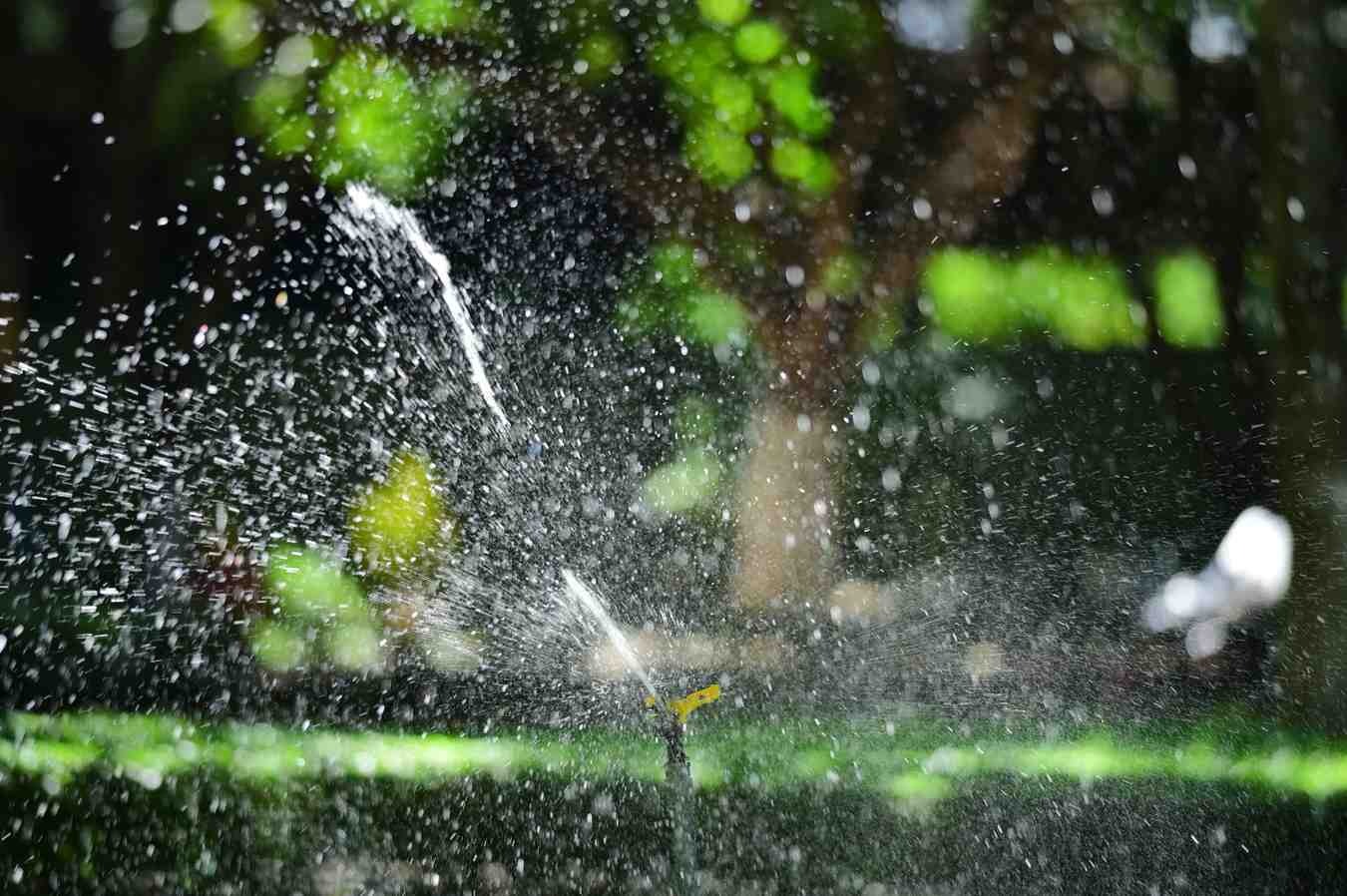
Irrigation systems are a specific culprit in newer developments that's worth calling out directly, because builder-installed sprinkler systems in new subdivisions sometimes place zone heads closer to the foundation than ideal, either to cover the full yard efficiently or because the original landscaping plan didn't account for how mature the plantings near the house would eventually get. A sprinkler head running daily just a few feet from a foundation wall, especially if it's slightly misaligned and spraying against the siding or foundation itself rather than the lawn, introduces a steady, repeated moisture source that's easy to overlook precisely because it's not a storm event. It's just quiet, daily watering that happens to be aimed at the wrong angle.
Shared stormwater infrastructure is another factor specific to master-planned communities like the ones along Powers. These subdivisions are typically built with retention ponds and shared drainage systems designed to handle the collective runoff from dozens or hundreds of homes at once, routing water away from individual lots and into a centralized system. That's an efficient design when it's working as intended, but it also means an individual homeowner has less direct control over how water moves through their yard than they would with a standalone drainage plan, since their lot's grading is designed to work in concert with the broader subdivision's system rather than independently. When that shared system gets overwhelmed during an unusually heavy storm, water can back up in ways that affect multiple homes in a section at once rather than being isolated to one property with a personal drainage flaw.
Metro district and HOA responsibility for shared drainage infrastructure is worth understanding if you own a home in one of these master-planned communities, since it directly affects who's responsible for fixing a problem when one shows up. Many of the newer subdivisions along the Powers corridor were developed under metro district structures that took on responsibility for retention ponds, storm drains, and other shared infrastructure as part of the original development agreement, separate from any homeowners association covering landscaping or architectural standards. When a shared detention pond isn't draining properly or a storm drain serving multiple properties gets clogged with sediment and debris, the fix isn't necessarily something an individual homeowner can request through a standard HOA maintenance request, and figuring out which entity actually owns that piece of infrastructure can take a few phone calls. It's worth knowing this distinction before you're standing in a flooded basement trying to figure out who to call, rather than discovering it for the first time during an emergency.
Landscaping choices made after a home is built also deserve a second look, separate from the builder-installed irrigation systems already discussed. It's common for new homeowners in these subdivisions to add mulch beds, decorative rock, or additional plantings close to the foundation within the first few years of ownership, often without much thought to how that landscaping affects water flow directly against the house. Mulch in particular holds moisture against a foundation wall for considerably longer than bare soil or gravel would, and a a few inches of organic mulch piled up against siding or a foundation wall creates a persistently damp zone right where you least want one, especially combined with an irrigation system watering that same bed regularly. This is an easy thing to fix once it's identified, simply pulling mulch back a few inches from the foundation and making sure any decorative bed doesn't trap water against the house, but it's rarely something a new homeowner thinks to check since the landscaping itself looks intentional and well-maintained rather than like a moisture risk.
Construction timelines themselves can introduce moisture that has nothing to do with weather or landscaping at all, and this is a factor that's more relevant in a fast-growing subdivision area than in a neighborhood built slowly over decades. Framing lumber, drywall, and concrete all carry moisture from the manufacturing and installation process itself, and building codes generally expect a certain drying-out period before those materials get fully enclosed behind paint and flooring. On a construction schedule built around finishing dozens of homes quickly to meet demand, that drying window can get compressed more than it would on a single custom build where a contractor has the flexibility to slow down for a section that's not drying as expected. This doesn't mean every fast-built home has a problem, but it's part of why some newer owners in rapidly developed sections notice a musty smell in the first year or two that isn't tied to any storm or leak they can identify, simply because moisture from the original build was sealed in before it fully dried.
Newer homes also tend to have finished basements as a standard feature rather than an optional upgrade, which means more square footage of drywall, carpet, and finished ceiling is exposed to water damage risk than in an older home where a basement might have stayed unfinished storage space for decades. A basement flood in a newer Powers Corridor home is often a bigger material loss simply because there's more finished square footage involved, even if the actual water intrusion event is similar in size to what an older, unfinished basement would experience.
Builder warranties are worth understanding if your home is still relatively new, since most new construction in Colorado comes with a structural warranty that typically runs longer than the one or two year warranty covering fixtures and finishes, often extending several years further for major structural components. Water intrusion tied to a genuine construction defect, such as improper grading done by the original builder or a foundation waterproofing detail that wasn't installed correctly, may fall under warranty coverage depending on how the specific defect is classified and how much time has passed since closing. The claims process for this kind of issue usually requires documentation showing the problem traces back to original construction rather than something that developed later from normal wear or a homeowner's own landscaping changes, which is part of why it's worth having a professional assessment done and documented as soon as an issue is noticed rather than waiting, since that documentation becomes considerably more useful if a warranty claim ends up being the right path forward.
If you've noticed a damp smell near an exterior wall, water pooling near your foundation after normal watering rather than just after storms, or you're simply newer to a subdivision near Powers Corridor Colorado Springs and want to understand what to watch for, checking sprinkler placement and yard grading is a good first step before assuming any issue is weather-related. Our Water Damage Mold Removal Colorado Springs page covers how we trace a moisture source back to its actual cause, which in newer construction is often a landscaping or grading detail rather than a storm event.