
Why Mold Still Grows in Colorado Springs' Dry Climate
Colorado Springs is dry, so why do homes here still get mold? Here's where moisture actually hides in a semi-arid climate.
MOLD REMEDIATION COLORADO SPRINGS
Why Mold Still Grows in Colorado Springs' Dry Climate ?
Every few weeks we get some version of the same phone call. Someone found a dark patch under their bathroom sink or a musty smell in the basement, and their first reaction is "that can't be mold, it's too dry here." It's a fair assumption. Colorado Springs sits at high elevation with average humidity that hovers in the 30-45% range most of the year, and mold generally needs relative humidity above 60% to get going. So on paper, this city shouldn't have much of a mold problem at all.
The catch is that mold doesn't care what the humidity reading is for the whole city. It only cares about the humidity in the six cubic inches around it, and homes create hundreds of little microclimates that never show up on a weather app.
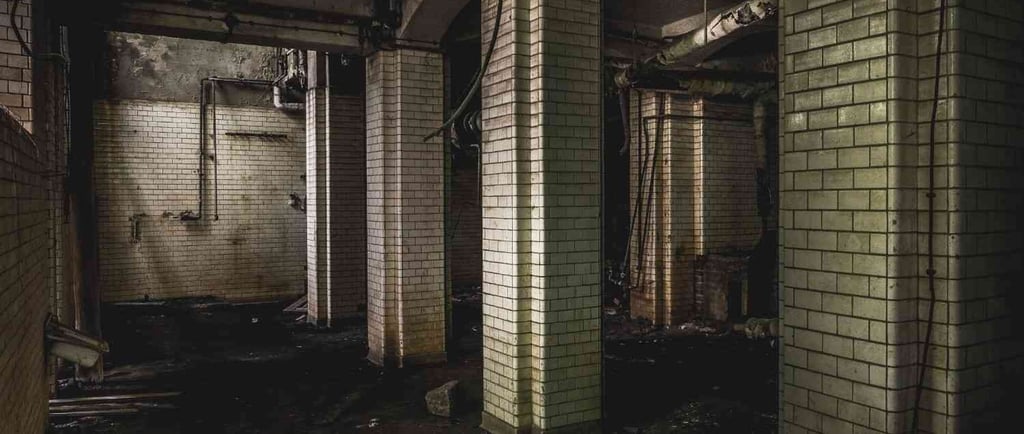
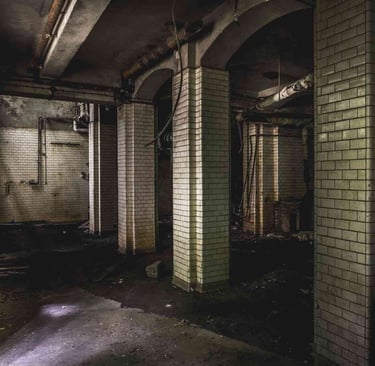
Take a typical unfinished or partially finished basement along the Front Range. Concrete stays several degrees cooler than the air around it for most of the year. When warmer, moisture-carrying air from upstairs drifts down and hits that cool concrete, it condenses, the same way a cold glass of water sweats on a summer afternoon. That thin film of condensation is often enough to feed mold on drywall paper, wood framing, or the backside of carpet padding, even while the rest of the house reads bone dry.
Bathrooms work the same way but faster. A five-minute shower can push local humidity in that room above 90% for a short stretch, and if the exhaust fan is undersized, missing, or just never gets used, that moisture settles into grout lines and drywall corners long before the whole-house average has time to catch up.
Then there's the seasonal wildcard most people don't think about until it's already a problem: monsoon season. From roughly July through September, Colorado Springs gets short, intense afternoon storms that can dump a lot of water in a short window. Homes with grading that slopes toward the foundation, or gutters that dump water within a few feet of the house, can see crawl spaces and basements go from dry to damp in a single storm. That moisture doesn't always evaporate quickly, especially in spaces with poor airflow, and mold can take hold within 24 to 48 hours of sustained dampness.
Swamp coolers add another layer that's fairly specific to this part of the country. Evaporative coolers work by pushing air across water-saturated pads, which is great for beating the heat without spiking your power bill, but it also means the system is deliberately adding moisture to your indoor air. In a well-ventilated home that's rarely an issue. In a home with older ductwork, tight construction, or ducts that were never quite sized right, that added humidity can settle in problem spots, particularly attics and closets near the unit.
There's a fourth spot worth mentioning that catches people off guard because it has nothing to do with plumbing or storms: attics. Colorado Springs sees some of the sharpest day-to-night temperature swings in the country, and that matters more for attics than any other part of a house. Warm, moist air from living spaces below rises and finds its way into the attic through light fixtures, attic hatches, and gaps around plumbing stacks. When that air hits the underside of a cold roof deck on a night when temperatures have dropped fast, it condenses the same way it does on a basement wall. Do this often enough over a winter, and you can end up with mold on roof sheathing that nobody sees until a home inspection during a sale turns it up. Proper attic ventilation and a well-sealed attic floor — meaning the barrier between living space and attic, not the roof itself — are what prevent this, and it's a detail a lot of older homes never had installed correctly in the first place.
None of this means Colorado Springs has the mold pressure you'd see in a coastal city, and it doesn't. What it means is that the mold that does show up here tends to be hiding in predictable places: basements, bathrooms, crawl spaces, around old roof leaks, and near HVAC or cooler equipment, rather than spread evenly through a house the way it might in a genuinely humid climate. That's actually useful information, because it means a targeted inspection of those specific areas will usually tell you what you need to know without tearing a whole house apart.
If you've noticed a musty smell that seems to come and go with the weather, or discoloration in a spot that's always a little cooler or damper than the rest of the room, it's worth having someone look at it before it spreads. Homes in older, established parts of the city — places like Downtown Colorado Springs with original foundations and less modern ventilation — tend to run into this more often than newer builds with updated moisture barriers and mechanical ventilation.
If what you're dealing with is specifically in a basement or crawl space, our Mold Removal page walks through what that inspection and removal process actually looks like, including what we check first and why.