
Why Attic Mold in Colorado Springs Is Almost Always a Ventilation Problem
Most attic mold in Colorado Springs isn't from roof leaks. It's from ventilation failures that most homeowners never knew existed. Here's how it works.
MOLD REMEDIATION COLORADO SPRINGS
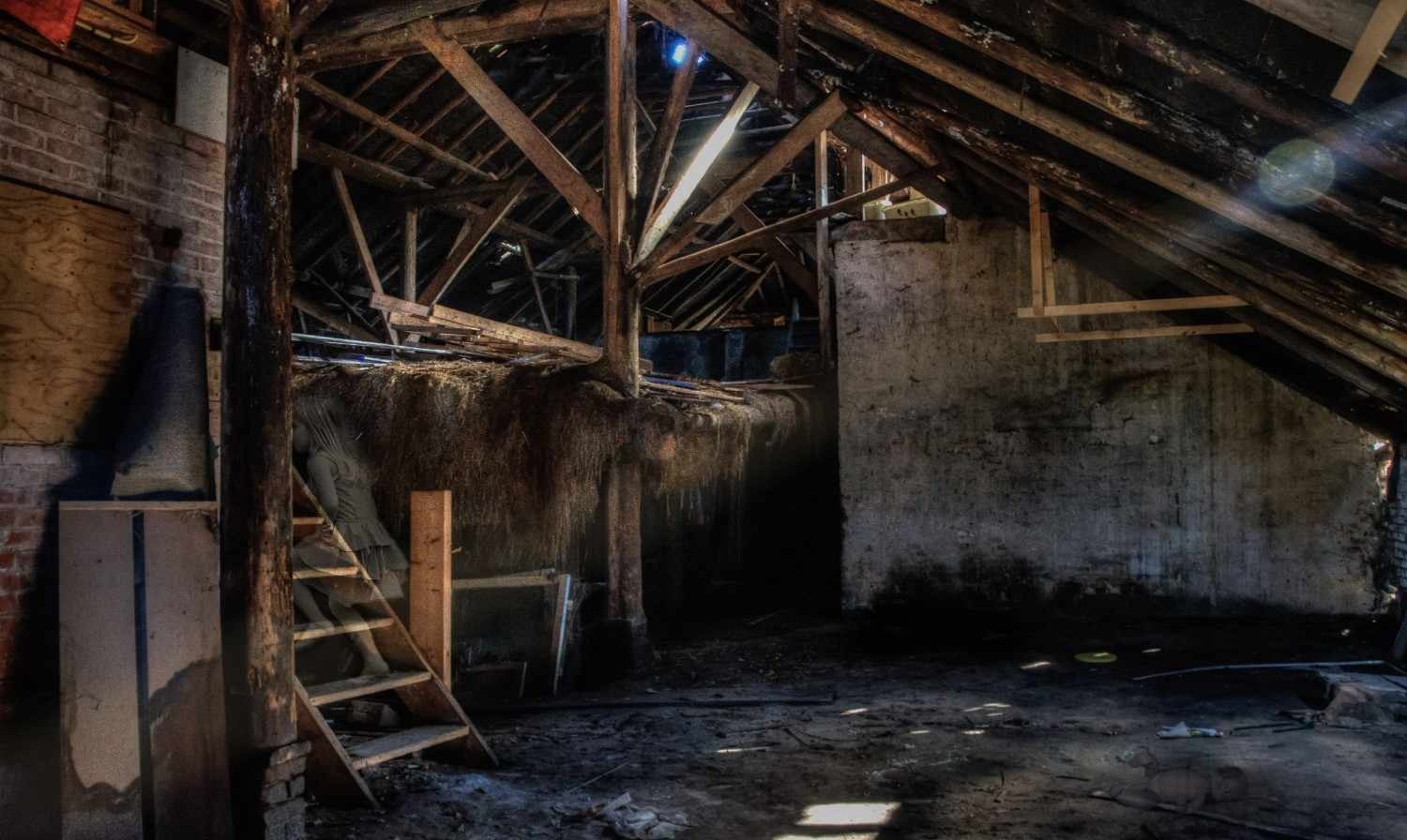
Why Attic Mold in Colorado Springs Is Almost Always a Ventilation Problem
When Colorado Springs homeowners discover mold in their attic, the first assumption is almost always a roof leak. It's a reasonable assumption — water comes from above, attics are below roofs, therefore roof leak. What's actually driving the majority of attic mold cases we see in Colorado Springs has nothing to do with water entering from outside. It's about moisture-laden air from inside the home rising into the attic and condensing on cold roof decking because there isn't enough ventilation to remove it before that condensation occurs.
Understanding why ventilation is the culprit — and specifically why Colorado Springs homes are particularly susceptible to this — changes how the problem gets fixed and whether it stays fixed after remediation.
How Warm Indoor Air Reaches Cold Roof Decking
In a properly built and sealed home, the attic is separated from the living space below by the attic floor — the insulation and the drywall ceiling of the rooms below. Warm, humid air from the living space should stay below that barrier. In practice, particularly in Colorado Springs homes built before the 1990s, that barrier is full of gaps. Recessed light fixtures that penetrate the ceiling. Gaps around plumbing stacks where pipes pass through the ceiling into the attic. Improperly sealed attic hatch covers. Pull-down attic stairs that have no insulation value at the hatch.
Each of these gaps allows warm, humid air from the living space to rise continuously into the attic during the heating season. In Colorado Springs, where homes are heated for six or seven months of the year, that means a continuous supply of moisture-laden air entering the attic and encountering roof decking that stays significantly cooler than the air coming in from below. The physics are the same as a cold glass sweating on a humid day — warm air hits a cold surface and releases its moisture as condensation.
Do this for one Colorado Springs winter and you have damp roof decking and wet insulation near the peak of the attic. Do it for two or three winters without any visible consequence in the living space below and you have mold colonies established across a significant portion of the roof sheathing that nobody discovers until a home inspection or a reroofing project forces someone to look.
Why Colorado Springs Makes This Worse Than Average
The temperature swing issue is specific to this region. Colorado Springs regularly experiences day-to-night temperature differentials of thirty to forty degrees Fahrenheit, particularly in late autumn and early spring. This means that roof decking in an unventilated or under-ventilated Colorado Springs attic goes through repeated warming and cooling cycles in a single 24-hour period — warming enough to release any condensation back to vapor during the day, cooling enough to condense new moisture from the attic air at night.
This cycling keeps the decking surface in a sustained wet-dry oscillation that's particularly favorable for mold growth, because it maintains the surface moisture content in the range that supports mold metabolism while providing enough periodic drying to prevent the obvious visible wetness that would attract attention.
Additionally, Colorado Springs' altitude — sitting at over 6,000 feet — means heating systems work harder and run more often than at lower elevations, generating more warm air that rises toward the attic floor. The combination of longer heating season, more dramatic temperature swings and the condensation patterns specific to high altitude thin air creates an attic mold environment that doesn't have a close equivalent in lower-elevation cities.
The Ventilation Standard and Why Many Colorado Springs Homes Don't Meet It
Current building standards require a minimum of one square foot of net free ventilation area for every 150 square feet of attic floor space, typically achieved through a combination of soffit vents at the eaves and ridge vents or gable vents at or near the peak. This balance — intake at the bottom, exhaust at the top — creates airflow that flushes humid air out of the attic before it can condense on the decking.
Many Colorado Springs homes, particularly those built before current codes and those that have been re-insulated without updating ventilation, don't meet this standard. Soffit vents get blocked when blown-in insulation is added without installing baffles to maintain the airflow channel. Ridge vents deteriorate over time and lose effectiveness. Gable vents that were adequate under original insulation levels become insufficient after insulation upgrades add mass to the attic floor and change the airflow dynamics.
The Northgate area of Colorado Springs — where rapid residential development produced homes with complex rooflines and multiple attic sections — has a specific issue with ventilation design. Multi-section rooflines create isolated attic pockets where ventilation paths from soffit to ridge don't exist because a hip or valley intersection separates the attic section from the ventilation pathway. These isolated sections can have excellent ventilation in the main attic while the secondary sections are effectively sealed — and it's consistently the secondary sections where attic mold develops first.
What Fixing It Actually Requires
Attic mold remediation that addresses only the contamination without correcting the ventilation will produce recurrence within one or two Colorado Springs winters. The remediation removes the mold colonies. The ventilation deficiency reintroduces the same condensation conditions. New colonies establish on the remediated surfaces within a season.
A complete attic mold response in a Colorado Springs home covers three things in sequence. First, assessment of the full ventilation configuration — what intake and exhaust ventilation exists, whether it meets current standards, and whether the attic has isolated sections with no independent ventilation pathway. Second, remediation of existing contamination — physical removal of contaminated insulation, antimicrobial treatment of affected decking and framing, post clearance air testing before new insulation is installed. Third, ventilation correction — adding or restoring intake and exhaust ventilation to a level appropriate for the attic's actual configuration, not just the main section.
For Northgate properties where complex rooflines create isolated attic sections, the ventilation assessment is the most important part of that sequence — because no amount of remediation will hold if the isolated section doesn't get its own ventilation pathway addressed.
Our attic mold removal page covers the full process in detail including how we assess ventilation as part of every attic job. And for Northgate homeowners dealing with this specific situation, our Northgate neighbourhood page covers the construction-specific risk factors that make attic ventilation issues particularly common in that part of Colorado Springs.