
Crawl Space Encapsulation vs Mold Removal in Colorado Springs — What Your Home Actually Needs
Crawl space encapsulation and mold removal are not the same thing. Colorado Springs homeowners need to understand which one their property actually requires.
MOLD REMEDIATION COLORADO SPRINGS
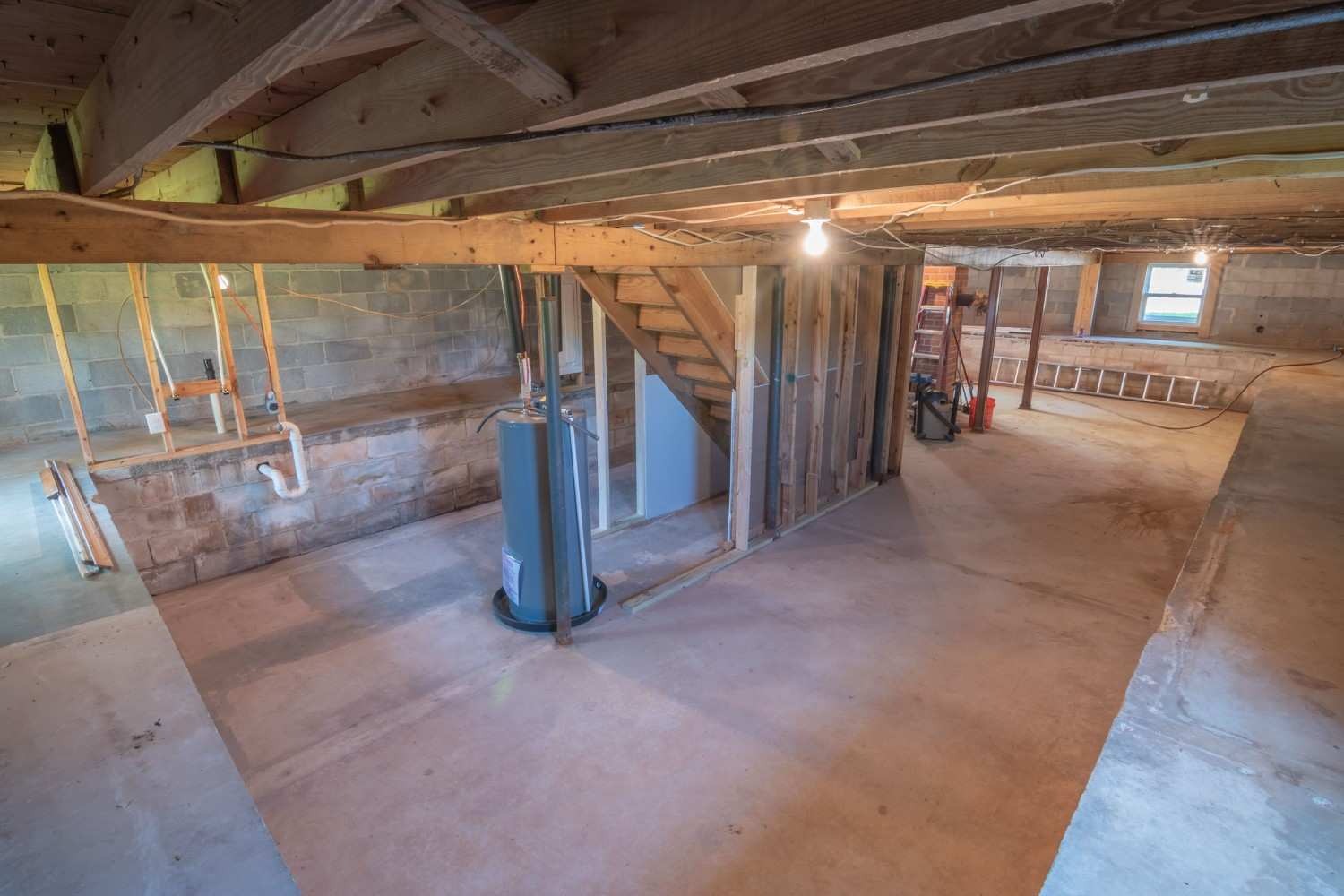
Crawl Space Encapsulation vs Mold Removal in Colorado Springs What Your Home Actually Needs
Crawl space encapsulation has become a well-marketed solution in the Colorado Springs home improvement market, and for good reason — it's a genuine moisture management improvement that makes a real difference in the right circumstances. The problem is that encapsulation and mold removal are two different things that solve two different problems, and a number of Colorado Springs homeowners have spent significant money on encapsulation when what their crawl space actually needed was mold remediation first.
Understanding the difference — what each addresses, when each is appropriate and what the right sequence looks like when both are needed — is worth knowing before you make decisions about what to do with a Colorado Springs crawl space that has a moisture or contamination problem.
What Crawl Space Encapsulation Actually Is
Encapsulation is a moisture management system. In its standard form it involves lining the crawl space floor and walls with a heavy-duty polyethylene barrier — typically 12 to 20 mil thickness — sealed at seams and penetrations to create a continuous barrier that significantly reduces moisture evaporation from the ground into the crawl space air. More comprehensive encapsulation systems also include a conditioned air supply or a dedicated crawl space dehumidifier to actively manage the humidity of the encapsulated space.
Encapsulation prevents moisture from entering the crawl space from below. That's its function and it does it well. What it does not do is address moisture that's already present in the crawl space structural materials — the floor joists, rim joists and subfloor sheathing that have been exposed to elevated humidity. And it does not remove or kill mold that has already established itself on those structural surfaces.
What Mold Removal Actually Is
Mold removal — specifically IICRC-certified crawl space mold remediation — addresses contamination that has established itself in the crawl space structural materials. This involves physical removal of contaminated insulation, which cannot be effectively treated in place. It involves antimicrobial and fungicidal treatment of affected floor joist and rim joist surfaces. It involves post-clearance air testing to confirm that spore levels in the crawl space air have returned to acceptable levels. And it involves assessment of the moisture source that allowed the contamination to establish — which may or may not include a failed or absent vapor barrier.
Mold removal addresses existing contamination. It does not prevent future contamination if the moisture conditions that generated the original problem continue after the mold is removed.
Why the Sequence Matters — and Why Getting It Wrong Is Expensive
The correct sequence when a Colorado Springs crawl space has both active mold contamination and inadequate vapor management is always mold removal first, encapsulation second. Here's why.
Installing an encapsulation system over a crawl space with active mold contamination on the floor joists seals the contamination into the encapsulated space rather than removing it. The encapsulation creates a sealed environment — which, if it works as designed, reduces moisture introduction from the ground. But the mold already present on the structural surfaces doesn't need moisture from the ground to continue growing. It has structural materials to consume and whatever residual moisture is already present. Encapsulating over active mold creates conditions where the contamination continues to grow and consume structural material in a sealed environment where there's no airflow to dilute the spore concentration.
Colorado Springs crawl space encapsulation companies that install their systems over existing mold contamination — without mold removal as a prerequisite — are not providing a complete solution. They're providing moisture management over a contamination problem that still requires remediation. This sequence occasionally happens in good faith when the encapsulation company's assessment of the crawl space condition is visual only and misses contamination that's established on joist surfaces obscured by old insulation. It occasionally happens because the encapsulation sale is simpler to close than a combined mold removal and encapsulation conversation.
Either way, the homeowner ends up with an encapsulated crawl space that still has a mold problem — often discovered when the encapsulation system is opened for inspection or maintenance.
When Encapsulation Alone Is Sufficient
Encapsulation without prior mold removal is appropriate when a professional assessment confirms that the crawl space has elevated moisture and a failed or inadequate vapor barrier but no established mold contamination on structural surfaces. This is a legitimate scenario — some Colorado Springs crawl spaces with poor moisture management haven't yet developed mold on the joists, particularly if the vapor barrier failure is recent or if the ground moisture source is modest.
In these cases, encapsulation addresses the moisture source before contamination establishes — which is the most cost-effective outcome. No remediation required, improved moisture management installed, problem prevented rather than treated.
The only way to know whether this applies to your Colorado Springs crawl space is professional assessment — moisture measurement of the structural materials and visual assessment of all accessible joist surfaces, not a visual check from the access hatch. Making the encapsulation decision based on a hatch-access estimate rather than a full-crawl inspection is how Colorado Springs homeowners end up with encapsulation over contamination they didn't know was there.
When Mold Removal Alone Is Sufficient
Mold removal without subsequent encapsulation may be sufficient when the crawl space has an intact, functioning vapor barrier that was adequate for the moisture load the space faces — and the contamination developed from a discrete event like a plumbing failure rather than from chronic ground moisture evaporation through an inadequate barrier.
In this scenario, the moisture source is identifiable and fixable — the leak is repaired, the affected materials are dried, the mold is remediated. The vapor barrier already present is adequate to prevent recurrence if the one-time moisture source has been resolved. Adding encapsulation on top of an already-adequate system doesn't improve outcomes; it just adds cost.
Again, this is a determination that requires professional assessment — specifically, assessment of the vapor barrier's condition and performance rather than just its presence.
The Right Conversation to Have
For Cheyenne Mountain homeowners whose crawl space sections face persistent ground moisture from mountain snowmelt drainage alongside the structural materials question — and where the cost of getting the sequence wrong on a high-value property is proportionately significant — having both questions assessed professionally before committing to either service is the right approach.
Our crawl space mold removal page covers our assessment process specifically, including how we evaluate vapor barrier condition as part of every crawl space inspection so the mold removal and moisture management questions get answered together rather than separately. For Cheyenne Mountain properties specifically, our Cheyenne Mountain neighbourhood page covers the terrain-specific moisture dynamics that make the assessment question particularly important in that part of southwest Colorado Springs.