
Commercial Mold Remediation for Briargate's Office and Retail Spaces
Briargate's mix of decades-old and brand-new commercial buildings each carry different mold risks. Here's what business owners should know.
MOLD REMEDIATION COLORADO SPRINGS
Commercial Mold Remediation for Briargate's Office and Retail Spaces
Briargate has grown from a rural stretch of land in the 1960s into one of the largest commercial and residential corridors in Colorado Springs, and that decades-long growth means the commercial buildings along Briargate Parkway, InterQuest, and the surrounding retail centers span a real range of ages and construction types. That range matters more than most business owners realize when it comes to mold risk, because a strip retail space built in the 1990s and a new office suite built in the last five years fail in almost opposite ways.
Older commercial buildings in the area, the ones built during Briargate's first wave of development, tend to have more gaps in their building envelope than a newer structure would. Aging roof membranes, older window seals, and HVAC systems that have been serviced and patched over multiple ownership changes all create small points where water can get in gradually rather than all at once. The advantage of these older buildings, if there is one, is that they generally breathe more than a modern sealed structure, meaning trapped moisture has more paths to eventually dry out on its own. The disadvantage is that gradual leaks in a commercial space, especially above a drop ceiling or behind a back-room wall that nobody looks at daily, can go unnoticed for months because retail and office staff aren't typically checking behind ceiling tiles as part of their routine.
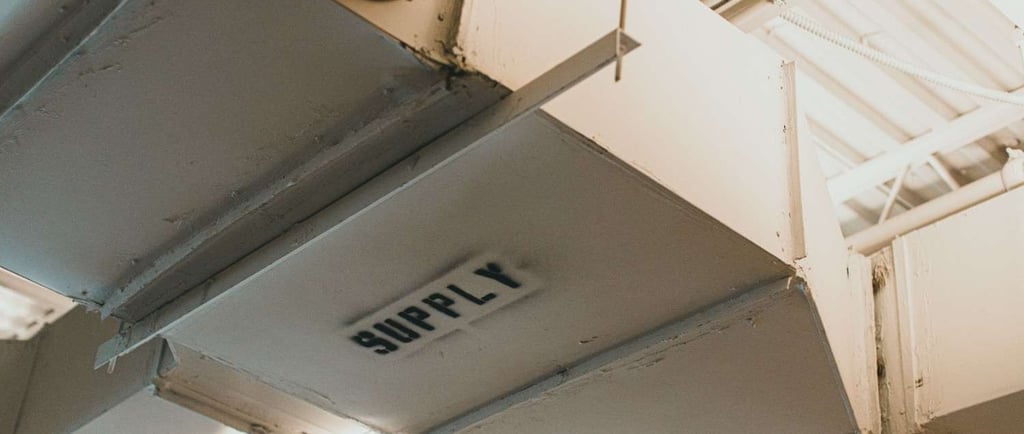
Newer commercial construction in Briargate's eastern development, built to much tighter energy codes than anything from the 90s, actually introduces a different problem. Modern commercial buildings are sealed far more effectively against outside air, which is good for energy costs but means that once moisture gets inside, whether from a plumbing leak, a roof issue, or simply humid air from an HVAC system that's not balanced correctly for the space, it has fewer natural paths to escape. A tightly sealed building with a condensation problem on a supply duct or a poorly insulated cold water line can sit in that state for a long time before anyone notices a smell or visible staining, precisely because the building isn't allowing that moisture to dissipate the way an older, leakier structure would.
HVAC systems deserve specific attention in either type of building, because commercial systems condition much larger volumes of air than a residential unit and often run on a schedule that doesn't match occupancy, cycling overnight or on weekends in a way that can create condensation on ductwork if the system isn't properly balanced. Drain pans under commercial air handlers are a common, quiet source of mold growth precisely because they're designed to hold water temporarily, and a clogged or slightly misaligned drain line lets that water sit longer than it should, right next to ductwork that then carries any spores it produces throughout the building's air supply.
Multi-tenant buildings introduce a layer of complexity that a standalone commercial building doesn't have, and Briargate has plenty of both, from small strip centers with three or four separate storefronts to larger retail buildings sharing a single roof and sometimes a single HVAC zone across multiple leases. When a moisture problem develops in one tenant's space, whether it's a stockroom, a shared back hallway, or ductwork that actually crosses over between units, it doesn't necessarily stay contained to that one business. Air handling systems that service multiple tenants can circulate spores from one unit's problem into a neighboring business's space entirely, which means the tenant complaining about a smell isn't always the one with the actual source. Sorting out where a shared system starts and where individual tenant responsibility ends is often the first real question in one of these buildings, and it's usually a conversation that involves the property manager or landlord directly rather than something an individual tenant can resolve on their own.
Exterior grading and parking lot drainage around commercial pads is another factor specific to how Briargate's retail centers were built, particularly the older strip centers dating to the neighborhood's first development wave. These pad sites were often graded as part of a larger parking lot and drainage plan designed to handle runoff across the entire shopping center, not just an individual tenant's building. Over the decades since, parking lot resurfacing, added curb cuts, or nearby construction projects can quietly change how water moves across that shared surface without any single tenant realizing their building's drainage situation has shifted. A retail space that never had a water issue for fifteen years can start seeing moisture problems after a seemingly unrelated parking lot repaving project next door altered the grade just enough to redirect runoff toward a wall that used to stay dry.
Retail and office spaces also carry somewhat different risk profiles worth distinguishing. A retail storefront typically has more foot traffic moving in and out through primary entrances throughout the day, which affects humidity levels near those entry points more than in a typical office suite, especially during humid stretches of the year when door traffic brings in more outside moisture than a controlled office environment sees. Office spaces, by contrast, tend to run HVAC systems on a more consistent daytime schedule tied to standard business hours, which can actually work against them during long weekends or holiday closures when the system powers down and a building sits with no active air circulation or dehumidification for an extended stretch. A leak or condensation issue that would normally get caught and addressed quickly during a five-day work week can sit unnoticed and untreated over a three-day weekend closure, giving mold considerably more of a head start than the same issue would get in a space that's occupied and monitored daily.
Lease agreements themselves are worth reviewing before a moisture issue turns into a dispute, since commercial leases handle maintenance and repair responsibility very differently from a standard residential rental agreement. Many commercial leases in Briargate's retail centers are structured as triple net arrangements, where the tenant covers a share of building maintenance costs, but the specifics of who's responsible for HVAC servicing, roof repairs, or structural moisture issues varies considerably from lease to lease. A tenant who assumes the landlord automatically handles anything related to the building envelope, or a landlord who assumes HVAC maintenance falls entirely to the tenant, can both be operating on incorrect assumptions that only surface once there's an actual problem and everyone's trying to figure out who pays for the fix. Reviewing the maintenance and repair clauses in a commercial lease before a problem arises, rather than during a dispute over an active mold issue, tends to prevent a lot of the friction that otherwise comes with figuring out responsibility after the fact.
Parking lot and pad site grading history is worth digging into as well, particularly for tenants in older sections of Briargate's retail development where a building may have changed hands, been resurfaced, or had neighboring construction completed multiple times since it was originally built. Getting access to any available site plans or asking a property manager about known drainage changes over the building's history can reveal whether a current moisture issue traces back to something structural in the original design or something that changed more recently, which meaningfully affects whether the fix is a one-time repair or a recurring problem tied to how the surrounding property continues to be developed.
For a retail tenant or property manager, the practical takeaway is that a musty smell in a back room, a stained ceiling tile, or an employee mentioning ongoing allergy symptoms at work are all worth investigating immediately rather than waiting for a lease renewal or scheduled maintenance cycle. Commercial mold issues carry liability considerations that residential ones don't, since employees and customers occupying the space daily have a different legal and practical stake in air quality than a homeowner deciding when to address their own basement. Getting ahead of a small issue before it becomes a documented complaint or a health department inquiry is almost always less costly than the alternative, both in remediation cost and in the disruption to business operations.
If you manage or lease commercial space anywhere along the Briargate Colorado Springs corridor, understanding whether your building falls into the older or newer construction category is a useful first step in knowing what to watch for. Our Commercial Mold Remediation Colorado Springs page covers how we scope a commercial assessment differently from a residential one, including working around business hours and tenant occupancy.